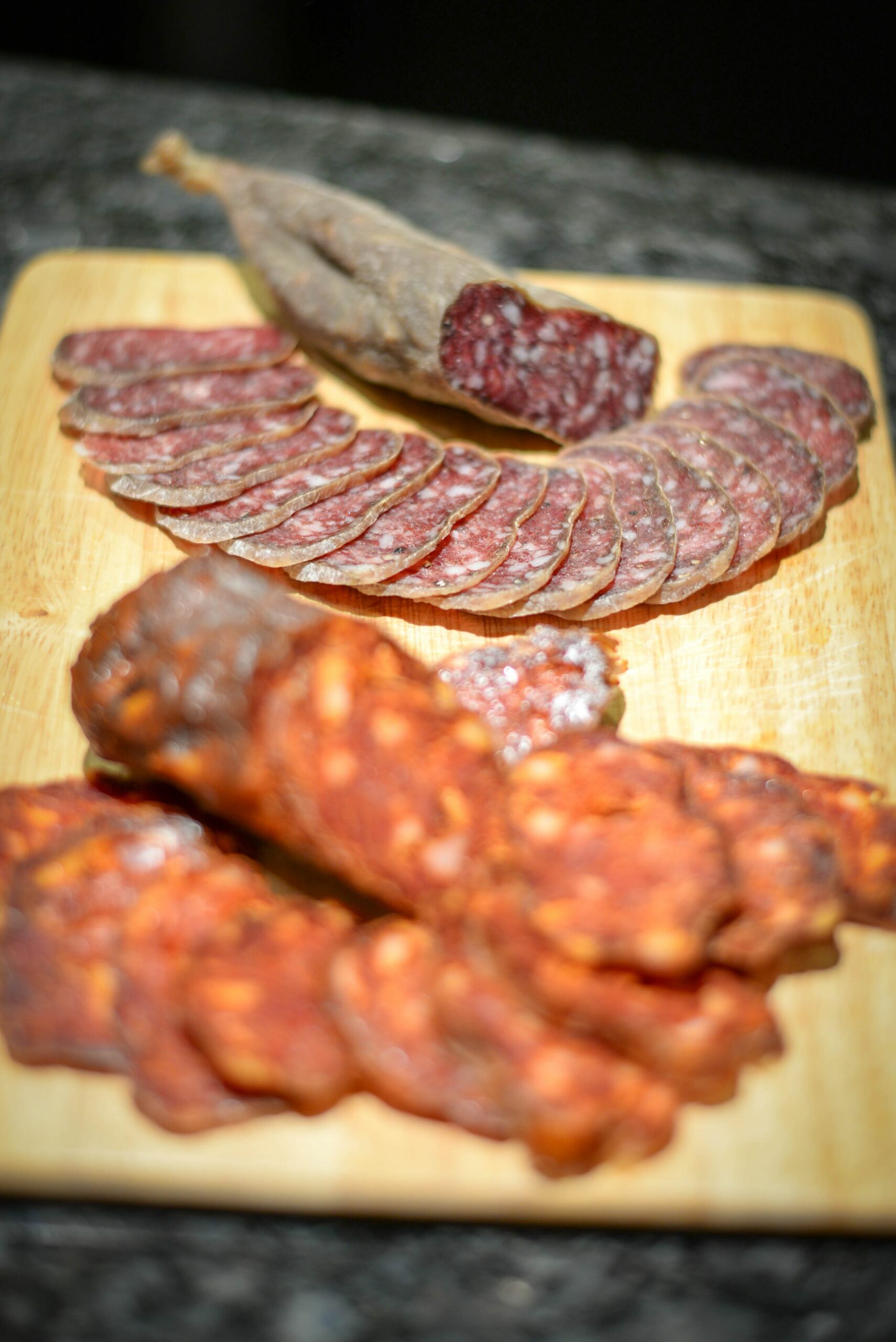
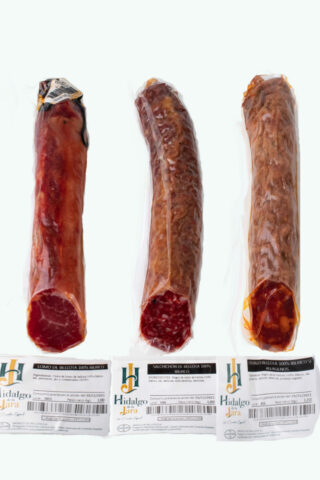
On an Iberian charcuterie board, cured loin, chorizo and salchichón can look like three versions of the same idea: cured pork, sliced and served as an appetiser. From a production point of view they are fundamentally different. Understanding those differences makes labels easier to read, helps you choose according to taste and allows each product to be served in a way that respects its texture and aromatic profile.
The first major distinction is between a cured whole muscle and a sausage made from chopped or minced meat and fat. That technological choice determines much of what we later perceive in the mouth.
Cured loin: a whole muscle rather than a minced mixture
Caña de lomo is produced from a muscle that remains whole, is seasoned, placed in a casing and cured. When it is sliced, the continuous structure of the muscle remains visible: fibres, intramuscular fat and the natural direction of the cut. That is why its texture is unlike chorizo or salchichón.
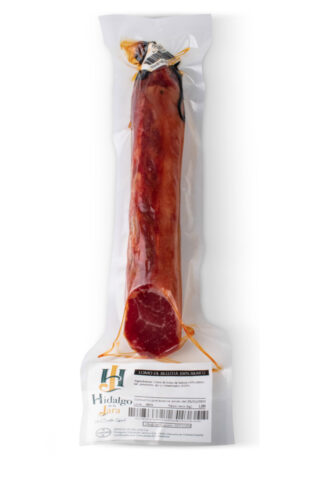
For Iberian products, caña de lomo is specifically covered by Spain's Iberian Quality Standard. It is worth avoiding the assumption that “lomo” and “lomito” always describe the same cut. Producers may work with different muscles and commercial names, so the product sheet should identify what has actually been cured.
From a sensory perspective, loin often gives the meat, intramuscular fat and seasoning more direct prominence, without the mosaic structure of a minced sausage. Cutting it too thick can make the bite unnecessarily firm; a fine slice usually shows its texture more elegantly.
Chorizo: paprika shifts the centre of flavour
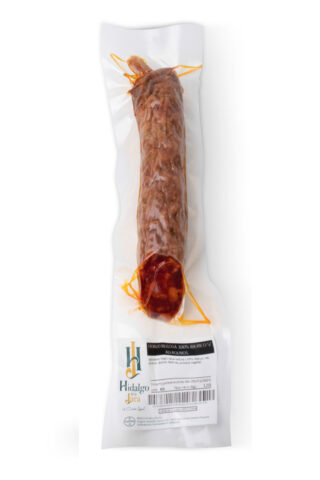
Chorizo is made from chopped or minced meat and fat, seasoned and stuffed before curing. Paprika is one of its defining elements and has a major influence on colour, aroma and taste. Garlic and other seasonings can complete the profile according to the producer's recipe.
That does not mean all chorizos taste alike. Particle size, fat proportion, paprika type and quantity, casing diameter, final moisture and maturation all change the result. A coarse-cut chorizo reveals meat and fat differently from a finely structured one; a drier, more mature piece gives a firmer bite and more concentrated aromas.
Salchichón: spice and meat without paprika taking centre stage
Salchichón is also a cured sausage based on meat and fat, but its aromatic identity is different. Instead of being defined by paprika in the way chorizo is, it commonly relies on pepper and other spices. When comparable products from the same maker are tasted side by side, salchichón can therefore reveal the character of the meat and fat from a different angle.
Texture again depends on particle size and curing. A good slice shows a recognisable mosaic of lean and fat while remaining cohesive rather than becoming a uniform paste. As with any cured meat, the specific recipe matters more than a generic description, so the ingredient list is valuable information.
What does “Iberian” mean on a cured sausage?
The term “Iberian” on a meat product should not be treated as permission to assume every other characteristic. Spain has quality rules for both Iberian products and meat derivatives. Traceability, raw material and the use of protected or regulated terms must support the designation being used.
For the buyer, the practical approach is to read the full name, ingredients, producer and any stated breed or production information. “Iberian” matters, but it does not replace the rest of the product specification.
Texture is the easiest difference to identify blind
With your eyes closed, structure would distinguish the products quickly. Loin retains continuous muscle fibres. Chorizo and salchichón show a mosaic of lean and fat particles bound together during curing. This architecture changes the way fat melts in the mouth and how quickly seasoning is released.
The ideal slice changes too. Loin benefits from a clean, fine slice across the fibres. With chorizo and salchichón, an excessively thin slice can lose some textural interest, while a very thick one may feel heavy. The right thickness depends on casing diameter and curing level.
What order should they be served in?
There is no compulsory tasting protocol, but a comparative tasting often works best by moving from less dominant profiles to more heavily seasoned ones. Loin, salchichón and then chorizo is a useful sequence because paprika and stronger chorizo seasoning do not condition the palate before the other products are assessed.
Real products can of course break that rule. A strongly peppered salchichón may be more intense than a mild chorizo. The principle is to order by actual intensity and provide bread and water to reset the palate rather than covering the cured meats with too many accompaniments.
Choosing for the occasion
- For a tasting focused on the meat itself: cured loin is particularly informative because of its whole-muscle structure.
- For someone who enjoys paprika and a bolder seasoning profile: chorizo is the natural choice.
- For a balanced board: salchichón supplies a different spicy register and useful contrast with chorizo.
- For a gift: combining all three shows different techniques and flavour profiles without requiring one large whole ham.
Storage and serving
A whole cured sausage and a pre-sliced packet do not necessarily have the same storage instructions. Follow each label, particularly after opening. Refrigerated sliced packs are often more expressive after tempering before service, while still remaining within the manufacturer's safety instructions. With whole pieces, a clean cut and appropriate protection of the exposed end help limit drying.
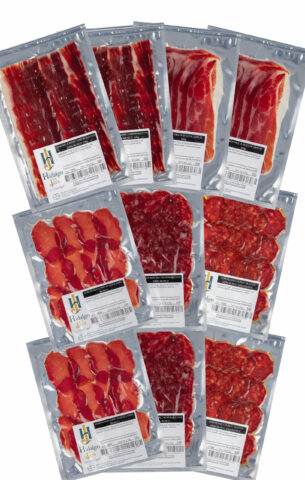
Our cured meats selection lets you compare different Hidalgo de la Jara products and check ingredients, format and product details before choosing.
Sources and regulation
For terminology and general meat-derivative criteria we used Spain's Royal Decree 474/2014 on the quality standard for meat derivatives, whose consolidated text was updated in February 2026, together with the Iberian Quality Standard for categories specifically covered by it.
Related products
-
Sale!
 Select options
This product has multiple variants. The options may be chosen on the product page
Select options
This product has multiple variants. The options may be chosen on the product page
-
-
-
 Artisan Tomato Jam, 250 ml
  Pinto Beans
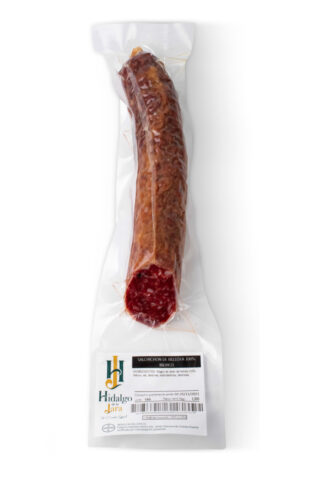
 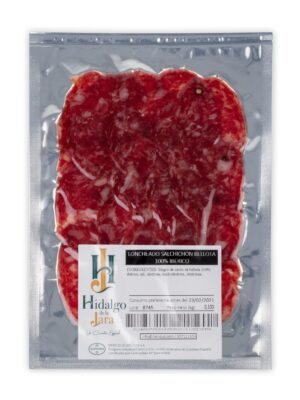 100% Iberian acorn-fed salchichón, 10 × 100g machine-sliced packs