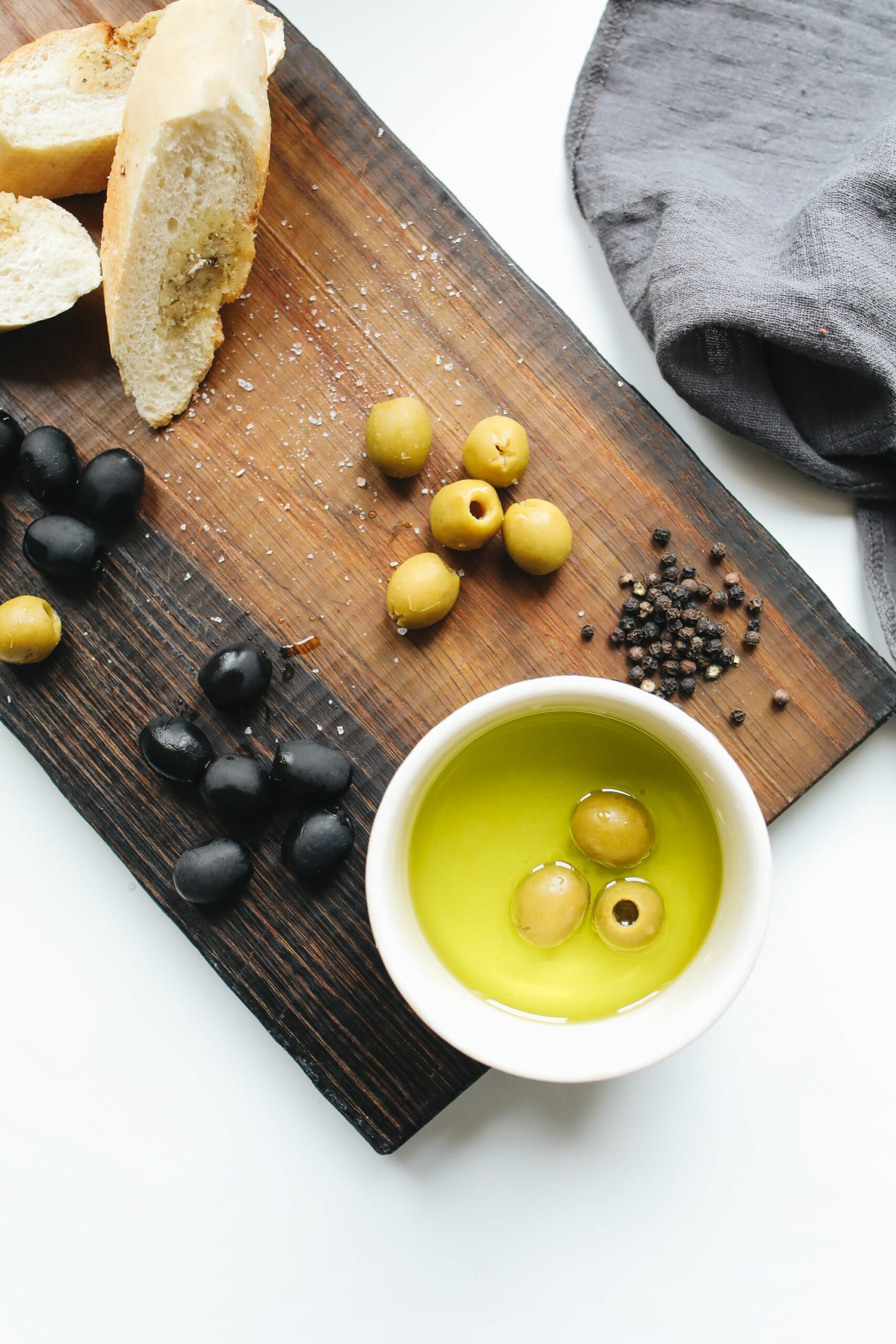
Choosing extra virgin olive oil only by looking for the words “extra virgin” is rather like choosing wine knowing only that it is wine. The category tells you a great deal about how the oil was produced and classified, but there is still enormous diversity within it. Olive variety is one of the easiest variables for a consumer to explore because it changes aroma, bitterness, pungency, perceived sweetness and persistence.
Arbequina, Picual and Lechín are not three quality levels. They are three possible sensory profiles. A delicate EVOO can be superb in one preparation and too quiet in another; an intense oil can transform ripe tomato or grilled meat yet dominate a dish that needs subtlety. The useful question is not which variety is “best”, but what role you want the oil to play.
Before comparing varieties: harvest and production matter too
A variety does not taste exactly the same every time. Olive maturity, harvest date, climate, soil, time before milling, extraction and storage all influence the final profile. Varietal descriptions should therefore be read as sensory tendencies rather than mathematical formulas.
There can also be differences from one harvest to the next. A skilled producer adjusts processing to the fruit received. Variety sets a direction; harvest and production write that season's particular version.
Arbequina: gentle, fluid and approachable fruitiness
Arbequina is commonly associated with fluid oils, a sweet or gentle entry and relatively restrained bitterness and pungency. Spanish sector descriptions mention aromas that can recall apple, banana, almond and fresh fruit. This makes it an approachable starting point for people who are not used to strongly bitter or pungent EVOOs.
In the kitchen it is particularly useful when the oil should support rather than dominate: mild mayonnaise and emulsions, delicate salads, white fish, subtly flavoured vegetables, baking where olive oil replaces another fat, or breakfast toast where a rounded profile is wanted. “Mild” does not mean neutral or lower quality; it means the sensory balance usually takes up less space in the dish.
Picual: structure, character and persistence
Picual is one of Spain's most recognisable olive varieties. It commonly produces a more intense profile, with pronounced fruitiness and a clearer bitter and pungent presence, particularly in early-harvest or greener styles. It is also valued for its oxidative stability.
That personality works well when the oil is meant to be a visible ingredient: tomato on toast, fresh tomato, roasted vegetables, pulses, soups, meat, marinades, stews or robust salads. On a simple piece of bread, an expressive Picual can almost become the principal flavour.
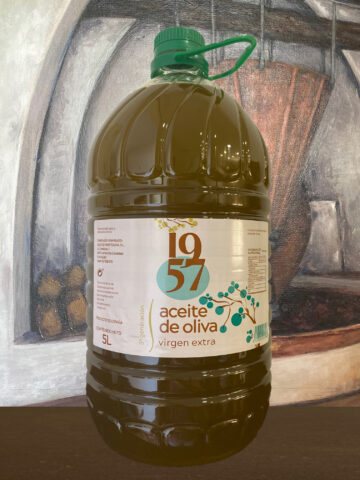
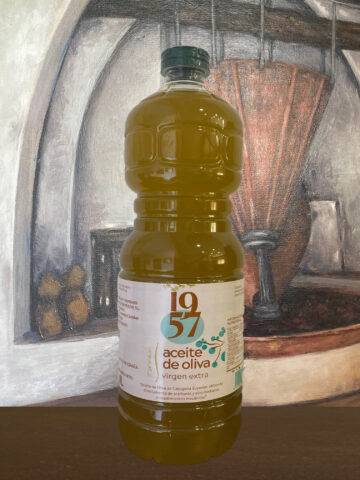
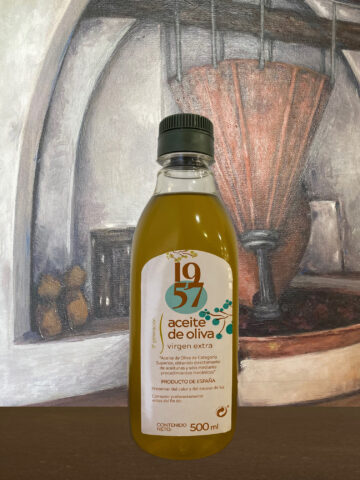
In 1957's range you will see the wording Marteña (Picual). Here we use Picual as the general varietal reference while preserving the producer's own “Marteña (Picual)” description when referring to its product.
Lechín: balance with a personality of its own
Lechín —particularly Lechín de Sevilla in commonly used varietal descriptions— tends to offer a fruity profile with green tones and a recognisable balance between bitterness and pungency. For someone who finds Arbequina too delicate but does not want every dish to carry the force of a powerful Picual, it can occupy a very useful middle ground.
It is versatile with vegetables, pulses, stews, white meats, savoury pastry, sauces and breads, especially when you want the EVOO to be noticeable without becoming the only protagonist. That middle position does not make it vague; balance is part of its identity.
A practical map by dish
| Preparation | Useful profile | Reason |
|---|---|---|
| Mild mayonnaise or emulsion | Arbequina | Fruit and richness without overwhelming the mixture. |
| Tomato on toast | Picual | Its intensity stands up well to tomato acidity and flavour. |
| Roasted vegetables | Picual or Lechín | Both can accompany browned, roasted flavours with enough presence. |
| White fish | Arbequina or a gentle Lechín | They can leave the fish itself in the foreground. |
| Pulses | Picual or Lechín | A raw finishing drizzle can add aroma and persistence to the stew. |
| Grilled beef | Picual | Its character copes well with strong, browned flavours. |
| Baking | Arbequina | Its gentler profile often integrates more easily. |
This is not intended to turn cooking into a rule book. One of the best ways to learn about EVOO is to taste two varieties on the same simple food. Tomato, bread or a boiled potato provides a sufficiently neutral base to notice how dramatically the oil can change the dish.
What about cooking? Good EVOO is not only for raw use
The idea that high-quality extra virgin olive oil should be reserved exclusively for dressing is too simplistic. Olive oil also works in sautéing, roasting, stewing and frying. Heat changes part of its aromatic expression, but starting flavour, stability and interaction with the food still matter.
The choice can be economic as well as sensory. You might reserve a particularly aromatic EVOO for finishing and use another profile during cooking, or cook and finish with the same variety when you want continuity of flavour.
Two profiles at home can be more useful than one “universal” oil
For a household that uses EVOO daily, keeping one gentle oil and one more assertive oil is often practical. Arbequina covers delicate uses; Picual or Lechín expands the range when a dish needs more presence. That avoids asking one bottle to behave identically in a mild vinaigrette and with grilled meat.
1957 currently offers different varietal options, allowing profiles to be compared within one producer's range. See the available formats in our olive oil selection. If you buy larger containers, our guide to 5-litre EVOO and storage is also useful.
Varietal source
For general sensory characteristics we used the varietal material published by Aceites de Oliva de España. The exact profile of a bottle should always be judged according to the producer's information and the specific harvest.
Related products
-
EMDO Selection Sale
-
EMDO Selection
-
EMDO Selection