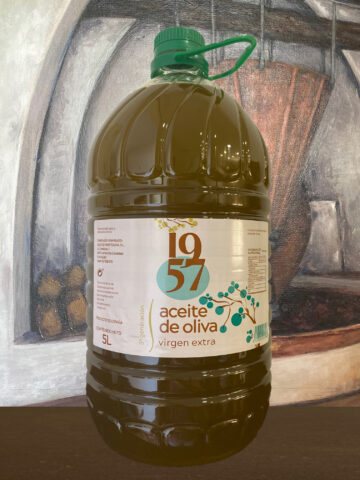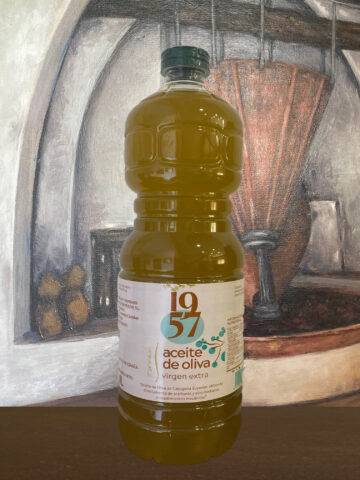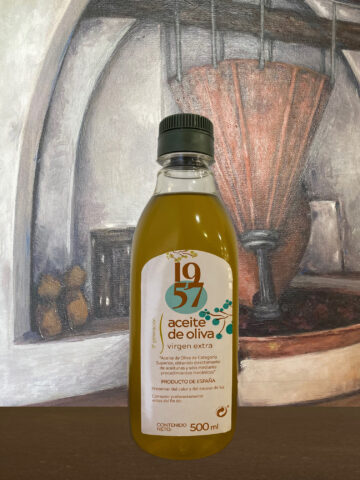
Buying extra virgin olive oil in a five-litre container can be an excellent decision, but not because “bigger is always better value”. The format works when consumption is high enough and storage is sensible. If a large container sits open for months beside a sunny window or next to the hob, the initial saving can work against sensory quality.
The key idea is that extra virgin olive oil is chemically dynamic, but it is not a product designed to improve through ageing. Once produced, the objective is to preserve its aromas, flavours and characteristic compounds for as long as possible.
What actually degrades extra virgin olive oil?
The three household factors that matter most are oxygen, light and temperature. They accelerate different reactions that gradually modify lipids and aromatic compounds. Good storage is therefore not just about checking a date; it is about reducing unnecessary exposure throughout the life of the container.
Oxygen becomes relevant every time the container is opened and as the headspace increases in a partially empty vessel. Light can promote photo-oxidative reactions, which is why opaque or highly protective packaging is valuable. Heat accelerates many chemical reactions, so storing oil beside an oven or in direct sunlight is a poor habit even if it is convenient.
Why a large container can keep very well
Container size itself is not the problem. A large opaque container, tightly closed and stored in a stable environment can perform very well. Problems arise when the bulk container is used as the everyday serving bottle, opened repeatedly and kept close to heat.
A practical strategy is to keep the main container in the pantry and refill a small daily-use bottle. The large container is then opened less often. The smaller bottle should also protect the oil from light and stay away from the cooking heat source.
Avoid decanting the entire purchase into decorative vessels of uncertain quality. If we do not know how well they seal, how much light they transmit or whether they are perfectly clean and dry, storage can become worse rather than better.
Does extra virgin olive oil need refrigeration?
For most households, no. A cool, dark place with reasonably stable temperature is normally more practical. At low temperatures some oil components can crystallise and the oil may look cloudy. This physical change does not necessarily indicate spoilage, but it offers little advantage for ordinary day-to-day use.
A pantry is usually better than the worktop. If a kitchen becomes very hot for long periods in summer, use the coolest suitable storage area available. The main objective is to avoid sustained heat and large temperature swings.
When does five litres really make sense?
There is no universal number of people per household. Two people who cook with extra virgin olive oil every day may use more than a larger family that rarely uses it. The right approach is to review actual consumption over recent months. If smaller bottles are replaced frequently, a large container can reduce price per litre, packaging and the number of orders.
If a 500 ml bottle already lasts a very long time, jumping to five litres is unlikely to be sensible. Smaller formats may preserve freshness better for that consumption pattern and make it easier to alternate varieties and styles.
Variety: Picual, Arbequina and other profiles
Format should not make us forget cultivar. Picual often gives more assertive profiles with noticeable bitterness and pungency and generally high oxidative stability. Arbequina often feels softer and sweeter on entry, with delicate fruity aromas. Other cultivars bring different balances.
These are broad tendencies rather than guarantees. Harvest timing, fruit maturity, growing area, extraction and storage all influence the final oil. Two Picual oils can be very different. Cultivar is a useful clue, not a complete tasting note.
Filtered or unfiltered: what really changes?
Unfiltered oil can retain fine solid particles and tiny amounts of vegetation water. This creates the cloudy appearance and the freshly produced character that many consumers enjoy. Those remaining solids and water can also accelerate some changes during longer storage.
Filtering removes much of that material and generally supports greater stability. Neither style should be declared universally superior. If you choose unfiltered oil, follow the producer’s instructions carefully and plan for good turnover.
What to check before buying a large-format EVOO
- Packaging that protects from light and closes reliably.
- Cultivar or blend information where provided.
- Producer, harvest and best-before information.
- Whether it is filtered or unfiltered and the recommended storage.
- Whether your real consumption justifies the chosen volume.
Compare formats and cultivars in our extra virgin olive oil selection. With five litres, the principle is simple: good oil, good turnover and a cool, dark, stable place.
Related products
-
EMDO Selection Sale
-
EMDO Selection
-
EMDO Selection