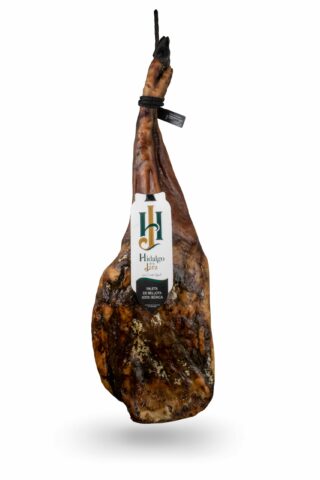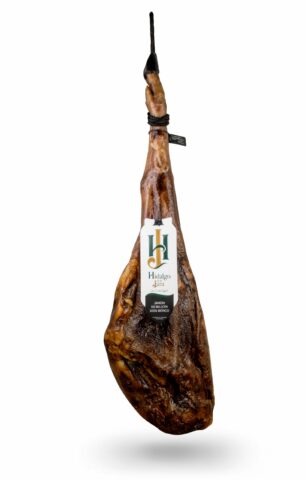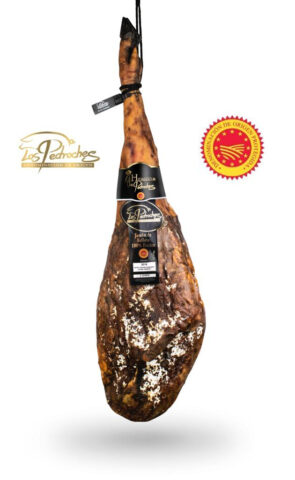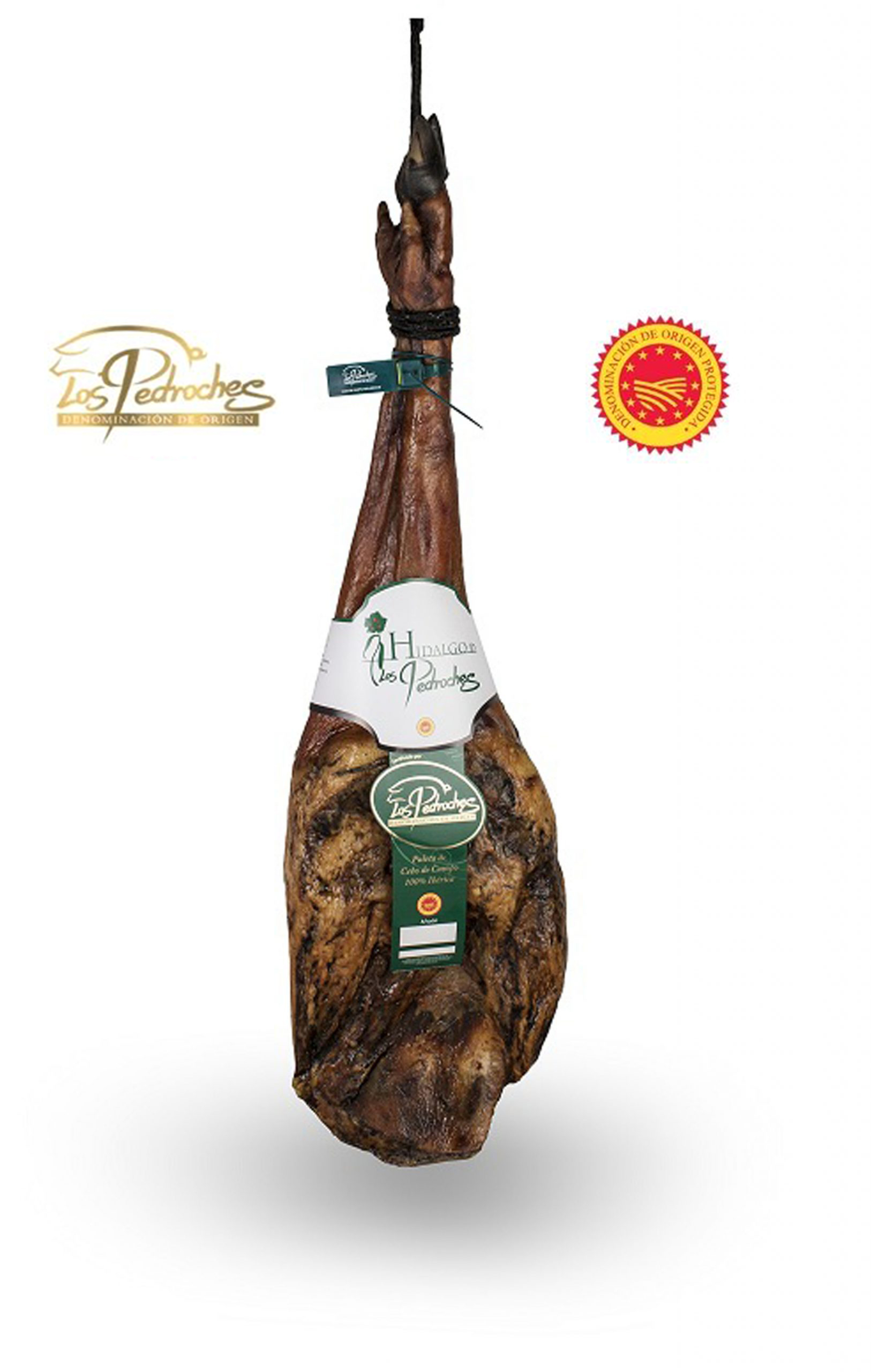
A cured Iberian ham is designed to remain stable for a long time before it is opened, but that stability changes the moment the first cut is made. A fresh surface is suddenly exposed to oxygen, light, temperature and moisture loss. Storing a started ham well is not about sealing it as tightly as possible; it is about limiting those factors without creating new problems.
The most useful principle is simple: an opened ham keeps best when it is eaten regularly, sliced cleanly and kept in a stable environment. Many household problems come from the opposite: leaving the piece next to a heat source, not cutting it for weeks, keeping old oxidised fat pressed against the surface or moving it repeatedly between very different temperatures.
Where you keep it matters
A whole bone-in cured ham needs a cool, dry, ventilated place away from direct sunlight. “Cool” does not automatically mean refrigerator. At home, keep the ham stand away from radiators, ovens, hobs, sunny windows, hot terraces and places with large temperature swings.
The kitchen feels like the obvious location, but it is not always ideal because cooking produces heat, steam and rapid changes in humidity. A stable interior pantry or similar space may be better. The producer's own instructions should always take priority because curing level, size and format can change the recommendation.
What happens to the cut surface
The freshly cut face contains exposed moisture and fat. As time passes, oxygen changes the colour and the surface gradually dries. A slightly darker or drier first layer after a period without slicing does not automatically mean that the ham is spoiled; often a very thin trimming slice is enough to return to an attractive surface.
Clearly rancid smells, abnormal flavours, unusual dampness or other signs outside the normal development of a dry-cured product are different. If there is genuine doubt, the solution is not simply to cut deeper and hope for the best. Ask the producer or seller for advice.
Should you cover the cut with the ham's own fat?
When a whole ham is opened, rind and external fat are trimmed away until the area to be sliced is exposed. A clean piece of the white fat can be reserved and placed over the cut face. It acts as a temporary barrier, reducing direct exposure to air and slowing dehydration.
That piece of fat is not permanent. If it becomes heavily yellowed, oxidised or rancid-smelling, replace it with a fresh clean piece as the cut progresses. A clean breathable cloth or the producer's recommended cover can then go over the top. What matters is avoiding improvised wrapping that traps moisture and condensation around the exposed ham.
Which side to start depends on how quickly you will eat it
The traditional recommendation is to start with the maza —the broader, usually juicier side— when the ham will be eaten frequently. If consumption will be slow, starting with the narrower, generally more cured babilla can make sense so that this side is not left to dry further while the other side is being eaten.
This is a practical rule rather than an absolute law. Size, curing and number of diners all matter. Think in terms of your real weekly consumption: a family slicing ham several times a week advances through the piece very differently from one person who serves it only at weekends.
Slice little, slice often
For storage quality, it is usually better to cut the amount you plan to serve each time. Cutting a large quantity and leaving it for days in a dish or container removes one of the main advantages of owning a whole piece: being able to produce the slice at the moment you want to eat it.
A reasonably flat, clean cutting plane also helps. Deep steps and hollows dry unevenly and make it harder to use the meat around the bone efficiently. A suitable knife and a secure ham stand are therefore storage tools as well as slicing tools.
Should a whole ham go in the refrigerator?
A whole cured bone-in ham is not handled like a packet of sliced ham. Unless the producer specifically instructs otherwise, repeatedly moving a whole ham in and out of the refrigerator can create temperature changes and condensation that are not helpful. Recommendations for whole pieces normally focus on a cool, stable environment.
Vacuum-packed sliced ham, on the other hand, must be stored exactly as its label states. Many packs require refrigeration. Once a packet is opened, the situation changes again because far more surface area is exposed, and the manufacturer's instructions for opened product become particularly important.
Serving temperature and storage temperature are not the same thing
A packet can be correctly refrigerated and still taste muted if served very cold. Ham becomes more expressive as its fat loses rigidity and appears glossy and flexible. It is therefore often useful to allow a refrigerated packet to temper before serving, while still respecting its food-safety and storage instructions.
There is no need to chase one magic temperature for every product. Practical sensory signs are useful: flexible slices, less opaque fat and aromas that become easier to perceive.
Using trimmings, cubes and bones
Good storage also means good use. Areas that are difficult to slice can become cubes for cooking, croquettes, eggs, vegetables or pulses. When you reach the bone it can be cut into manageable sections for stocks if you have the right equipment and hygienic conditions. Portions that will not be used soon can be packed and frozen appropriately.
A simple routine after each slicing session
- Cut only what you plan to eat.
- Leave the cutting face clean and reasonably even.
- Protect it with clean fat from the piece if that fat remains in good condition.
- Cover it appropriately and keep the stand away from heat and sunlight.
- After several idle days, trim a thin dry surface layer if necessary before serving again.
If your consumption is genuinely occasional, a whole ham may not be the most practical format. Our guide to whole versus sliced Iberian ham compares storage, convenience and consumption rate.
See the formats available in our ham and shoulder selection, and always follow the specific instructions supplied by the producer of the piece you buy.
Related products
-
EMDO Selection SaleSale!
 Select options
This product has multiple variants. The options may be chosen on the product page
Select options
This product has multiple variants. The options may be chosen on the product page
-
EMDO Selection SaleSale!Select options
This product has multiple variants. The options may be chosen on the product page
-
EMDO Selection SaleSale!Select options
This product has multiple variants. The options may be chosen on the product page
-
EMDO Selection SaleSale!Select options
This product has multiple variants. The options may be chosen on the product page
-
Sale!Select options
This product has multiple variants. The options may be chosen on the product page