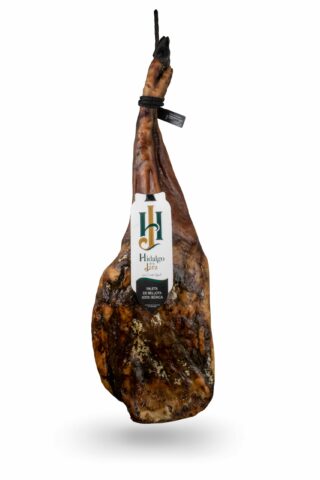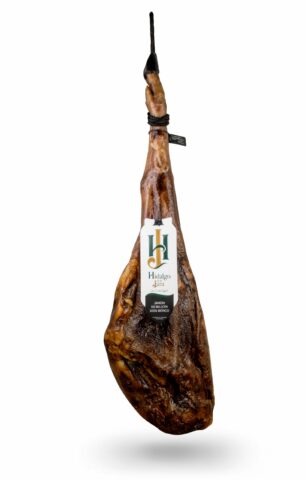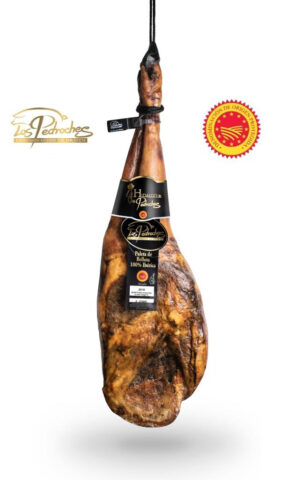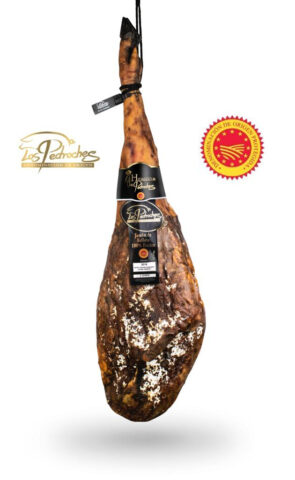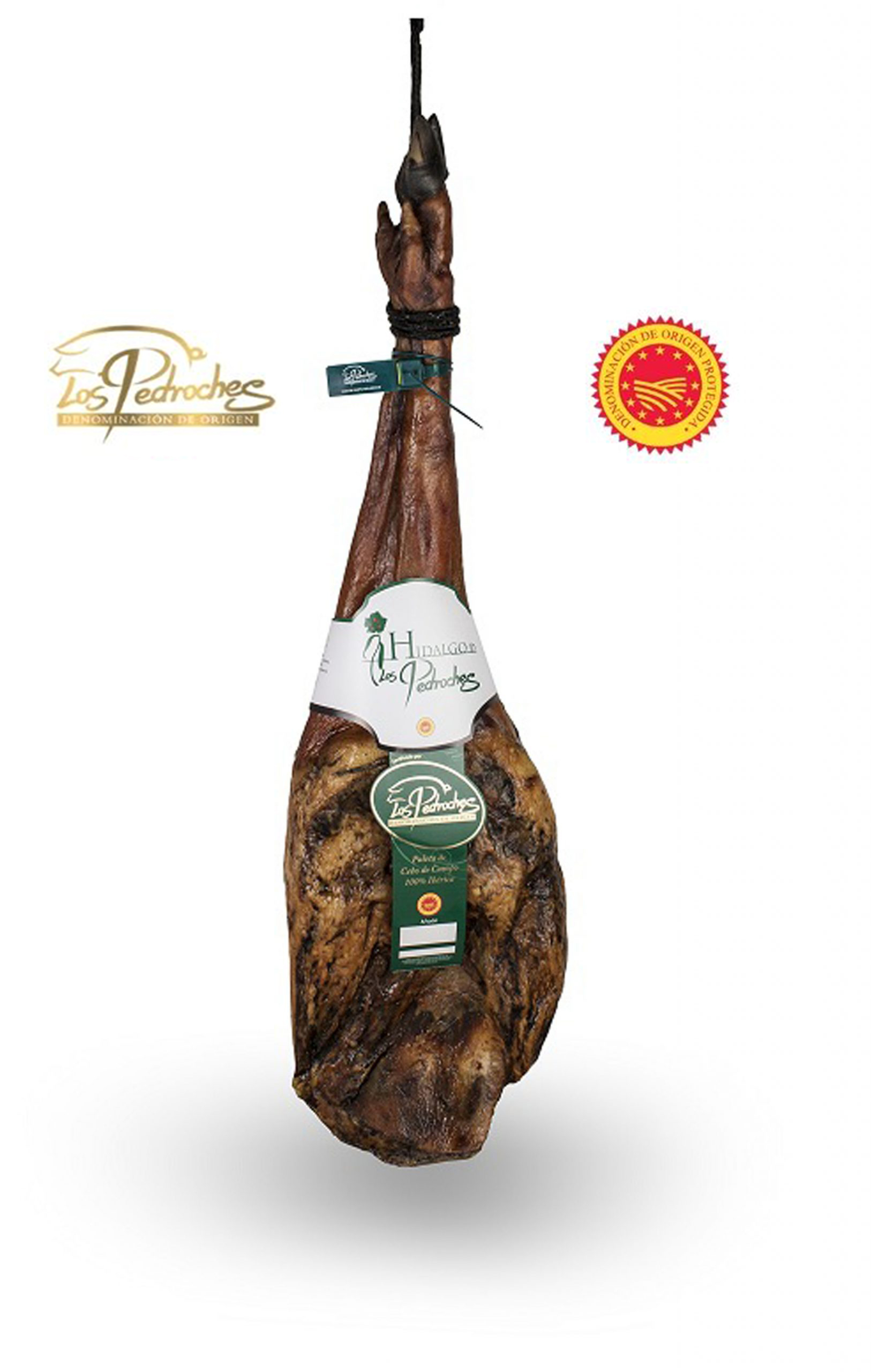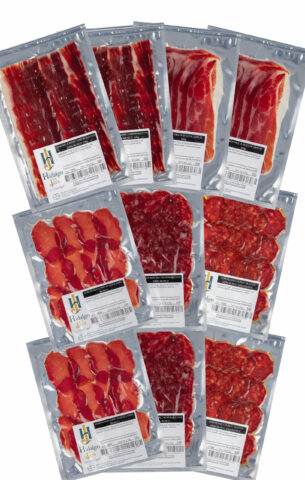
With a good Iberian ham, the question is not always which grade to buy. Very often the practical decision is simpler: should you buy a whole piece or choose ham already sliced and vacuum packed? Both formats can contain an excellent product, but they suit very different eating habits.
A whole piece gives you the complete experience: carving, moving through the different muscles and preparing each serving yourself. Vacuum packs turn that experience into ready-portioned slices. Neither format is universally better. The right one depends on household size, how often you eat ham, available space and how much you value carving.
Format does not replace ham quality
A 100% Iberian acorn-fed ham does not stop being one because it is sliced, and a whole leg is not automatically superior merely because it retains its original shape. Breed, feeding system, curing and producer workmanship come before format.
When comparing a leg with sliced packs, make sure the underlying products are genuinely comparable. If one belongs to a higher commercial category, differences in flavour and price may come from the ham itself rather than the packaging format.
What you gain with a whole piece
The main advantage is control over carving and serving. Different areas of a ham vary in fat, marbling and texture. The carver can adjust slice thickness and choose sections according to the occasion.
There is also a gastronomic element that a sealed pack cannot reproduce completely: carving immediately before eating, watching the leg evolve and learning the differences between maza, babilla, punta and hock.
The trade-off is practical. You need space, a stable stand, suitable knives and some skill. Once started, the ham should also be eaten at a sensible pace so that the exposed surface does not sit unused for too long.
What you gain with vacuum-sliced packs
The major benefit is portion control. You open only what you intend to eat while the remaining packs stay protected. For one person, a couple or a household that eats ham occasionally, this can matter more than the potential economy of buying a full leg.
Packs take little room, travel easily and allow you to set a table without carving equipment or preparation time. They are also easy to give as a gift because the recipient does not need a ham stand or carving experience.
Consumption pace is the key household difference
Consider two homes. In one, four people eat ham several times a week. In the other, a couple opens a serving every two or three weeks. A whole piece may be natural and efficient for the first household, whereas individual packs fit the second much better.
This is one of the most common buying mistakes: choosing a large leg because the overall price looks attractive, then discovering that it is being eaten too slowly. The right format is not the one that gives you the most food. It is the one that lets you enjoy that food in good condition.
Which format keeps better?
You need to distinguish an unopened package from a product that has already been opened. An intact vacuum pack stays protected according to the producer's stated storage conditions and date. A started ham has an exposed carving face that needs proper protection and regular use.
The advantage of packs is that each is an independent unit: opening one does not expose the others. The advantage of a whole ham is that most of its interior remains protected within the piece and is only exposed as carving progresses.
In both cases, correct handling matters more than format alone. Excessive heat, prolonged air exposure or poor hygiene can harm quality.
Serving temperature matters with sliced packs
Iberian ham taken straight from a cold refrigerator can appear firmer, less aromatic and less glossy. Its fat needs an appropriate serving temperature to express itself well. If the producer recommends tempering the pack before serving, give it time rather than judging the ham immediately after refrigeration.
This does not mean heating the ham. The aim is simply to allow the slices to reach a pleasant serving condition within the product's instructions.
Hand-carved or machine sliced is a different question
Vacuum packing does not tell you how the ham was sliced. Ham can be carved by hand and then vacuum packed, or sliced by machine and packed. These are separate decisions: buying format and slicing technique.
For that comparison, see our guide to hand-carved versus machine-sliced Iberian ham. Here the question is simply whether you want to manage a whole piece or buy ready portions.
Yield and price: do not compare only the price per kilogram
In a whole ham, part of the gross weight is bone, rind and external fat that will never become serving slices. With sliced packs, much of the selection and preparation has already happened before the product reaches you.
Vacuum-sliced ham can therefore show a higher price per kilogram without necessarily being more expensive in terms of edible, ready-to-serve product. You are also paying for slicing, handling, packaging and convenience.
Our guide to how many packs come from an Iberian ham explains why gross weight and usable sliced yield are not the same thing.
Which creates less waste?
It depends on the user. A skilled carver who also uses bones and trimmings can achieve excellent yield from a whole piece. An inexperienced carver may leave meat on the bone, cut slices too thickly or let part of the surface dry.
Ready packs reduce household food waste because the serving has already been prepared, although they require more packaging material per kilogram. These are different types of waste and each household may value them differently.
For celebrations
A whole ham has presence and can become part of the event when someone knows how to carve it. For a large meal, however, prepared packs are very predictable: you know how many grams you will serve and can assemble several platters in minutes.
If precise quantity planning is the priority, packs are extremely convenient. If the ritual and progressive service matter, the whole piece becomes more attractive.
For gifts
A whole ham is impressive when the recipient loves the product and has the necessary equipment. A selection of good sliced packs is often safer when you do not know whether that person has a ham stand, space or carving experience.
A gift should make the product easier to enjoy, not create a storage and carving problem.
Whole, boneless and sliced are not the same comparison
Keep the concepts separate. A ham may be sold bone-in or boneless; a boneless ham may still be sold as a block for later slicing; vacuum-sliced packs are the final serving format. If your question is about bone-in versus boneless, see our guide to whole versus boneless Iberian ham.
Our practical rule
- Choose a whole piece if several people eat ham frequently, you have space and you enjoy carving.
- Choose vacuum-sliced packs if consumption is irregular, you want precise portions or convenience comes first.
- Combine formats if you eat a lot during Christmas or gatherings but only small amounts during the rest of the year.
The best format is the one that matches how you genuinely eat. A great ham deserves to reach the table at the right moment rather than remaining open simply because you bought more than you needed.
Frequently asked questions
Does vacuum-sliced ham lose quality?
Not necessarily. A good ham that has been sliced, packed and stored correctly can provide an excellent experience. Proper serving conditions remain important.
Is a whole ham always cheaper?
Only if you use it well. Compare edible yield, consumption time, equipment and potential losses rather than gross price per kilogram alone.
Can hand-carved ham be vacuum packed?
Yes. “Vacuum packed” describes packaging; “hand carved” or “machine sliced” describes the cutting method. They are independent characteristics.
What should two people choose?
If consumption is occasional, packs are often the easiest option. If you eat ham frequently and enjoy carving, a whole piece can still make perfect sense.
-
EMDO Selection SaleSale!
 Select options
This product has multiple variants. The options may be chosen on the product page
Select options
This product has multiple variants. The options may be chosen on the product page
-
EMDO Selection SaleSale!Select options
This product has multiple variants. The options may be chosen on the product page
-
EMDO Selection SaleSale!Select options
This product has multiple variants. The options may be chosen on the product page
-
EMDO Selection SaleSale!Select options
This product has multiple variants. The options may be chosen on the product page
-
Sale!Select options
This product has multiple variants. The options may be chosen on the product page