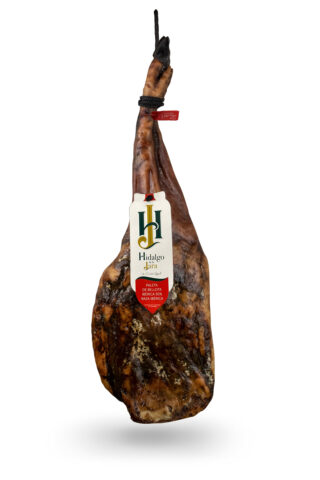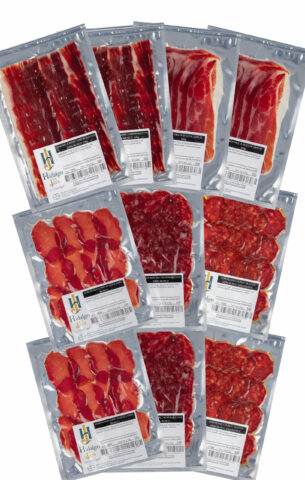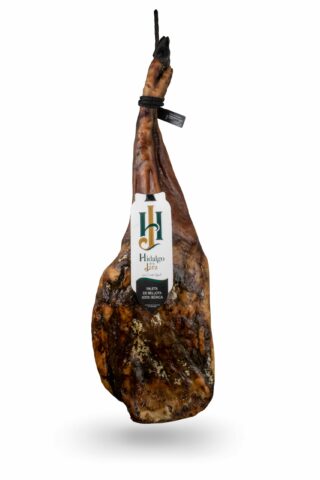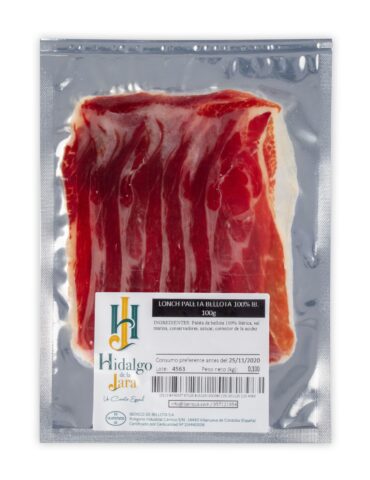
- Black Flange: for the 100% Iberian acorn-fed ham: The black label on the ham indicates that it is a 100% Iberian breed and that in the fattening months it has been fed acorn and grass in a free-range dehesa pasture. Their parents will be 100% Iberian and must be registered in the Stud Book of the Iberian pig breed.
- Red Flange: for the Iberian acorn-fed ham: These are hams that come from pigs that are between 50 and 75% Iberian breed and that in the fattening months have been fed acorn and grass in a free-range dehesa pasture.
- Green Flange: for the Iberian free-range grain-fed ham: they are hams that come from specimens with between 50 and 100% Iberian breed, however, they have not been fed with acorn in the dehesa pasture, only with feed and natural resources in the wild.
- White Flange: for the Iberian grain-fed ham: they also come from Iberian specimens, with a percentage between 50 and 100%, however, they have not been raised in the field. They have been fed on farm feed.
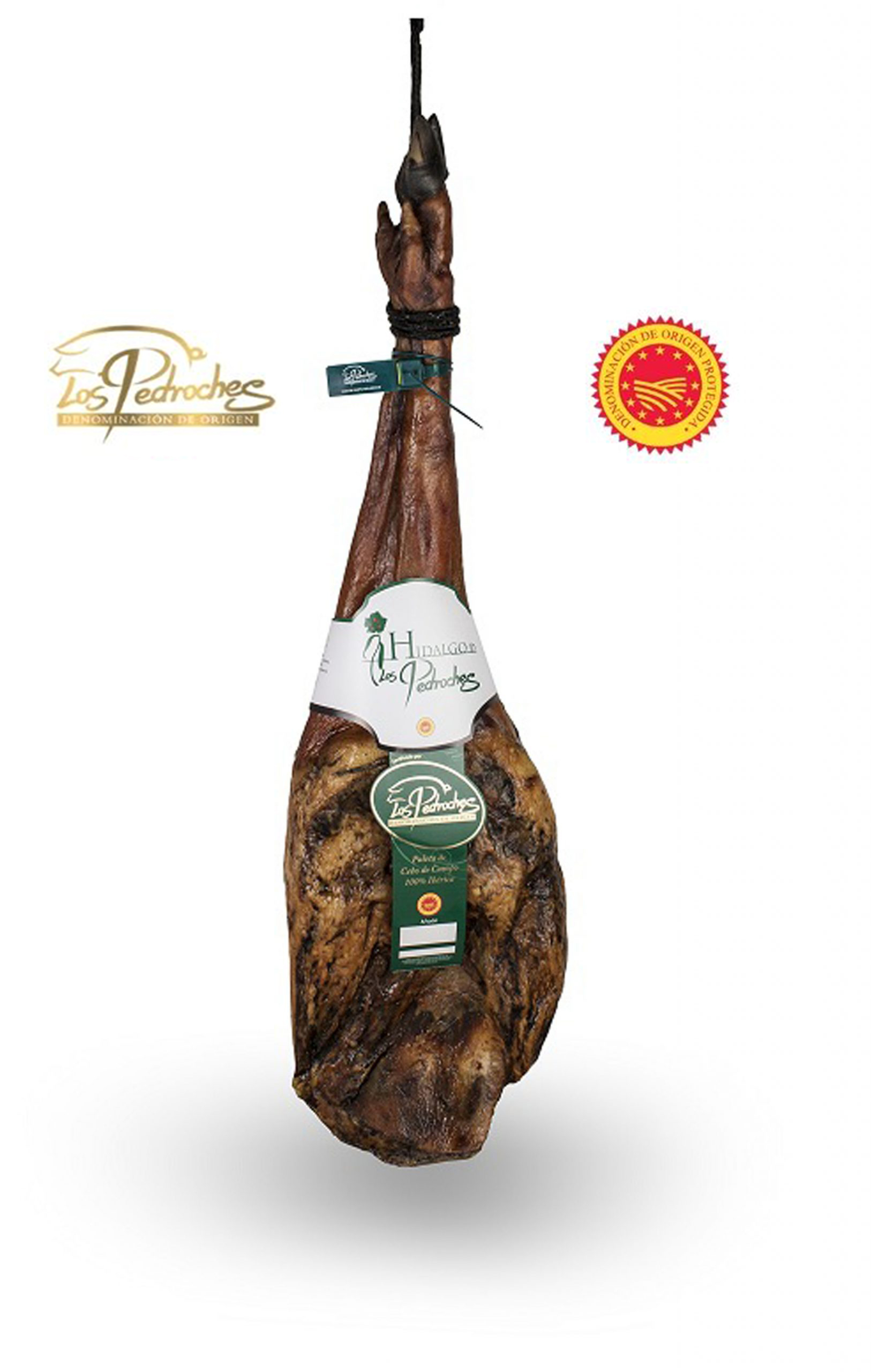
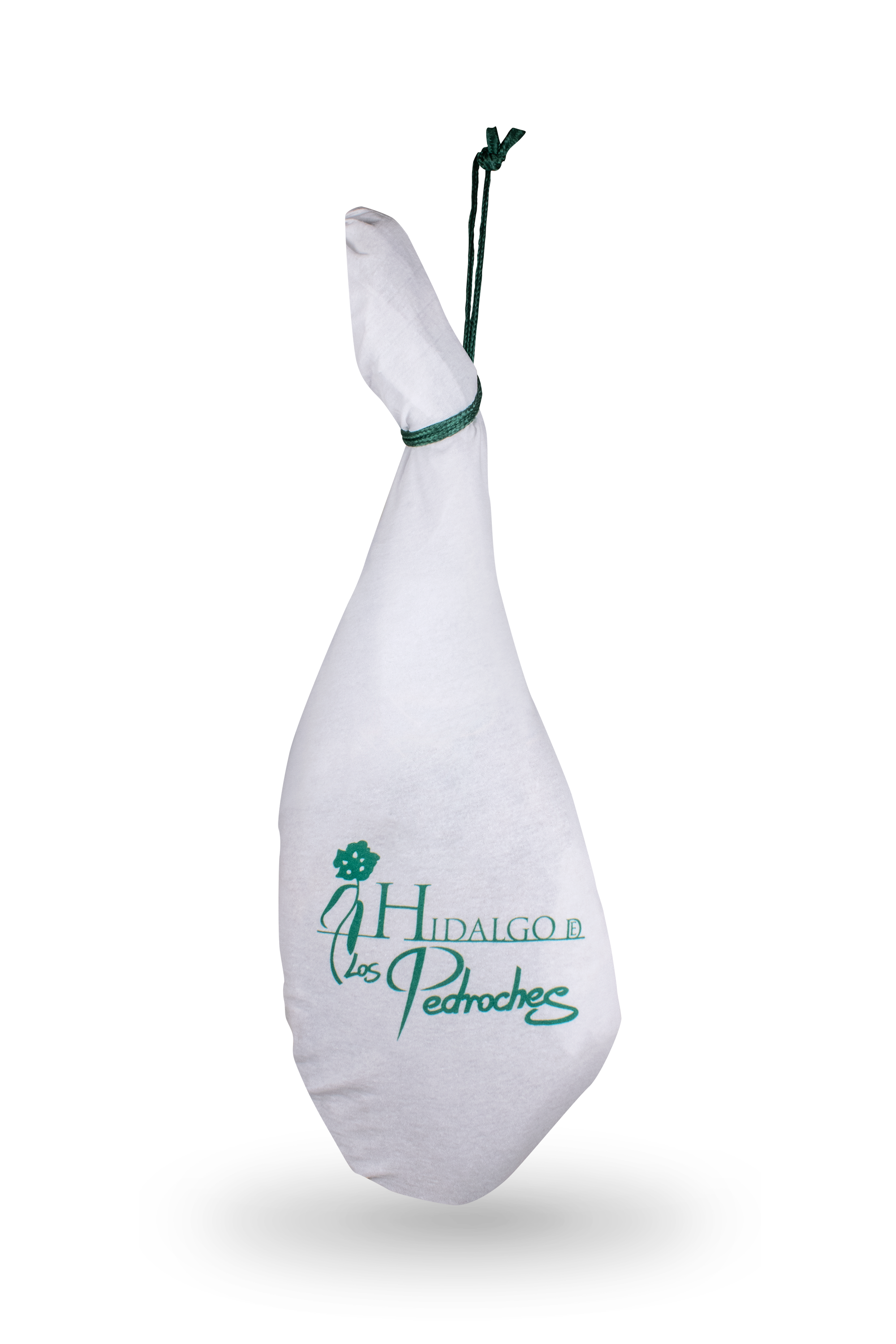
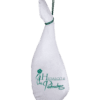
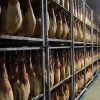
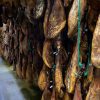
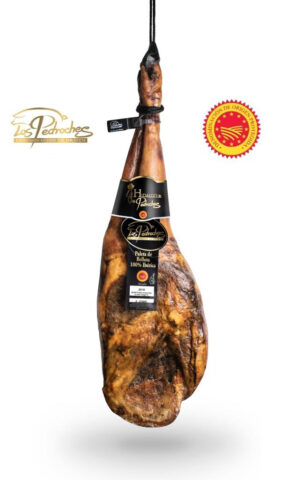
Free-range grain-fed shoulder ham 100% Iberian with PDO Los Pedroches (green flange)
Price range: 147,00€ through 162,00€
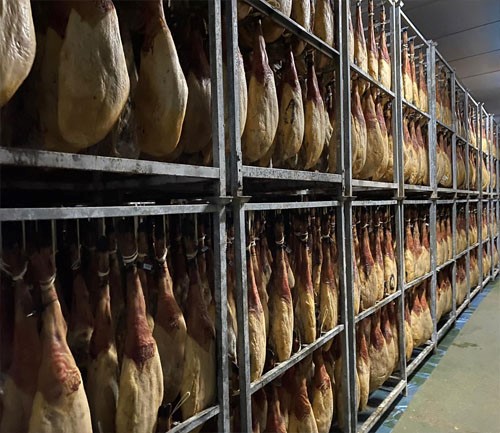
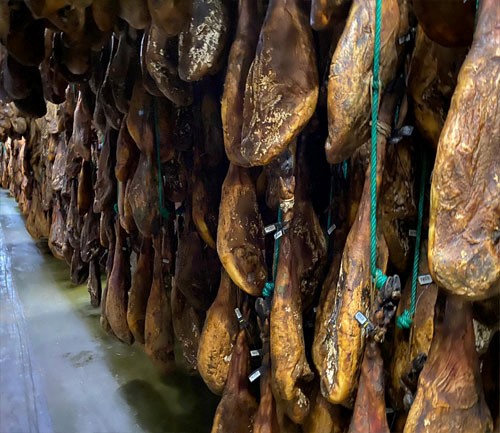
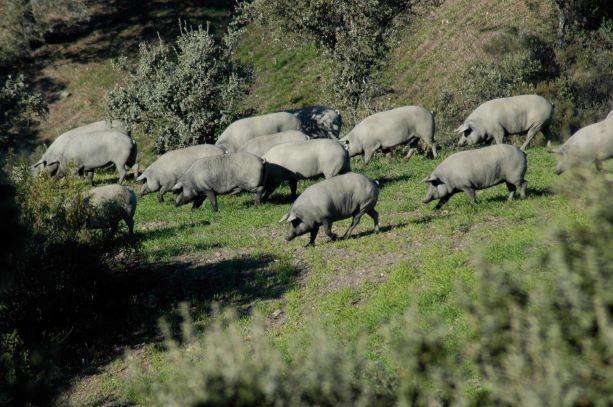
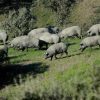
shoulder ham with Protected Designation of Origin from a 100% Iberian pig, fed freely in the pastures of the Los Pedroches region. After the montanera season they complete their diet with the resources available during the spring. The exercise and the diet of the dehesa pasture give them a differential flavor to the rest of the free-range grain-fed products. COMPLIES WITH THE IBÉRICO QUALITY STANDARD RD 4/2014. Green flange Shipments in 1-2 business days for whole pieces, for sliced pieces this period will increase one more day depending on demand.
Item will be shipped in 1-2 business days
SKU: N/A
Category: Hams and shoulders
Tags: 100% Iberian, Free-range grain-fed, Los Pedroches PDO, Iberian, Shoulder ham
IDENTIFICATION OF PARTS ACCORDING TO THE FLANGE
The ham can be quickly identified by the label on its hoof. There are four colors:
Additional information
| Size | 4.5–5 kg, PDO Los Pedroches, 4.5–5 kg, Los Pedroches PDO, hand-carved + bones + diced ham, 4.5–5 kg, Los Pedroches PDO, machine-sliced + bones + diced ham, 4.5–5 kg, Los Pedroches PDO, boneless, 5–5.5 kg, PDO Los Pedroches, 5–5.5 kg, Los Pedroches PDO, hand-carved + bones + diced ham, 5–5.5 kg, Los Pedroches PDO, machine-sliced + bones + diced ham, 5–5.5 kg, Los Pedroches PDO, boneless |
|---|
Related products
-
Sale!
 Select options
This product has multiple variants. The options may be chosen on the product page
Select options
This product has multiple variants. The options may be chosen on the product page
-
EMDO Selection SaleSale!Select options
This product has multiple variants. The options may be chosen on the product page
-
Sale!Select options
This product has multiple variants. The options may be chosen on the product page
-
EMDO Selection SaleSale!Select options
This product has multiple variants. The options may be chosen on the product page