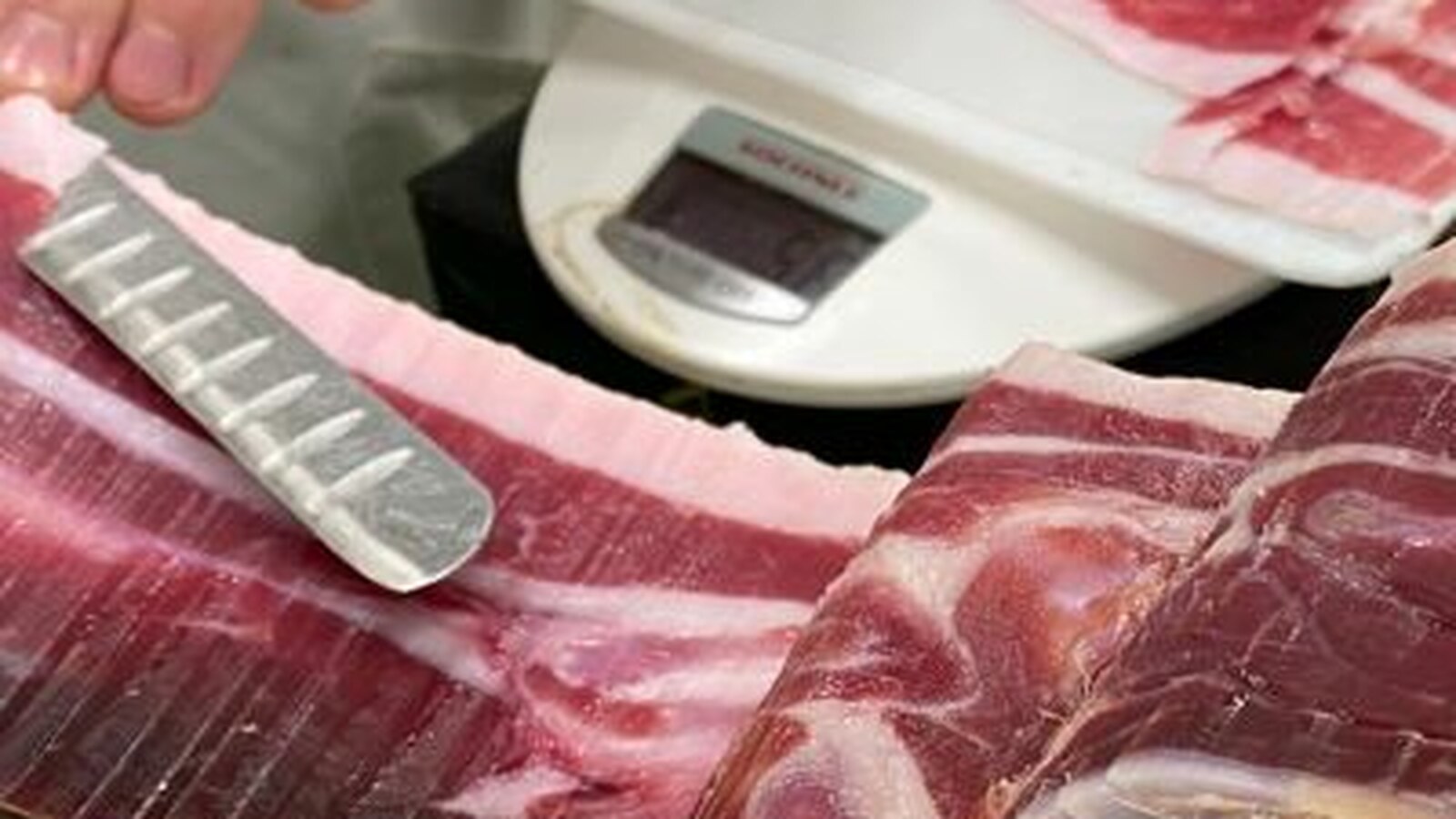
A whole Iberian ham does not stop being useful when it can no longer produce neat slices. As the knife approaches the bones, the leg reveals irregular muscles, cubes, fat and trimmings that still carry plenty of flavour. Throwing them away simply because they do not look like a perfect slice wastes a meaningful part of the product.
Good utilisation does not mean keeping everything without judgment. Separate usable meat, clean fat, dry exterior pieces and bones; chill or freeze what will not be used soon; and match each part to the type of cooking where it performs best. The end of the ham is a second culinary phase.
Distinguish slices, cubes, trimmings and bones
As long as the surface allows safe, thin carving, continue making slices. When the geometry around the femur, hip or shank makes that difficult, change both tool and objective. A short, controllable knife is better for removing small blocks of meat that can be diced later.
Trimmings are irregular pieces that do not have the shape of a presentation slice but still have culinary quality. Once accessible meat has been removed, the bones can be portioned for cooking. There is no benefit in forcing a long ham knife into awkward spaces around bone.
Small cubes are one of the best uses
Meat close to the bone, shank and lower leg can be firm and intensely flavoured. Cut into small cubes, it works with eggs, sautéed vegetables, croquettes, rice, pasta, pulses or as a finishing ingredient for soups and purées. Here the goal is not a melt-in-the-mouth slice but a controlled burst of flavour.
Size matters. A large cube may feel chewy, while a small one distributes more evenly. Timing matters too. Some recipes benefit from a short sauté; others are better if the ham is added near the end so it does not dry out or make the whole dish excessively salty.
What to do with the fat
Not every piece of fat removed when opening or trimming the ham belongs in the bin. Clean white fat can be used sparingly to add flavour to a soffritto, vegetables or a stew. Yellowed, oxidised outer fat or any piece with unpleasant aromas should be discarded.
Ham fat is powerful. Treat it more like a seasoning than a general cooking oil. A small amount can change a pot of beans or vegetables; too much can overwhelm it.
Why bones are easier to use when portioned first
A whole ham bone is awkward in a domestic kitchen. If it is cut with the correct equipment, or portioned by someone with the right tools, small sections are far easier to freeze and fit into a saucepan. Each section can then be used independently.
Do not improvise bone cutting with a normal kitchen knife. It can damage the blade, cause injury and create splinters. Bone requires a suitable saw or professional tool.
Stocks and pulses: use the bone as an ingredient
Ham bone contributes salt, fat and aromatic compounds. In stock, lentils, beans or traditional stews it can add depth, but it should not dominate the recipe. Too much can make a dish overly salty and mask the other ingredients.
A sensible method is to start with one section and adjust seasoning later. Because cured ham already contains salt, heavily salting the cooking liquid at the beginning can easily overshoot the final balance.
Should you blanch the bone first?
Some cooks briefly boil a ham bone and discard the first water to reduce surface salt, fat or intensity. It is a culinary choice rather than a universal rule. It can be useful for a very cured bone or when a cleaner-tasting stock is desired.
Blanching is not a method for rescuing poorly stored food. If a bone has abnormal odours, visible contamination or has been stored incorrectly, boiling it is not the solution; it should be discarded.
Storing cubes and trimmings
If they will be used within a short period, keep them protected and refrigerated. For longer storage, freezing in small recipe-sized portions is practical. Packs of roughly 50, 100 or 150 grams let you take out only what a dish requires.
Remove excess air where practical and label the date. Freezing cannot improve a trimming that was already dry or deteriorated; it only helps preserve material that was in good condition when packed.
Storing the bones
Portioned bones can be refrigerated for near-term use or frozen securely for later cooking. Because cut bones can have sharp edges, use a robust container or double protection rather than a thin bag that can easily be punctured.
Plan thawing with normal food-hygiene principles. A small frozen bone section can also go into a long cooking process without being fully thawed first, provided the entire dish receives the appropriate heat treatment.
Practical uses for each part
Cubes: eggs, peas, green beans, artichokes, croquettes, pasta and rice. Fine trimmings: toast, fillings, warm salads or vegetable toppings. Clean fat: small amounts in cooking bases and stews. Bones: stocks, soups, pulses and slow-cooked dishes.
The common principle is to stop treating every leftover in the same way. Meat needs relatively little cooking; bones benefit from extraction time; fat should be used sparingly.
Do not overcook good trimmings
A high-quality piece of ham can lose much of its character if it spends twenty minutes boiling. When you want the ham itself to remain recognisable, adding it late often works better. When you want a bone to flavour a stock, long cooking is exactly the point.
Understanding the difference between extracting flavour and preserving flavour is central to good utilisation.
A well-used ham lasts beyond the last slice
One of the advantages of a whole leg is this second life in the kitchen. First comes carving; afterwards, cubes, trimmings and bones can support many meals. Once portioned and stored properly, the end of the ham becomes a small flavour pantry rather than a pile of scraps.
For guidance on when to move from slicing to trimming and how the anatomy changes across the leg, see our guide to the different parts of an Iberian ham.
Related hams and shoulders
-
EMDO Selection SaleSale!
 Select options
This product has multiple variants. The options may be chosen on the product page
Select options
This product has multiple variants. The options may be chosen on the product page
-
EMDO Selection SaleSale!Select options
This product has multiple variants. The options may be chosen on the product page
-
EMDO Selection SaleSale!Select options
This product has multiple variants. The options may be chosen on the product page
-
EMDO Selection SaleSale!Select options
This product has multiple variants. The options may be chosen on the product page
-
Sale!Select options
This product has multiple variants. The options may be chosen on the product page


 12 Jars of Sweet-and-Sour Peppers, 720 ml
 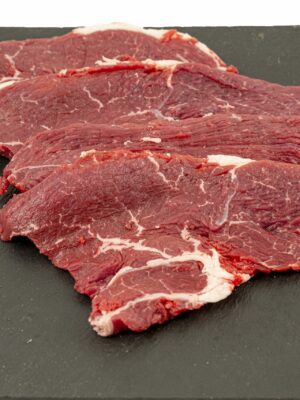 Prime beef steaks
 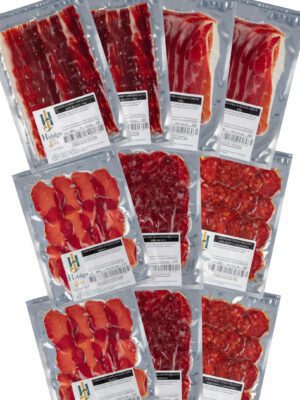 Tasting pack of 100% Iberian acorn (2x ham, 2x shoulder ham, 2x cured loin, 2x salchichón, 2x chorizo)