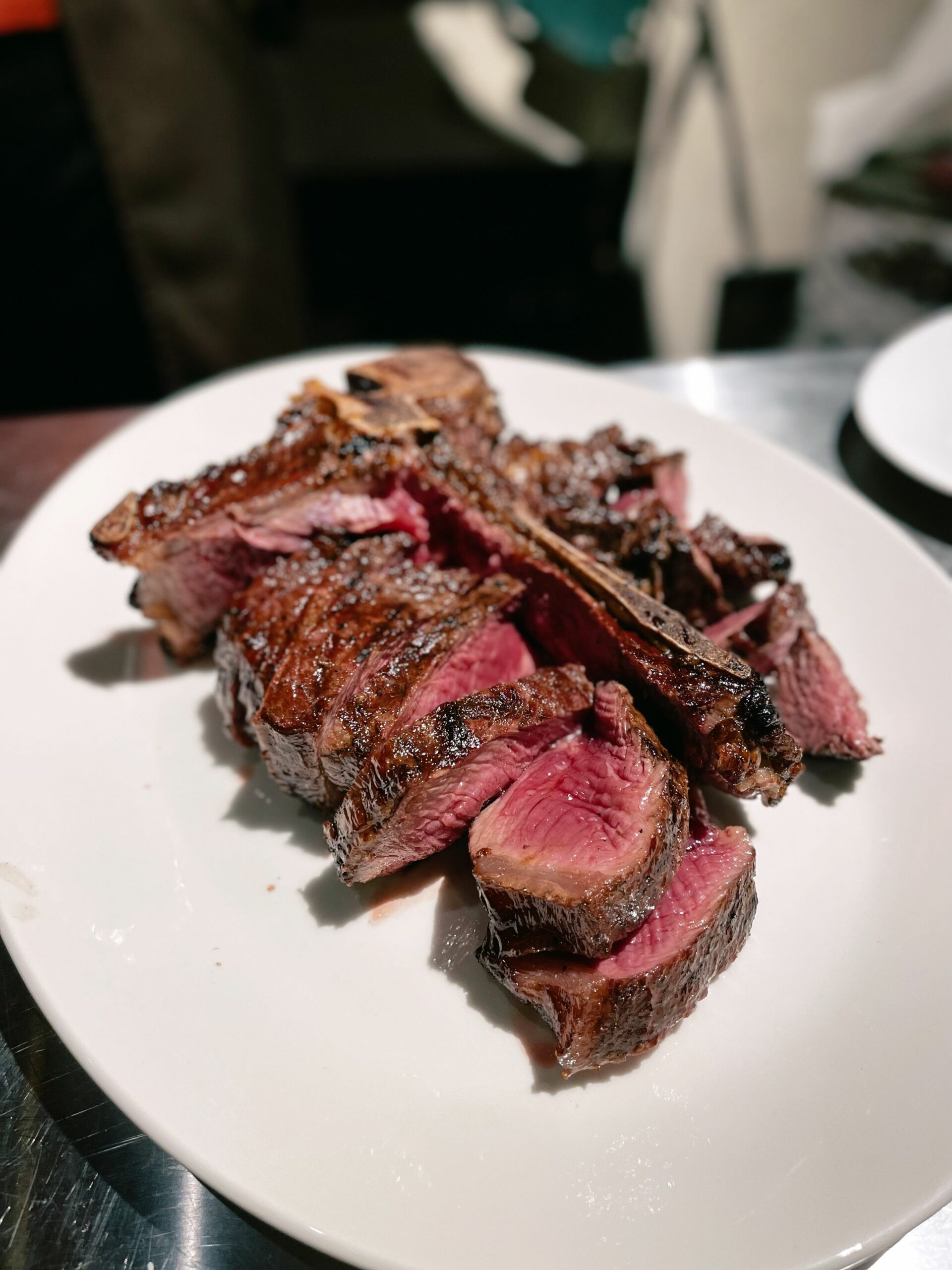
Beef doneness is described with words — rare, medium rare, medium, medium well and well done — but the most repeatable way to hit your preference is to measure internal temperature. Colour is useful information, but it is not a thermometer: myoglobin, pH, cooking method and even lighting can change what you see.
Two ideas must also be kept separate. Culinary doneness describes the texture, colour and juiciness you want. Food safety depends on the type of meat, whether it has been ground or mechanically altered, the time-temperature treatment and the person eating it. A rare-to-well-done chart is never a universal safety guarantee.
Approximate beef doneness temperature chart
Cooks use practical ranges rather than perfectly universal borders. A thick steak can also continue rising in temperature after it leaves the heat.
| Doneness | Approximate centre temperature | Typical appearance and texture |
|---|---|---|
| Rare | 50-52°C | Red centre, very soft texture. |
| Medium rare | 54-57°C | Red-pink centre, juicy. |
| Medium | 60-63°C | Pink centre, firmer texture. |
| Medium well | 65-68°C | Very little pink, firmer and less juicy. |
| Well done | 70°C or above | No visible pink in the centre, firm texture. |
These are culinary references for intact beef steaks, not safety instructions for every meat product. Ground beef, burgers and vulnerable consumers call for more conservative food-safety guidance.
Why a thermometer beats the finger test
Pressing a steak and judging resistance can become useful to a cook who handles the same cuts every day, but it is subjective. Firmness varies with animal, aging, fat and thickness. A fast digital thermometer removes much of that uncertainty.
Measurement also helps you learn. If your steak is exactly how you like it at a final 56°C, you have a useful reference for next time instead of relying on dining-room light or a memorised number of minutes.
How to measure internal temperature correctly
Aim the probe at the thermal centre of the thickest area. Avoid touching bone, a large seam of fat or the hot pan. With a moderately thin steak, inserting from the side can make it easier to position the sensing tip exactly in the middle.
Check two or three areas on an irregular steak. A large bone-in cut may cook at a different rate near a thin edge than through its main central mass.
Carryover cooking: why the temperature keeps rising
When a thick steak leaves the heat, its surface is much hotter than its centre. During resting, some of that energy continues moving inward, so the centre may rise by several degrees. The thicker and hotter the steak, the more noticeable this can be.
That is why cooks often remove a steak before it reaches the desired final temperature and watch the rise. Our guide to resting beef after cooking explains the process in more detail.
Crust and centre are separate goals
A brown crust forms when the surface is dry and receives enough heat. The centre depends on how long heat takes to travel inward. You can have a dark crust and a nearly cold centre, or an overcooked centre with a pale surface.
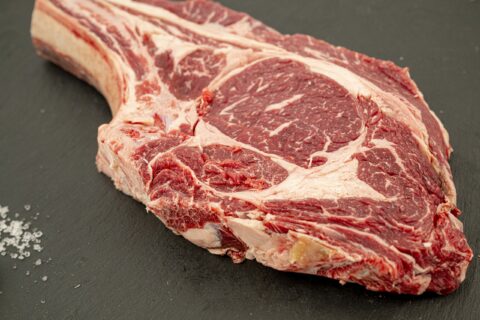
Thick steaks therefore benefit from separating the stages: high heat for browning and gentler heat for the centre, or the reverse-sear sequence. Our guide to cooking a thick rib steak compares the options.
What changes as beef gets hotter?
Muscle proteins change structure and contract, altering their ability to hold water. As cooking advances, tender quick-cooking cuts generally become firmer and can lose more moisture. Fat progressively softens and renders as well.
That does not mean “less cooked is always better”. Doneness is a preference within an appropriate safety context. The useful skill is knowing the result you want and controlling the process deliberately.
An intact steak and a burger are not the same
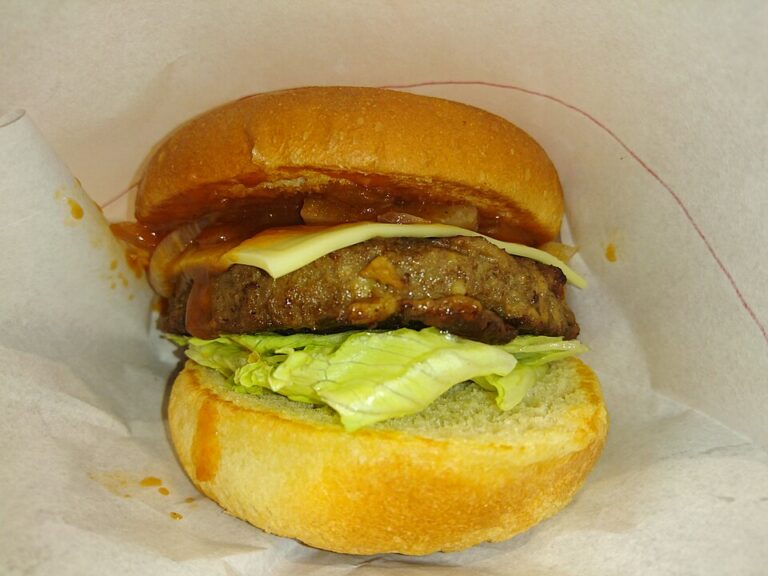
With an intact whole steak, much potential contamination is associated with the outside surface, which receives direct heat during searing. Grinding breaks that surface up and distributes it through the meat. A burger therefore needs a different safety approach and should not simply be cooked to the same temperature you use for an intact entrecôte.
Pregnant people, young children, older adults and immunocompromised people require particular caution. Follow official food-safety advice for vulnerable groups and avoid serving insufficiently cooked animal foods.
Does thickness matter?
Very much. A thin steak can move through several doneness levels in less than a minute. A 5 cm steak gives you more time to build a crust but requires a strategy for heating the centre without burning the outside. The thicker the steak, the more valuable a thermometer becomes.
What if you do not own a thermometer?
You can control steak thickness, heat and cooking time and watch the side of the meat, but the result will be less precise. If you cook beef regularly, a basic digital thermometer is one of the simplest ways to improve repeatability.
Common doneness mistakes
- Using the same cooking time for every thickness.
- Touching bone with the probe and treating that reading as the centre.
- Waiting for the exact final temperature while the steak remains over fierce heat.
- Using colour as an objective food-safety measurement.
- Treating ground beef like an intact steak.
- Forgetting that dry-aged beef may have a drier surface and behave somewhat differently when browning.
A repeatable routine
Dry the steak, brown the surface, position the probe correctly, watch the centre, remove with carryover cooking in mind and rest when the size calls for it. Remember the final temperature you enjoyed. Next time you will have a real reference instead of a guess.
Beef cuts for practising different doneness levels
-
Sale!
 Select options
This product has multiple variants. The options may be chosen on the product page
Select options
This product has multiple variants. The options may be chosen on the product page