Portioning dried chickpeas, lentils or beans can be deceptive. A small amount in a bowl becomes much larger after soaking and cooking because dried pulses absorb water, so the cooked weight is far higher than the dry weight you started with.
That is why “how many grams per person?” only makes sense if we specify whether the pulses are dry or cooked and what role they play in the meal. A lentil main course is not portioned in the same way as a spoonful of chickpeas added to a salad.
Related guides: whether lentils need soaking and for how longchickpea soaking and cooking timeswhy foam appears when cooking pulsesshop pulses
A practical starting point: 60–80 g dry per adult
For home cooking, 60–80 g of dried pulses per adult is a useful starting range when pulses are an important part of the main dish. In a substantial stew with vegetables, meat or other ingredients, many servings fall comfortably within that range.
This is not a universal nutritional prescription. Appetite, age, the rest of the menu, the cultivar and the amount of other ingredients all change the right serving. The range is simply a planning tool.
How much dried lentils per person?
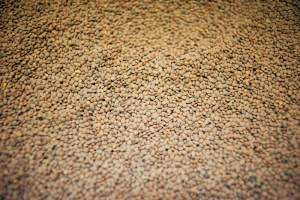
Lentils often cook without a long soak and gain considerable weight as they hydrate. For a main dish, 60–80 g dry per adult is a practical reference.
If lentils are part of a salad, a side dish or a recipe containing plenty of vegetables, grains or other protein, 40–60 g dry may be enough. A very rich stew may also need less pulse because the accompanying ingredients add volume and satiety.
How much dried chickpeas per person?
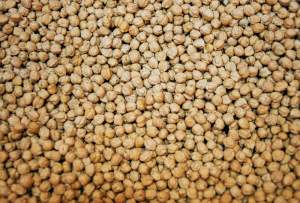
Chickpeas can use a similar reference: 60–80 g dry per adult when they are central to the dish. After soaking and cooking, the weight increases substantially, so 70 g dry becomes a full cooked serving.
In a stew with meat, vegetables and potatoes, the lower end may be sufficient. For hummus, chickpea salads or dishes where the pulse provides most of the volume, the upper end may make more sense.
How much dried beans per person?
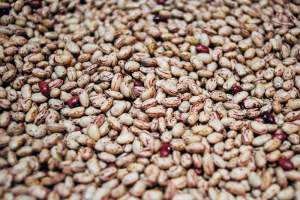
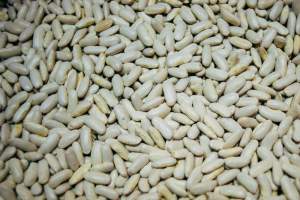
Beans also work well with a general 60–80 g dry per adult guideline. Variety and size matter, however. Small beans and very large beans do not occupy the same volume and may take up different amounts of water.
In a rich bean stew containing sausage or other substantial ingredients, 60–70 g dry can be generous. In a lighter dish where beans are almost the entire meal, you may want somewhat more.
How much weight do pulses gain?
There is no exact multiplier for every pulse. As a home-cooking guide, cooked weight is often around two to two-and-a-half times the dry weight, and can sometimes be higher depending on variety, soaking and cooking.
That means 70 g dry may finish around 150–180 g cooked, sometimes more. If you need precision for meal preparation, weigh your own batch before and after cooking. That gives you the real yield for the variety and method you use.
Quick portion table
| Use | Approximate dry amount per adult |
|---|---|
| Main pulse dish | 60–80 g |
| Rich stew with many accompaniments | 50–70 g |
| Side dish or salad | 40–60 g |
| Small addition to another dish | 25–40 g |
These are kitchen-planning ranges, not dietary prescriptions.
Amounts for 2, 4, 6 or 8 people
Using 70 g dry per adult as a middle reference:
- 2 people: about 140 g dry.
- 4 people: about 280 g dry.
- 6 people: about 420 g dry.
- 8 people: about 560 g dry.
Then adjust for the rest of the meal. With starters, bread, meat, vegetables and dessert, 60 g per person may be plenty. If pulses are the single main dish, 75–80 g may be more appropriate.
Children do not need an adult portion
Children's needs vary greatly with age and appetite. As a simple cooking estimate, half to two-thirds of an adult portion may be useful for younger children, without treating it as a strict rule.
For family meals, it is often easier to calculate the adult portions and add a small margin than to chase exact individual weights.
Is it worth cooking extra?
Often yes. Properly cooled cooked pulses keep for a short period under refrigeration and many preparations freeze well. Making a slightly larger batch can save time without creating waste.
The key is deciding what to do with the surplus rather than leaving it forgotten in the refrigerator. Our guide to freezing cooked pulses explains the best approaches.
Soaking does not change your original portion calculation
If you weighed 280 g of dry chickpeas for four people, that remains the basis of the calculation. After soaking they may weigh much more, but most of the increase is absorbed water.
All quantities in this guide therefore refer to pulses before soaking.
Lentil variety affects the result
Small and large lentils do not behave identically. Cooking time and water uptake can differ. For normal household planning, however, the same starting range works and can be refined through experience.
If a particular recipe specifies different quantities, follow it. The recipe may be designed around a particular amount of stock, vegetables or final texture.
Chickpeas and beans: soaking affects final volume
Soaking time, age of the pulse and water hardness can influence hydration and cooking. Do not use post-soak volume alone as evidence that you prepared “too much”.
For the technique itself, see our complete guide to cooking dried pulses.
Dried or already cooked?
Prepared pulses require a different calculation because the water is already part of the product weight. Do not apply the 60–80 g dry figure directly to a drained jar or tin.
Our comparison of dried versus cooked pulses explains the differences in convenience, texture, storage and recipe control.
How to avoid running short
If you are cooking for guests and do not know their appetite, adding roughly a 10% margin is sensible. The extra cost is usually small and leftovers are easy to reuse.
A little margin is more practical than calculating the theoretical minimum and hoping everyone eats lightly.
How to avoid cooking twice as much as you need
The opposite mistake happens when we measure dried pulses by eye in cups or bowls. Dry pulses look compact, so people often underestimate how much they will expand. A kitchen scale removes the uncertainty in seconds.
After a few batches with the same variety, you will know the quantity that suits your household.
The most useful rule
For most home recipes, start with 60–80 g dried pulses per adult when they are the main ingredient and 40–60 g when they are an accompaniment. Then adjust for appetite, the rest of the menu and the type of dish.
There is no need to chase one universal number. The right portion is the amount that produces the meal you intended without unnecessary waste.