
Iberian ham smells rancid: how to distinguish rancidity from normal cured aromas
Cured ham has intense aromas that can be confused with rancidity. Learn which smells are normal, which suggest fat oxidation and how to assess a…
Read the articleGuides to Iberian ham and shoulder covering breed, feeding system, colour seals, Iberian percentages, formats, curing, producing areas and protected designations. This hub brings together comparisons between acorn-fed, field-fed and grain-fed categories, explanations of black, red, green and white seals, differences between ham and shoulder, storage of whole pieces and sliced packs, yield and buying decisions. We also discuss signs such as yellow fat, sweating, dryness, smell or slice colour. The aim is to separate legal classification, sensory quality and personal preference so each label and product is easier to understand.
Cured ham has intense aromas that can be confused with rancidity. Learn which smells are normal, which suggest fat oxidation and how to assess a…
Read the articleHam fat does not have one single colour. Learn why external fat can yellow, how it differs from white or ivory internal fat and when…
Read the articleA dark hoof is a visual trait, not proof of breed or feeding system. We explain why it cannot identify Iberian ham on its own…
Read the articleChoosing a whole ham or vacuum-sliced packs is not just about convenience. Consumption pace, storage, serving, usable yield and the overall experience all change. Here…
Read the articleThe same quality of ham can be sold bone-in or boneless, but carving, space, storage, usable yield and convenience all change. This guide helps you…
Read the articleIberian and Serrano are both Spanish cured hams, but the names describe different product systems. Learn what changes in breed, fat, production, labelling, curing, flavour…
Read the article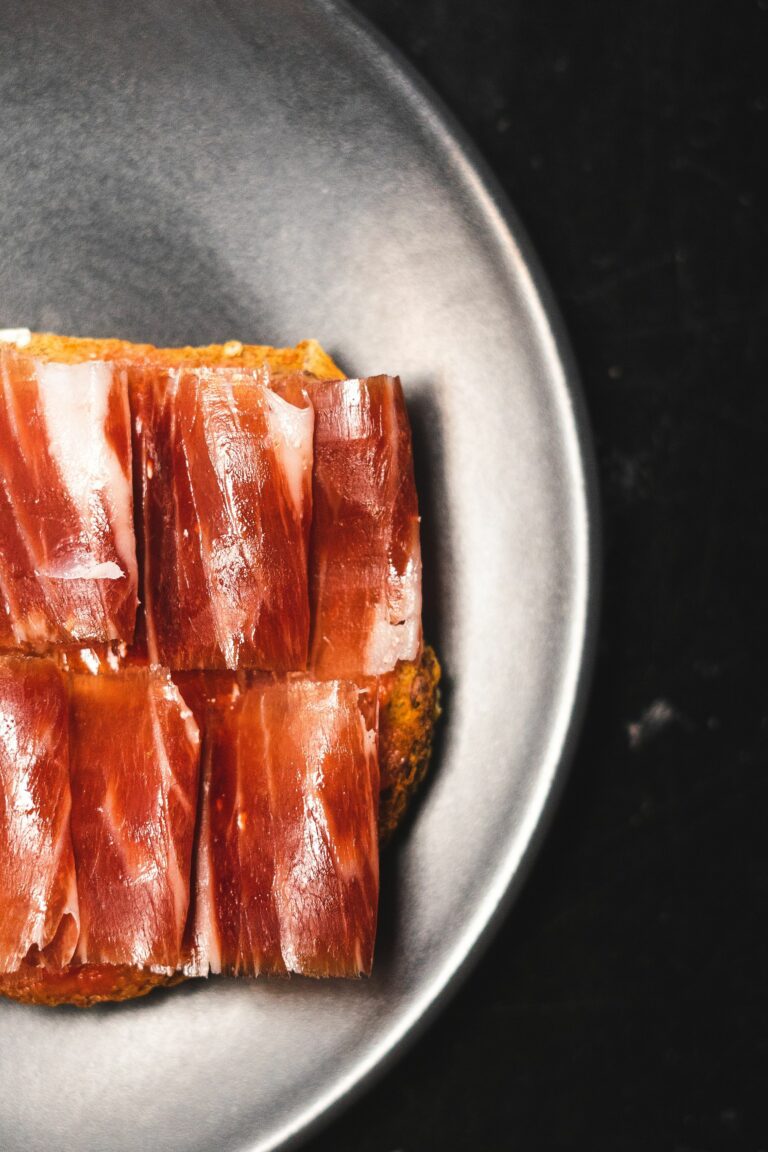
The white streaks in Iberian ham are intramuscular fat between muscle fibres. Learn where it comes from, how it affects texture and aroma, and why…
Read the article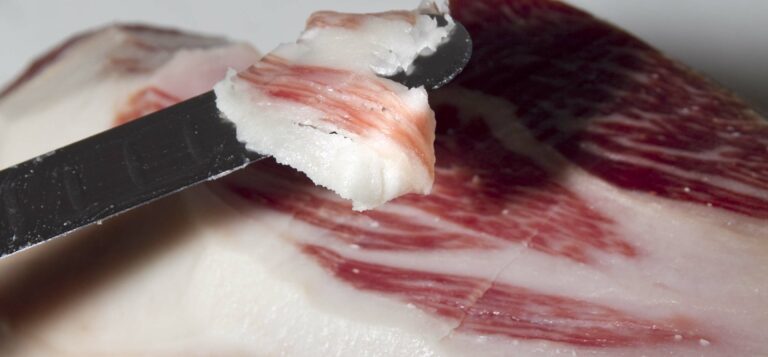
Small hard white specks inside dry-cured ham are commonly crystals associated with maturation, especially tyrosine. Learn how to distinguish them from fat, salt, mould or…
Read the article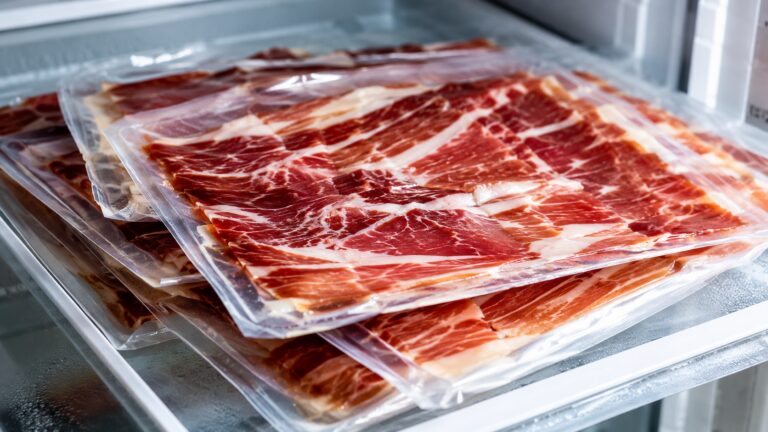
Iberian ham can be frozen, but it is rarely the first choice when maximum aroma and texture are the goal. Learn when freezing can make…
Read the article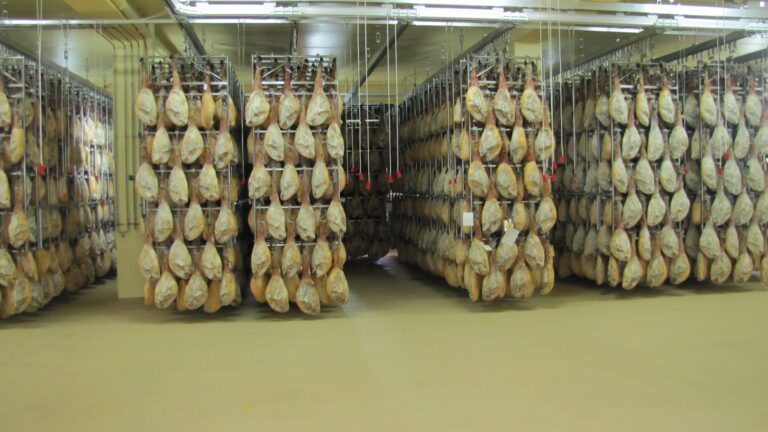
Surface mould can be part of the maturation of a whole dry-cured ham, but not every growth, smell or damaged pack should be treated the…
Read the article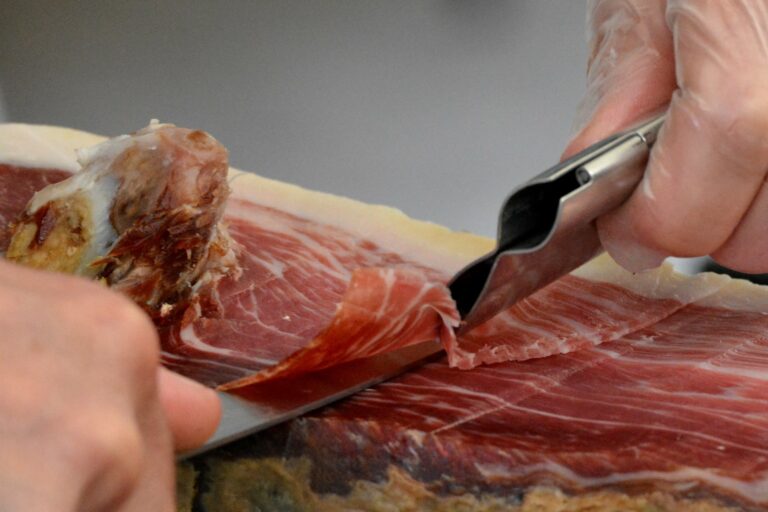
An 8 kg ham does not produce 8 kg of slices. Bone, rind, external fat, curing loss and trimming determine yield. See how many 100…
Read the article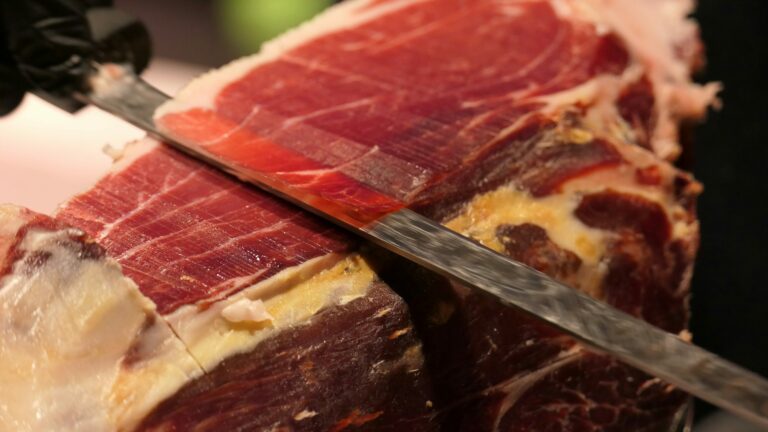
Knife and machine slicing are not simply good versus bad. They change thickness, slice shape, consistency, service and experience. Here is what each method contributes…
Read the articleSubscribe to our newsletter and receive 5% off your first order.