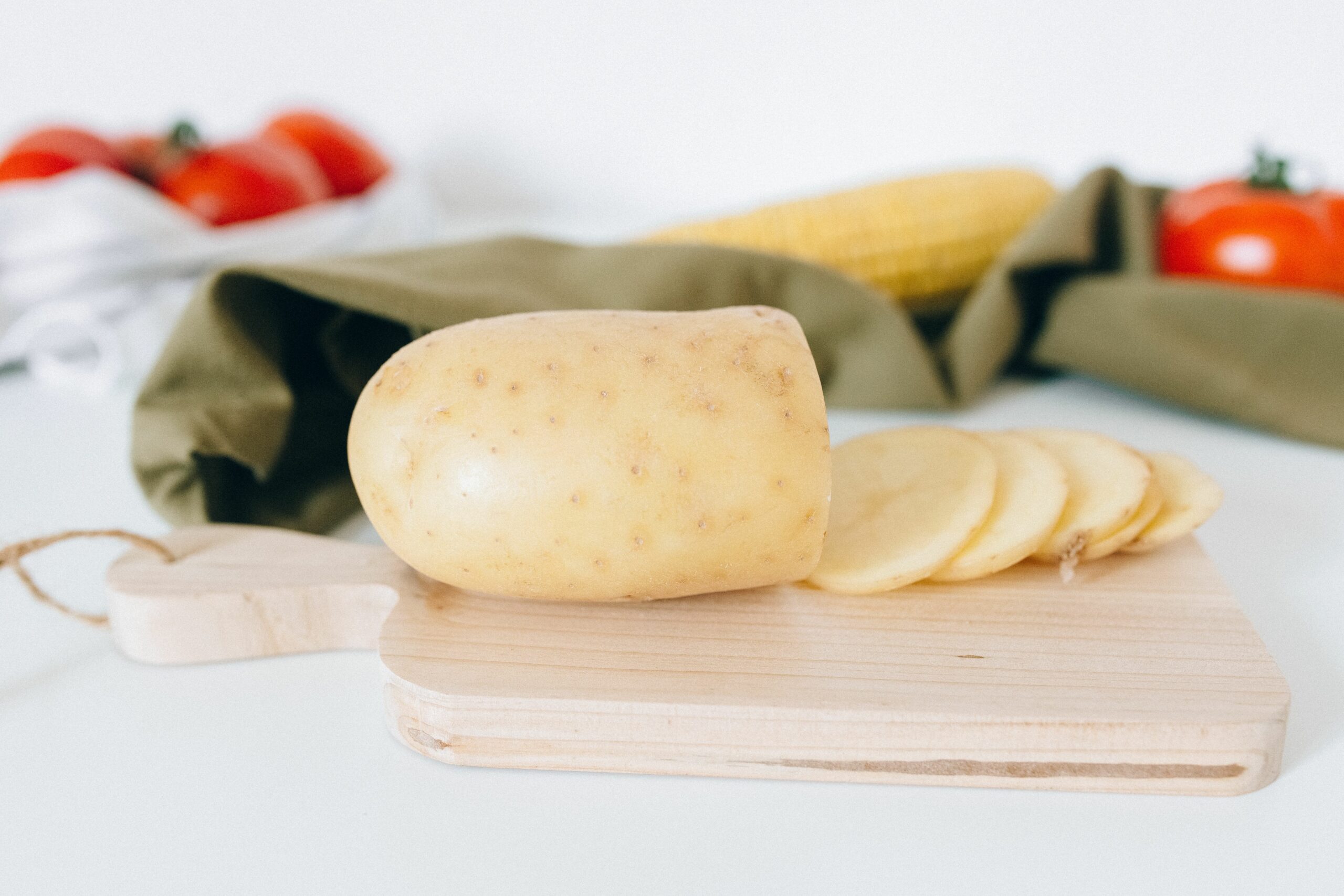
Peel a potato, leave it on the board for a while and the surface can turn grey, brown or almost black. The change looks dramatic, but in most cases it does not mean the potato suddenly spoiled. It is enzymatic browning triggered when cut tissue is exposed to oxygen.
Cutting breaks plant cells and allows enzymes and phenolic compounds that were previously separated to react in the presence of air. Dark pigments then develop, broadly similar to what happens to a cut apple or pear.
Why cut potatoes darken
The speed depends on variety, condition, exposed surface area, temperature and time. Thin pieces present much more tissue to the air than a whole peeled potato and may therefore change colour faster.
Mechanical damage matters too. A bruised or heavily handled potato can contain tissue that darkens readily. That is different from a black internal patch that was already present before the potato was cut.
Surface browning and internal black spots are different
If the potato is pale when first cut and gradually darkens on the exposed surface, enzymatic browning is a likely explanation. If a black patch is visible immediately inside the tuber, bruising, internal necrosis or another defect may be involved.
We cover that second situation separately in our guide to black spots inside potatoes. Not every dark mark should be called oxidation.
The simplest method: cold water
If potatoes need to be cut ahead, keeping them covered with cold water greatly reduces direct contact with oxygen and slows browning. It works well for potatoes that will later be boiled, stewed or prepared for certain styles of frying.
Do not leave them submerged indefinitely. Water removes surface starch and some soluble compounds; very long soaking can also affect texture and flavour. A few refrigerated hours are different from forgetting cut potatoes in water for a day or two.
Keep cut potatoes cold
Once peeled and cut, the potato no longer has the protection of intact skin. If it must wait for several hours, keep the clean container refrigerated.
Water slows oxidation; it does not make cut potato shelf-stable at room temperature.
Do lemon juice or vinegar help?
Acidification can slow browning reactions because the relevant enzymes are less active at lower pH. A small amount of acid in the water can help, but it is not always desirable in cooking because it may add flavour or slightly alter the surface.
For many dishes, cold water is sufficient. Acid makes more sense when the waiting time is longer and mild acidity will not interfere with the recipe.
What about salt?
Salt solutions can influence surface texture and colour depending on concentration and time, but there is no need to salt the water purely to stop browning. Season according to the dish and use water plus refrigeration as the primary tools.
Dry thoroughly before frying
If soaked potatoes are going into hot oil, drying is essential. Surface water causes splattering and works against even browning.
Drain thoroughly and dry with clean absorbent material. Our guide to choosing potatoes for different cooking methods explains how starch, dry matter and technique affect the result.
Can a browned potato still be eaten?
Light surface browning from air exposure is primarily a quality issue. If the potato was recently cut, stored correctly and still has a normal smell and firm texture, the colour alone does not imply dangerous spoilage.
That does not mean every black potato is acceptable. Soft breakdown, slime, abnormal odour, mould, fermentation or deep decay are different signs and should be treated differently.
Previous storage also affects potatoes
Storage temperature can change sugar balance and structure, which in turn affects browning during cooking. That is a separate phenomenon from raw enzymatic darkening after peeling.
Ask when the change appeared: on the cutting board, already inside the potato, or only during frying? Those are three different diagnostic questions.
How to prepare potatoes in advance
- Use clean tools.
- Cover with cold water if cooking is delayed.
- Refrigerate the container.
- Keep the waiting time as short as practical.
- Drain and dry well before frying or roasting.
- Discard if there is unusual smell, slime or obvious decay.
Can browning be prevented completely?
It rarely needs to be. The practical aim is to slow the reaction during preparation. Slight discolouration can become visually irrelevant after cooking or be hidden by normal browning.
Working efficiently and keeping the food cold is generally more useful than aggressive chemical tricks.
Frequently asked questions
Why does a peeled potato turn black?
Cutting exposes tissue to oxygen and activates enzymatic reactions that form dark pigments.
Can I cut potatoes the night before?
Yes if they are stored correctly under clean water in the refrigerator, although shorter storage preserves quality better.
Should a grey potato be thrown away?
Not for superficial colour alone. Consider time, storage, smell and texture.
Potatoes and vegetables available
- EMDO Selection