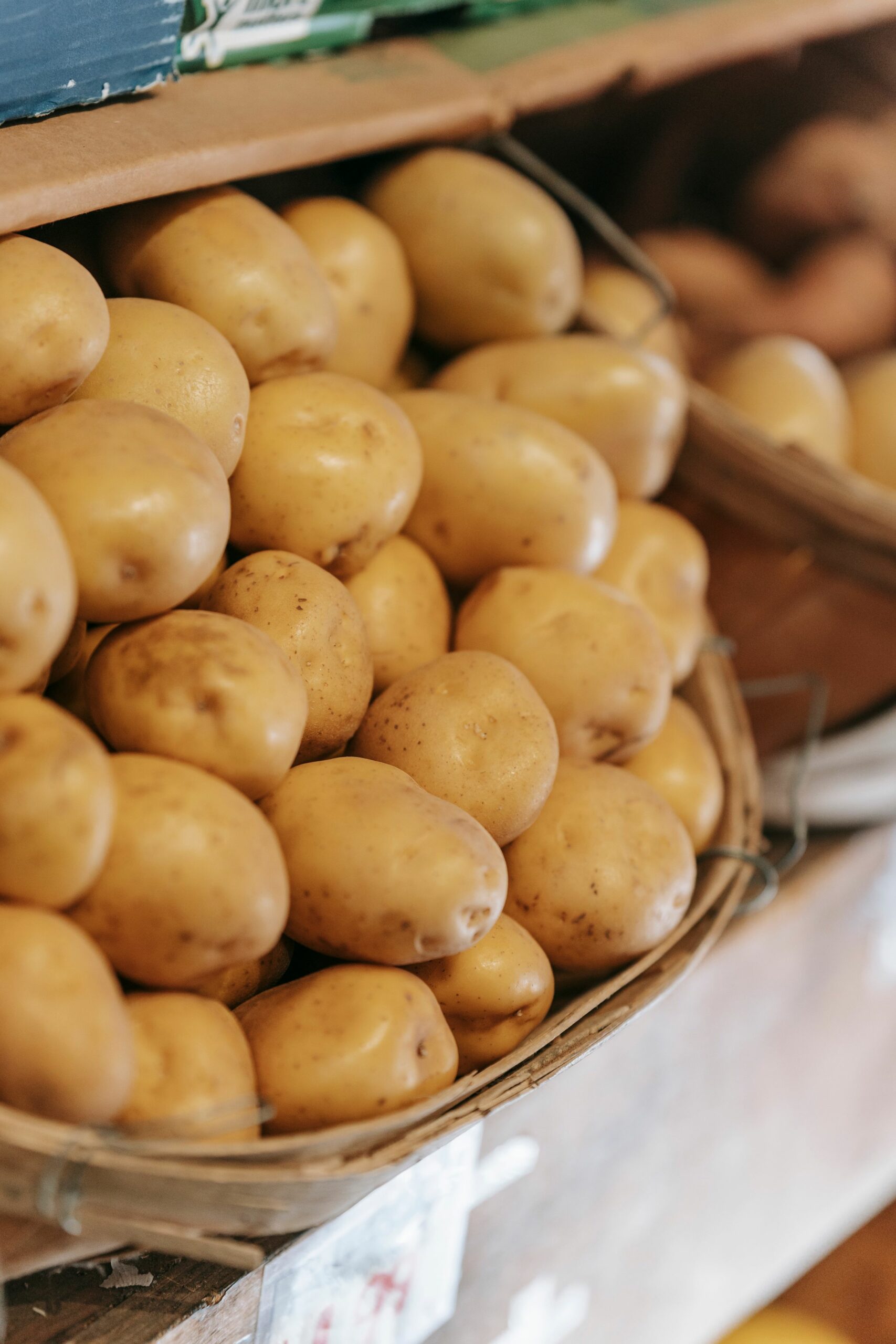
“Potato” sounds like one simple ingredient until two different bags behave completely differently in the kitchen: one produces crisp fries while another stays soft; one holds together in a stew while another breaks down. Much of the explanation lies in the balance of starch, dry matter and water, together with variety, maturity, storage and cooking technique.
You do not need to memorise dozens of cultivar names. It is more useful to understand two broad culinary behaviours: more floury potatoes with greater dry matter, and more waxy or firm potatoes with more water and less starch. Many varieties sit between those extremes.
Why starch changes the result
When a high-starch potato cooks, its cells separate more readily and the texture becomes dry and fluffy. That is valuable for baked potatoes, airy mash and crisp frying.
Lower-starch potatoes keep their structure more effectively. Their texture is often creamy and firm, making them useful when pieces need to remain intact in salads, boiled dishes and stews.
Potato Goodness describes the same distinction: floury potatoes suit dishes that need a fluffy texture, while waxy potatoes are more likely to hold their shape during cooking.
For frying: dry matter and controlled browning
Frying generally benefits from a potato with enough dry matter. A very watery potato takes more energy to crisp and can produce a less fluffy interior. Floury types are therefore a useful starting point.
Technique matters just as much. Evenly sized pieces cook at the same rate. Rinsing cut potatoes can remove some surface starch for certain styles, but the pieces must be dried thoroughly before going into hot oil.
Colour is also feedback. Even golden browning is desirable; taking potatoes to very dark colours does not improve them. Temperature, cut size and sugar content all affect browning speed.
For Spanish tortilla: decide what texture you want
There is no single compulsory potato for tortilla. A firm potato preserves more distinct slices, while a flourier potato breaks more easily and integrates with the egg, creating a creamier structure.
Slice thickness and oil cooking also matter. If you want a very soft tortilla, some broken-down potato can be an advantage. If you prefer clearly recognisable slices, firmer potatoes and gentle handling work better.
For boiling: holding shape matters
For salads, side dishes and recipes where potatoes should remain intact, firmer potatoes are generally useful. Lower-starch types tolerate boiling without collapsing as readily.
Use similarly sized pieces so that some do not overcook while others remain hard. Boiling in the skin can protect structure; peeled cubes require closer timing.
For stews: intact pieces or a thickened broth?
A stew can have two different goals. If you want clearly defined potato cubes, choose a firm potato. If you want starch to help thicken the liquid, a flourier potato or a cutting technique that exposes more starch can help.
This is the logic behind the Spanish practice of chascar potatoes: instead of completing a clean knife cut, the final section is snapped. The rough surface releases more starch into the stew.
For mash: texture comes first
A light mash needs potatoes that break apart easily. Higher dry matter makes it possible to achieve a fluffy result with less manipulation. Very waxy potatoes produce denser mash and can become gluey if overworked.
How you process them matters too. High-speed blending ruptures cells aggressively and releases large amounts of starch. A ricer, food mill or controlled mashing generally produces a better texture.
For roasting: crisp outside, creamy inside
Floury potatoes are particularly good when the goal is a crisp exterior and fluffy centre. Brief parboiling followed by drying and roughening the surface creates more irregular area that can brown in the oven.
Firm potatoes roast well too, but produce a more compact, creamy interior. That is not inferior—simply a different result.
New potatoes and storage potatoes
Technically, a “new potato” is harvested before full maturity rather than being defined by skin colour. It usually contains more moisture and has a thin skin. Its firm texture can be excellent for boiling, sautéing and dishes where shape matters.
More mature storage potatoes develop a stronger skin and, depending on variety, may accumulate more dry matter, opening up different culinary uses.
How to store potatoes at home
The ideal place is dark, cool, dry and ventilated. Light encourages greening and glycoalkaloid formation; heat accelerates sprouting and ageing. A sealed plastic bag that traps moisture is not ideal either.
Check potatoes periodically and remove damaged ones before they affect the rest. Long-term storage right beside onions is also best avoided because both products release moisture and volatile compounds that can accelerate deterioration.
Should potatoes be refrigerated?
Household guidance has changed as evidence has developed. Cold storage can extend shelf life, although it also affects sugar metabolism. For potatoes that will be used fairly soon, a cool dark place outside the refrigerator remains simple and practical. If refrigerated, pay particular attention to browning during frying or roasting and avoid excessive darkening.
What about sprouts and green areas?
A small superficial sprout can be cut away generously if the potato remains firm and otherwise sound. A heavily sprouted, shrivelled, bitter or extensively green potato is not worth rescuing. Greening signals light exposure and may accompany higher concentrations of undesirable natural compounds.
A quick guide by recipe
- Frying: look for higher dry matter and floury behaviour.
- Mash: choose a potato that breaks down easily.
- Roasting: floury for fluffy interiors; firm for a creamier bite.
- Boiling and salads: firm potatoes help pieces remain intact.
- Stews: firm for defined cubes; flourier for more thickening.
- Tortilla: choose based on whether you prefer defined slices or creamy integration.
Do not buy by cultivar name alone
Variety is informative, but harvest maturity and storage also affect behaviour. When a producer gives a recommended culinary use, that information is often more practical than trying to classify every potato by name alone.
Once they arrive home, storage becomes equally important. See How to store vegetables: what goes in the fridge and what does not for a wider produce guide.



 Beef osso buco