When an Iberian ham label says acorn-fed, there is a very specific production stage behind that wording: montanera. It is the period in which pigs destined for the “de bellota” designation use the natural resources of the dehesa, particularly acorns, grass and other forage available in that landscape. It is not simply a matter of feeding a pig a few acorns.
Montanera is linked to regulated management conditions, dates, weights, land and inspection. Understanding it helps explain why “de bellota” is a controlled designation rather than a decorative marketing phrase.
The dehesa is the setting for montanera
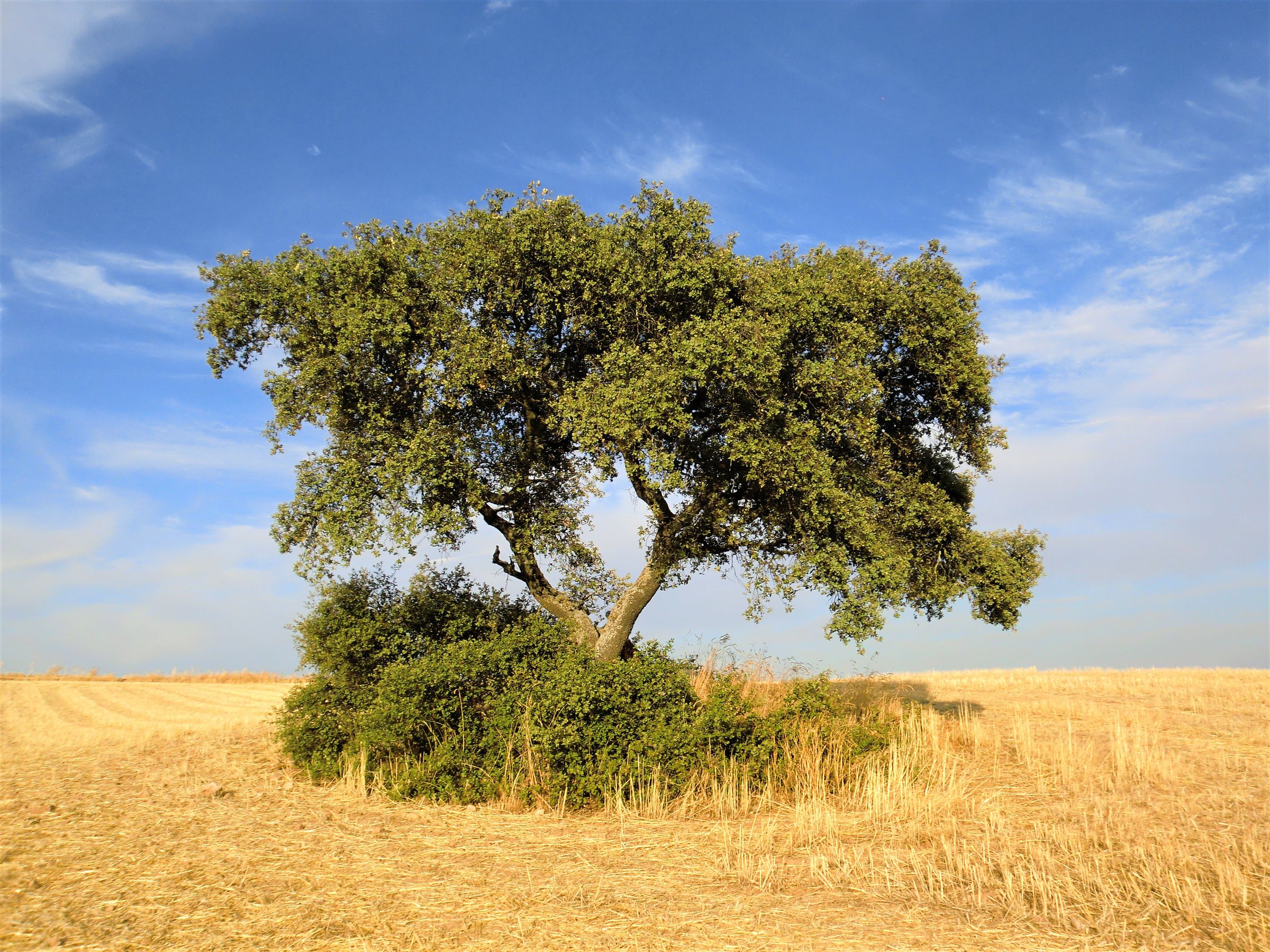
The dehesa is an agroforestry ecosystem where pasture, holm oaks, cork oaks and livestock coexist. During montanera, pigs forage on what that landscape produces. Acorns are a finite natural resource, so the permitted stocking density is related to the useful tree-covered area of each holding.
It is therefore not enough for animals simply to be “outdoors”. Land used for pigs whose products will carry the acorn-fed designation must be recognised as suitable within the official SIGPAC montanera layer.
What the current Iberian quality standard requires
Spain's Royal Decree 4/2014 establishes that animals giving rise to “de bellota” products are slaughtered immediately after the exclusive use of acorns, grass and other natural dehesa resources, without supplementary feed during that finishing stage.
The rule also sets concrete conditions. Entry into montanera must take place between 1 October and 15 December; slaughter between 15 December and 31 March; average live weight on entry between 92 and 115 kg; at least 46 kg of weight gain over more than 60 days in montanera; and a minimum slaughter age of 14 months.
These requirements show why “acorn-fed” describes a verifiable system. The current legal reference is Spain's Royal Decree 4/2014.
What does weight gain in montanera mean?
The required gain is the body weight accumulated during this stage. It helps ensure that a meaningful part of the final finishing process has actually taken place through dehesa grazing and foraging.
This is why montanera cannot be reduced to occasional access to acorns. There must be sufficient time in the system and a body-weight evolution consistent with it.
Every montanera season is different
Acorn production varies with weather, tree condition and the characteristics of each holding. The resource is not identical every year. Permitted animal numbers can therefore be adjusted downward according to actual acorn availability.
For consumers, this explains why dehesa-based production has natural limits. It cannot expand indefinitely without considering what the land can genuinely support.
Montanera does not automatically mean 100% Iberian
This is a common misunderstanding. Montanera describes feeding and management; Iberian percentage describes breed. They are separate parts of the sales designation. A product can be “de bellota 100% ibérico” or “de bellota ibérico” with another legally permitted Iberian breed percentage.
Always read the full designation and the seal colour. Our guide to black, red, green and white Iberian seals explains how breed and feeding categories work together.
Black and red seals
The black seal identifies acorn-fed 100% Iberian hams and shoulders. The red seal identifies acorn-fed Iberian products that are not 100% Iberian. In both cases, the “de bellota” part implies compliance with the corresponding regulated management system and therefore montanera.
The expression “pata negra” is legally reserved for “de bellota 100% ibérico”. That restriction prevents a historically loose phrase from being applied to any Iberian product.
Do the pigs eat only acorns?
During the final stage that qualifies for the “de bellota” designation, the regulation refers to exclusive use of acorns, grass and other natural dehesa resources without supplementary feed. The animal's life begins long before montanera, of course, and earlier feeding belongs to previous production stages.
It is therefore more accurate to say the pig finishes in montanera under these conditions than to imagine that it eats nothing but acorns throughout its life.
Movement, genetics and feeding work together
The final character of a ham never comes from one variable alone. Iberian genetics, age, extensive management, movement, diet, fat composition, salting and the long curing period all interact.
Montanera is fundamental to acorn-fed products, but curing remains crucial. Two correctly classified hams can still taste different because of size, processing time, cellar conditions and individual characteristics.
What should a buyer look for?
Rather than relying on pictures of oak trees or loosely used words such as “dehesa”, read the full legal designation and check the seal colour. Acorn-fed 100% Iberian ham should be consistent with a black seal; an acorn-fed Iberian ham of a lower breed percentage uses red.
“Montanera” has value precisely because its use is restricted to qualifying acorn-fed products. It is not an extra category above “de bellota”; it describes the production system behind that designation.
Why montanera knowledge improves buying decisions
Once you understand the process, products become easier to compare. Instead of assuming that every Iberian ham follows the same system, you can separate breed, feeding and management. Labels, seals and price differences then become much more meaningful.
For the next step, read what “acorn-fed 100% Iberian ham” really means.
Related hams and shoulders
-
EMDO Selection SaleSale!
 Select options
This product has multiple variants. The options may be chosen on the product page
Select options
This product has multiple variants. The options may be chosen on the product page
-
EMDO Selection SaleSale!Select options
This product has multiple variants. The options may be chosen on the product page
-
EMDO Selection SaleSale!Select options
This product has multiple variants. The options may be chosen on the product page
-
EMDO Selection SaleSale!Select options
This product has multiple variants. The options may be chosen on the product page
-
Sale!Select options
This product has multiple variants. The options may be chosen on the product page