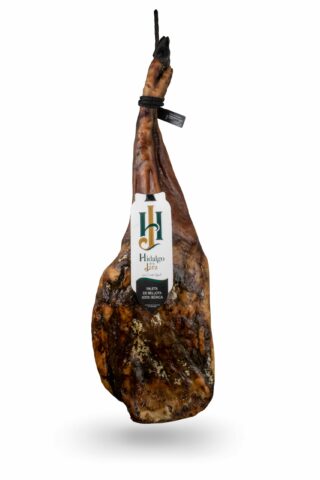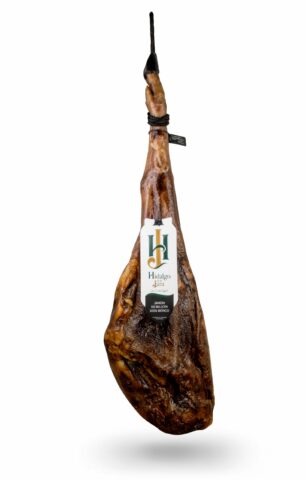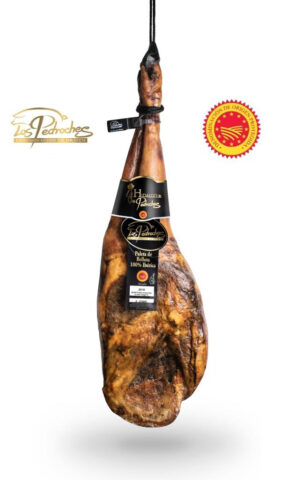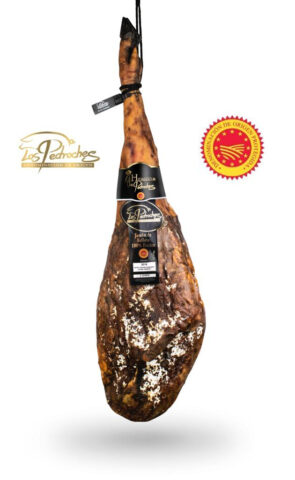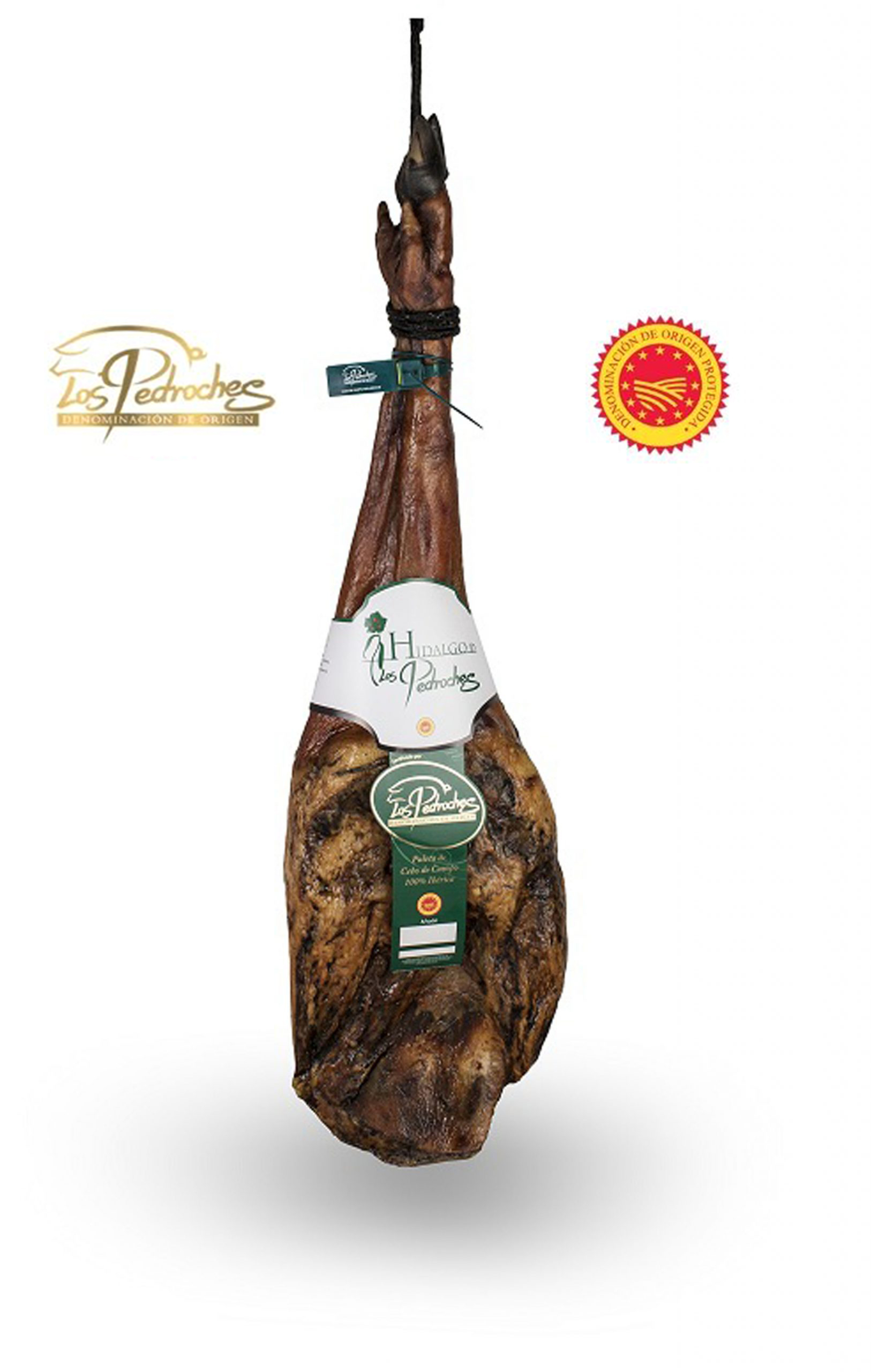
For decades, the Spanish expression “pata negra” has been used colloquially as shorthand for exceptional Iberian ham. That association created one of the product's most persistent misunderstandings: seeing a black hoof and assuming that the ham must be top-grade Iberian. It does not work that way.
Hoof colour is a physical characteristic. It can be visually interesting, but it does not by itself certify breed, Iberian percentage, feeding system or commercial category. A careful buyer should read the regulated product information rather than turning an anatomical trait into a quality label.
Black hoof and “pata negra” are not the same thing
Separate two concepts that sound similar:
- Black hoof: literally describes the visible colour of the hoof.
- “Pata negra” on labelling: a term whose use is restricted by Spain's Iberian Quality Standard.
Royal Decree 4/2014 reserves the term “pata negra” exclusively for the designation “de bellota 100% ibérico” when the legal requirements are met. A producer cannot therefore use those words as a lawful marketing description for any ham that merely happens to have a dark hoof.
Can a black-hoofed ham be non-Iberian?
Yes. Dark hoof pigmentation is not exclusive to Iberian pigs. Animals from other breeds or crosses can also have dark hooves. Looking at the end of the leg therefore cannot establish the racial origin of the ham.
This is the key principle: a visual characteristic shared by different animals cannot replace traceability and certification.
Can an Iberian pig have a hoof that is not intensely black?
Yes. The Iberian genetic group includes varieties and natural differences in pigmentation. Not every animal expresses exactly the same skin or hoof colour. Treating anything short of jet black as proof that a ham is non-Iberian would also be incorrect.
This is why the standard does not classify legs simply by looking at hoof colour. Breed is established through the relevant control system and required commercial information.
The most common mistake: confusing a black hoof with a black seal
They are completely different. The hoof is part of the animal. The coloured seal is the identification used within the Iberian quality system.
A black seal identifies 100% Iberian acorn-fed ham or shoulder. A naturally black hoof does not turn a red, green or white seal into a black one. There is no reason to guess category from pigmentation when regulated information is available.
What should you check instead?
Start with the full sales designation. It combines essential information about feeding and breed. Then check the stated Iberian percentage where applicable, the coloured seal and the rest of the label.
A useful buying sequence is:
- What is the complete sales designation?
- What Iberian breed percentage is stated?
- Which official colour seal is attached?
- Who certifies and produces the ham?
- Only then use morphology and appearance as additional context.
What the colour seals actually mean
Without turning this into another full classification guide, the basic map is worth remembering:
- Black: 100% Iberian acorn-fed.
- Red: acorn-fed Iberian ham with an allowed breed percentage below 100%.
- Green: Iberian cebo de campo.
- White: Iberian cebo.
The exact breed percentage must be read from the label. Seal colour has a regulated meaning; natural hoof colour does not.
Where did the expression “pata negra” come from?
The historical association is understandable. Many Iberian pigs have dark skin and hooves, so consumers began using “pata negra” as a quick expression for hams considered especially fine. In Spanish the phrase eventually became a general colloquial way of describing something as top class.
The problem begins when a popular expression is treated as a technical specification. Precisely because the phrase gained so much commercial power, modern Spanish rules restrict its use in labelling and advertising.
Does “pata negra” simply mean 100% Iberian?
No. Breed percentage alone is not enough. Under the Iberian Quality Standard, the reserved designation is 100% Iberian acorn-fed. It combines the 100% breed designation with the bellota feeding category.
A 100% Iberian product from another feeding category does not become legally “pata negra” merely because of its breed or hoof colour.
Does a black hoof indicate better flavour?
No reliable sensory ranking can be made from that characteristic alone. Ham aroma, flavour, fat infiltration and texture depend on many factors: genetics, feeding, husbandry, weight, salting, drying, maturation and curing time, among others.
Hoof pigmentation cannot summarise the entire production process. It may be part of the traditional appearance of many pieces, but it is not a flavour scale.
Morphology is context, not certification
Experienced ham buyers may observe leg length, shank fineness, overall shape, exterior fat and other traits. Such observations can add context, but they should remain product observation, not a replacement for traceability.
Consumers should not need to become anatomists to buy confidently. Regulated information exists precisely so authenticity does not depend on visually interpreting a leg.
What if you buy sliced ham?
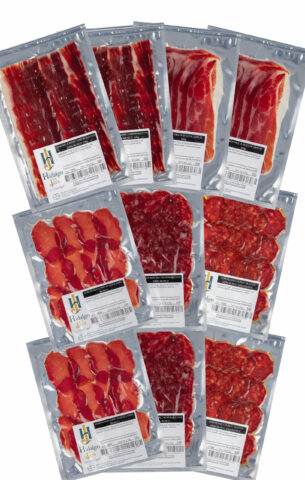
A vacuum pack has no hoof to inspect, which shows why hoof colour cannot be the basis of category. Sliced products still need enough labelling information to tell you what you are buying.
The absence of a whole leg does not remove the essential data. It encourages you to focus on what actually matters: origin, commercial category and traceability.
How to read marketing language critically
If a website, gift box or advertisement uses the words “pata negra”, do not stop at the phrase. Check that the actual product designation corresponds to 100% Iberian acorn-fed. A photograph of a dark hoof alone proves nothing.
The best defence against ambiguous marketing is knowing which information has legal meaning and which information is merely visual.
One sentence that prevents the confusion
Black hoof is colour; black seal is category; “pata negra” is a legally reserved term. All three can coincide on a 100% Iberian acorn-fed ham, but they are not interchangeable concepts.
What about breed percentage?
Iberian percentage is another fact that must be read rather than guessed. A hoof cannot accurately distinguish 50%, 75% and 100% Iberian heritage. Use the product label and certification rather than morphology.
If you want the top legal category
Do not begin by searching for the darkest hoof. Look for the designation jamón de bellota 100% ibérico, confirm the black seal and read the complete labelling and producer information. Only after that should format, size, curing and personal preference enter the decision.
Frequently asked questions
Does every Iberian ham have a black hoof?
No. Pigmentation varies and should not be treated as an absolute breed test.
Is every black-hoofed ham Iberian?
No. Other breeds or crosses can have dark hooves, so colour does not certify breed.
What does “pata negra” legally mean in Spain?
The Iberian Quality Standard reserves the term for the 100% Iberian acorn-fed designation that meets its requirements.
Are a black hoof and a black seal the same thing?
No. The hoof is anatomical; the black seal is a regulated identifier for 100% Iberian acorn-fed ham or shoulder.
-
EMDO Selection SaleSale!
 Select options
This product has multiple variants. The options may be chosen on the product page
Select options
This product has multiple variants. The options may be chosen on the product page
-
EMDO Selection SaleSale!Select options
This product has multiple variants. The options may be chosen on the product page
-
EMDO Selection SaleSale!Select options
This product has multiple variants. The options may be chosen on the product page
-
EMDO Selection SaleSale!Select options
This product has multiple variants. The options may be chosen on the product page
-
Sale!Select options
This product has multiple variants. The options may be chosen on the product page