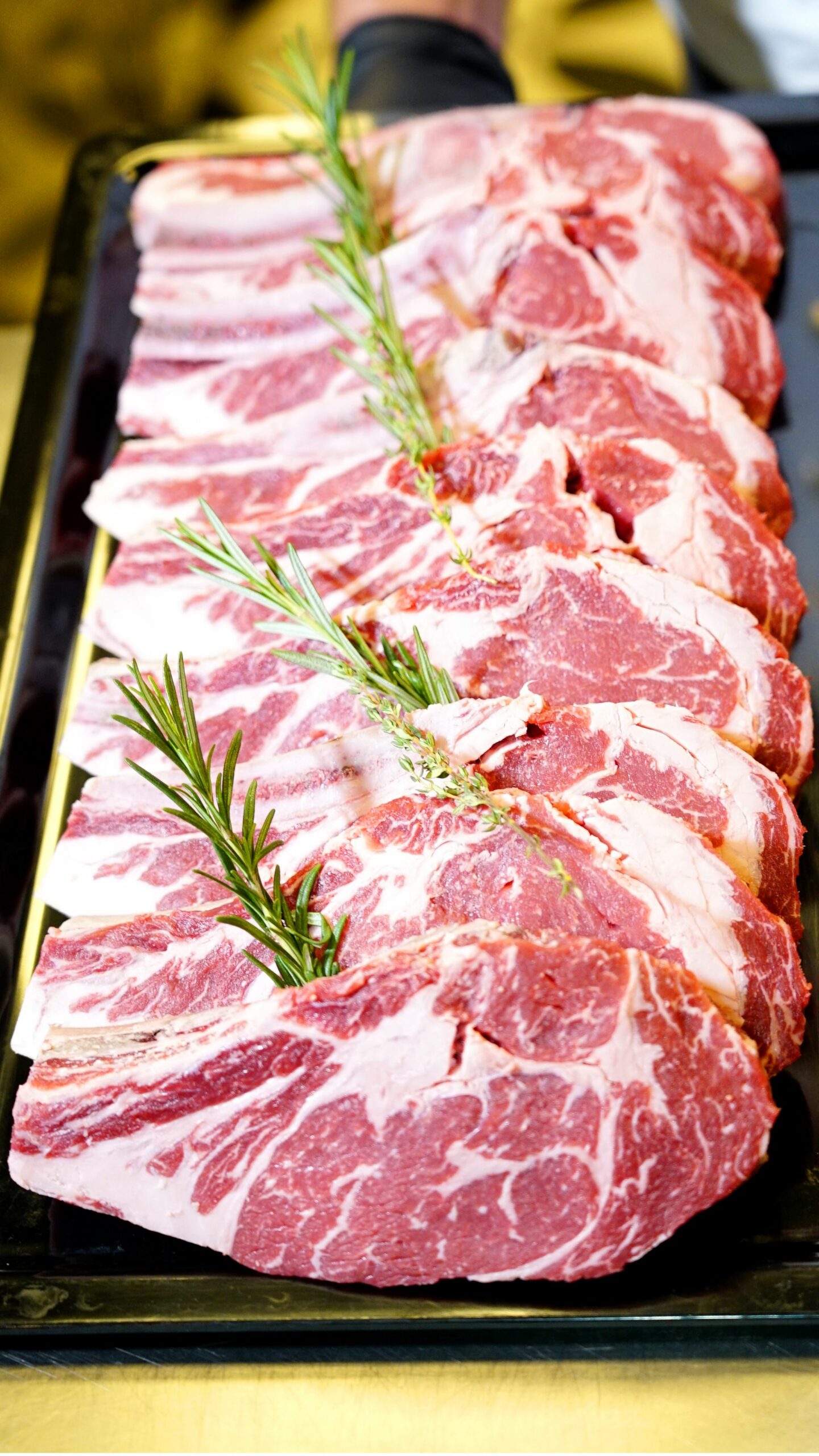
A beef steak can go from juicy to dry in less than a minute. The problem is rarely a complicated recipe: it is usually thickness, pan temperature and cooking longer than the piece needs. Everyday beef steaks are much simpler than a thick rib steak, but they also give you less room for error.
The goal is to brown the outside without keeping the centre over heat for too long. The thinner the steak, the smaller that window becomes. Prepare everything before the pan gets hot.
Start with thickness, not the clock
Two steaks of the same weight can cook very differently if one is broad and thin while the other is smaller and thicker. Minutes are only a guide. A steak under one centimetre thick can cook in seconds per side; a 1.5-2 cm steak gives you more time to brown the exterior and control the centre.
If you have bought a pack containing several steaks, sort them by thickness before cooking. That prevents you from applying one timing to every piece and drying out the thin ones while thicker steaks remain underdone.
Do steaks need to sit at room temperature first?
There is no need to leave a thin steak on the counter for an hour. Its centre changes temperature quickly during cooking. Take out the amount you are about to use, organise the rest of the meal and avoid leaving raw meat unnecessarily at room temperature.
What does help is drying the surface thoroughly with kitchen paper. Surface water must evaporate before browning can begin, so a wet steak is harder to sear efficiently.
Should you salt before or after cooking?
For a thin steak going straight into the pan, salting immediately before cooking works well. Slightly thicker steaks can also be salted earlier and kept refrigerated, allowing the seasoning to distribute more evenly. The awkward timing is salting and then leaving the steak for only a few minutes, when moisture can appear on the surface just as you want it dry.
A good steak does not need an acidic marinade to become tender. Long acidic marinades can alter the outer texture, but they cannot compensate for overcooking.
Pan or griddle: heat retention matters most
A heavy pan or solid griddle makes browning easier because it loses less heat when the meat goes on. Preheat the surface before adding the steaks and use a small amount of high-heat cooking fat if required. Crowding several steaks into a small pan cools it down and encourages steaming instead of searing.
Cook in batches when necessary. Four steaks cooked in two proper batches are usually better than four packed tightly into one pan.
Approximate cooking times for beef steaks
There is no universal timing, but this gives you a starting point for a very hot pan or griddle:
| Approximate thickness | Initial guide | What to watch |
|---|---|---|
| 5-8 mm | 30-60 seconds per side | They overcook quickly; look for surface colour and remove early. |
| 1-1.5 cm | 1-2 minutes per side | Adjust for pan power and desired doneness. |
| 2 cm | 2-3 minutes per side | An instant-read thermometer becomes more useful. |
These are approximate ranges, not guarantees. Pan material, burner power, starting meat temperature and steak shape all change the result.
How can you check doneness without cutting the steak?
Cutting into the meat during cooking releases juices and still gives you an imprecise measure. For steaks thick enough to probe, an instant-read thermometer is the most reliable tool. Insert it from the side so the tip reaches the centre.
Our beef doneness and temperature guide explains the different ranges and how to measure them. With extremely thin steaks, a probe can be difficult to position accurately, so timing and visual control become more practical.
Do not keep pressing the steak
Repeatedly pushing a steak against the pan with a spatula does not make it cook better. It forces moisture out and can make a thin piece drier. Put the meat onto the hot surface, let browning develop and then turn it.
You also do not have to follow a strict “turn only once” rule. One or two turns work for thin steaks; more frequent turning can produce more even heating in a thicker piece. What matters is controlling the centre.
What about butter, garlic and herbs?
They are useful for flavour, but add butter near the end so it does not burn during strong preheating. Lower the heat slightly, add butter, garlic or rosemary and baste for the final part of cooking.
With a thin steak this step needs to be brief. Two extra minutes of basting can turn a perfectly cooked steak into a dry one.
Resting time should match the size
A thick cut benefits from a more noticeable rest; a very thin steak does not need ten minutes because it will simply become cold. Give it a short pause while you finish the next batch or plate the meal. A thicker steak can rest for a few minutes while its temperature stabilises away from direct heat.
For more detail, see our guide explaining why beef is rested after cooking.
Why can a good steak still feel tough?
Three causes are common. The first is overcooking: as the meat loses more moisture, it becomes drier and firmer. The second is choosing a naturally tougher cut for a very fast cooking method. The third is slicing in the wrong direction when the grain is clearly visible.
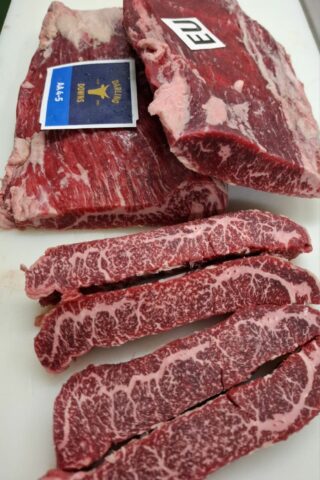
Where you can see long muscle fibres, cutting across the grain shortens those fibres and can make each bite feel more tender.
Common mistakes when cooking thin steaks
- Pan not hot enough: browning is weak and the centre spends too long cooking.
- Overcrowding: the cooking surface loses heat.
- Wet surface: excess moisture delays searing.
- Using one timing for every thickness: thin pieces finish first.
- Repeatedly cutting to check: you lose moisture without gaining accuracy.
- Preparing side dishes after the steak goes in: on a thin steak, thirty seconds matters.
How to cook several steaks for a family
Sort pieces by thickness and cook them in separate batches. Keep a clean plate ready for cooked meat and do not reuse the plate that held raw beef unless it has been thoroughly washed. If different people want different doneness levels, decide which steak belongs to whom before cooking starts.
The best method is the one that respects the meat
With good fresh beef, the method can remain simple: dry the surface, season, use a properly heated pan, watch the timing and remove the steak before it goes too far. Butter, herbs and sauces are optional. Overcooking is the mistake that is hardest to reverse.
Fresh steaks and meat available from the shop
-
Sale!
 Select options
This product has multiple variants. The options may be chosen on the product page
Select options
This product has multiple variants. The options may be chosen on the product page




 100% mature beef burgers – gluten-free (2)