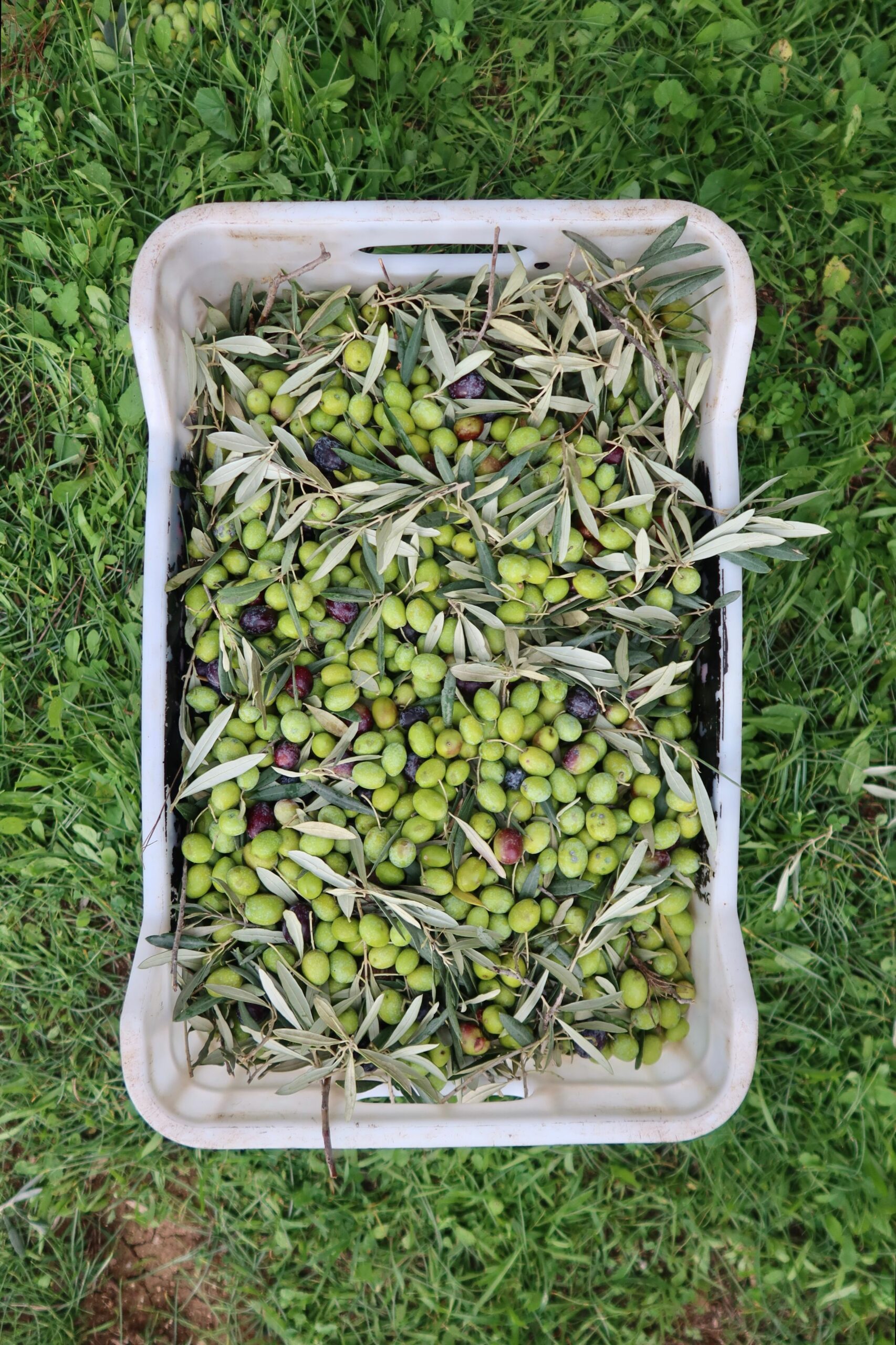
Olive oil tasting uses vocabulary that can sound unusual outside the sector. One of the most important terms is fruity. It does not mean that fruit has been added or that the oil should taste like sweet juice. In sensory analysis, fruitiness is the set of characteristic olfactory sensations associated with oil made from sound, fresh olives.
That fruitiness may show a more green or more ripe character. Understanding the difference helps you read tasting notes, choose EVOO for food and describe what you actually perceive more precisely.
What the International Olive Council means by fruitiness
The International Olive Council's organoleptic assessment method lists fruitiness as one of the key positive attributes of virgin olive oil, alongside bitterness and pungency. Official profile sheets also distinguish green and ripe fruitiness.
Professional classification is not simply a question of whether an oil smells pleasant. Trained panels measure attributes and check for defects. The International Olive Council publishes the recognised sensory methods.
What is green fruitiness?
A green-fruity oil evokes olives harvested at a less mature stage and may suggest fresh vegetal aromas: olive leaf, cut grass, tomato plant, artichoke, green almond, green apple or green banana, among many possible descriptors.
No oil needs to contain every descriptor. There is no compulsory checklist. The category describes an overall aromatic family reminiscent of fresh green fruit and vegetation.
What is ripe fruitiness?
Ripe fruitiness recalls olives and fruits that have progressed further in ripening. Aromas can feel softer, rounder or sweeter, suggesting ripe apple, ripe banana, nuts or other developed fruit notes depending on variety and origin.
“Ripe” does not mean “rancid”. Rancidity is an oxidation defect; ripe fruitiness is a positive profile from sound olives. Confusing the two leads to unfair judgement of oils that simply express a different style.
Is green fruitiness always better?
No. Green and early-harvest oils receive a great deal of attention because they can be intense, complex and distinctive, but a well-made ripe-fruity EVOO can also be excellent. Extra virgin quality requires the absence of sensory defects and compliance with chemical criteria; it does not require every oil to be green.
Preference depends on food and personal taste. A robust green oil can be outstanding on bread, tomato or grilled vegetables yet feel too dominant to someone looking for a discreet oil in a delicate sauce.
Olive maturity and aroma
As olives mature, pigments, volatile compounds and other fruit characteristics change. This influences aroma and the balance of bitterness and pungency. Variety, climate, irrigation, soil, harvest date and extraction also interact.
Avoid rigid equations such as “green always means very peppery” or “ripe always means mild”. These can be tendencies, not universal rules.
How to recognise the difference at home
Pour a small amount of EVOO into a clean, odour-free glass. Cover it with your hand, warm gently for a few seconds and smell with short inhalations. Instead of asking only whether you like it, describe it: leaf, grass, tomato plant, artichoke or green apple? Or softer ripe apple, banana and developed fruit notes?
Then taste a small amount and let it spread through the mouth. Notice the relationship between aroma, bitterness and pungency. Our guide to tasting EVOO at home explains the full method.
Colour does not determine green fruitiness
An oil may look strongly green because of its pigments without being the most aromatically intense. Professional tasting uses coloured glasses specifically to reduce visual bias.
Green fruitiness is an aroma and sensory judgement, not something established by looking at the oil against the light.
Bitterness and pungency are separate attributes
Green-fruity oils often show noticeable bitterness and pungency, but these are recorded separately in sensory assessment. A green fruitiness can be delicate or robust, and ripe oils can also vary in intensity.
Bitterness is perceived in the mouth and pungency can become particularly clear in the throat. Neither should be confused with chemical acidity. See what olive oil acidity really means.
Which profile works with which food?
A robust green-fruity oil can work beautifully on toast, tomato, assertive salads, grilled vegetables, pulses or beef when you want the oil to be noticeable. A rounder ripe profile can suit delicate sauces, mild foods and recipes where integration matters more than impact.
These are guidelines rather than rules. Balance is what matters: a delicate dish can handle a powerful oil in a small dose, while an intense dish may benefit from a gentler oil.
Variety matters, but does not decide everything
Picual, Arbequina, Lechín and other cultivars have recognisable tendencies. Picual is often associated with more noticeable bitterness and pungency, while Arbequina is commonly perceived as gentler and sweeter. Yet harvest timing can radically change the result within the same variety.
A varietal name is therefore a clue, not a guarantee. Our guide to Picual, Arbequina and Lechín compares their profiles in more detail.
A simple exercise that builds tasting skill
Compare two oils side by side in identical glasses. Taste them first without food and write down three aromas for each. Do not worry about finding a single “correct” answer; look for differences you can recognise repeatedly.
After several comparisons, aromatic families become easier to identify. Good tasting is not about inventing twenty descriptors. It is about training sensory memory to distinguish styles consistently.
Related extra virgin olive oils
-
EMDO Selection Sale
-
EMDO Selection
-
EMDO Selection


 Pinto Beans