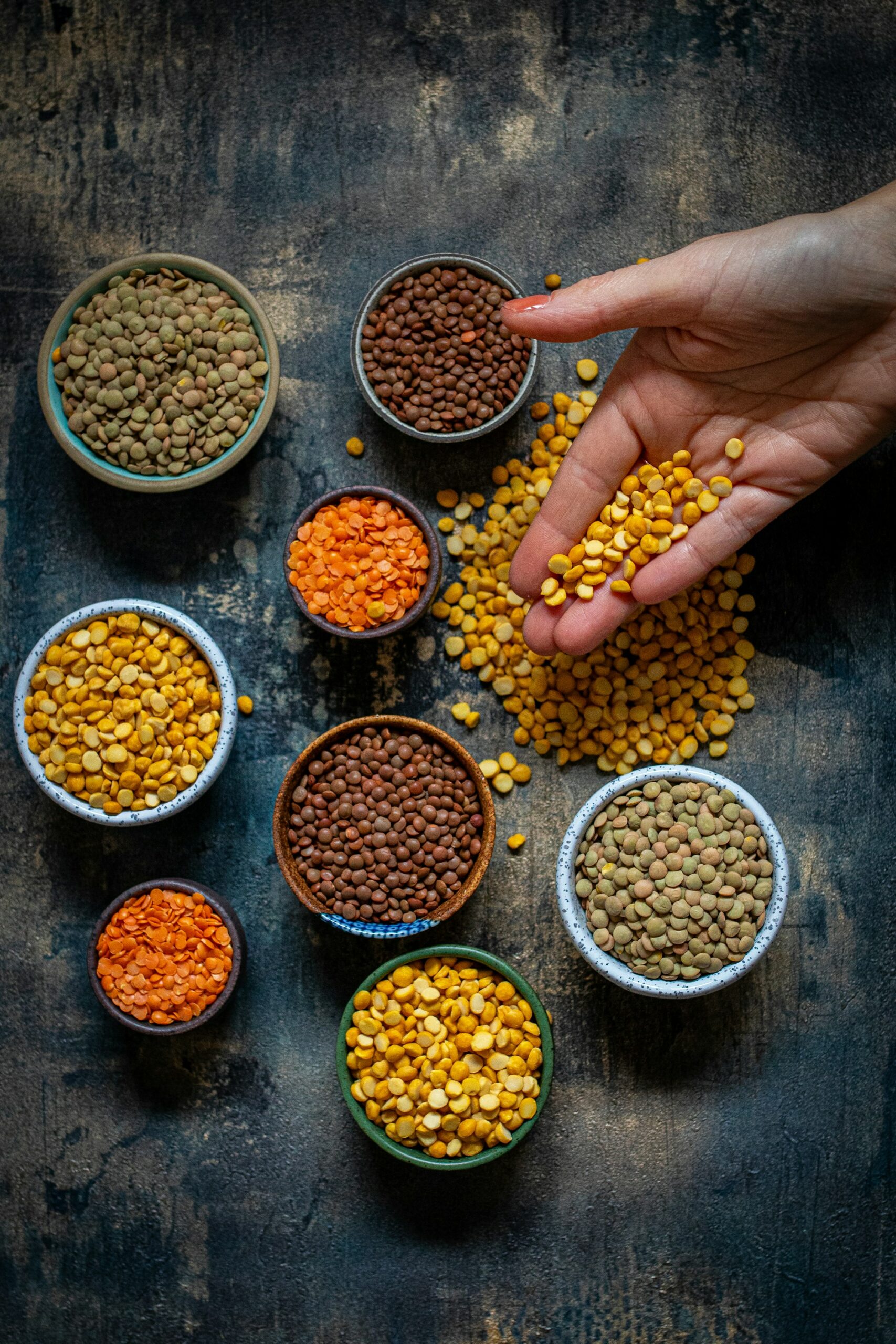
Dried pulses are among the most useful foods in the pantry: they keep well, make meal planning easy and, when cooked carefully, offer remarkably different textures from one variety to another. Because they look simple, we sometimes attribute every result to the recipe and forget how much the seed itself contributes.
Two packets of white beans can need different cooking times; one chickpea can become creamy while another keeps a firm centre; some lentils hold their shape beautifully while others open quickly. Variety, size, age, storage, water composition and technique all sit behind those differences.
What happens during soaking?
A dried pulse contains little water. During soaking it begins to rehydrate: water crosses the seed coat and gradually reaches the centre. This reduces the difference between the outside and inside before cooking begins and can therefore support more even softening.
Chickpeas and many beans generally benefit from a long soak. Small lentils can often be cooked without it or with only brief soaking, depending on variety and recipe. There is no single rule because “lentil” and “bean” each describe many different structures.
Soaking also provides a convenient moment to inspect the pulses and remove damaged seeds. Use a container with plenty of space because many pulses increase substantially in volume as they hydrate.
The age of the seed explains many mysteries
During prolonged storage some pulses develop what food science calls hard-to-cook characteristics and may need much longer to soften. This does not mean that every pulse from an earlier harvest is poor, but it does explain why a packet stored for a long time can behave differently.
Good stock rotation and dry, stable storage conditions help. At home, protect dried pulses from moisture, excessive heat and insects, using clean containers that close properly.
Water cooks too
Mineral composition can influence the softening of plant cell walls. Hard water containing higher levels of certain minerals can make some pulses take longer to become tender. This is one reason why the same recipe can produce different cooking times in two cities.
If a variety repeatedly takes far longer than expected, consider not only heat and timing but also the age of the pulses and the water being used.
Chickpeas: a tender centre with structure outside
In a well-cooked chickpea we normally want an integrated skin and a soft centre without a chalky or hard core. Adequate soaking helps reach that point. During cooking, a controlled simmer is usually more useful than violent agitation that unnecessarily damages the skins.
Seed size influences time but does not determine quality on its own. Small and large varieties can both be excellent. Relative uniformity within a batch is useful because the seeds then progress at a similar rate.
Lentils: why they are so useful for unplanned meals
Many lentils have thin coats and small size, allowing water and heat to reach the centre quickly. Some varieties can therefore go straight into the pot and solve a meal without planning the day before.
That speed also requires attention. If the goal is a lentil that keeps its shape for a salad, choose an appropriate variety and watch the cooking point. For a stew where body and thickening are desirable, some breakdown can be exactly what the dish needs.
Beans: far too diverse for one generic category
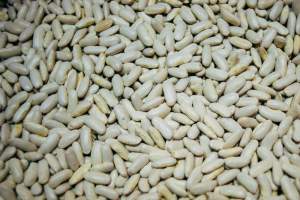
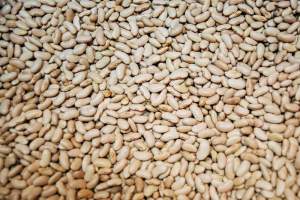
White, pinto, red and black beans, giant beans, fabes and many local varieties differ in size, skin and starch characteristics. That diversity explains why some become especially creamy while others maintain their structure.
When a product page identifies variety and origin, that information is far more useful than colour alone. It helps reproduce recipes consistently and explains why a specific bean can be particularly well suited to a particular stew.
Salt and acidic ingredients: separating myth from useful technique
For years people have repeated that salt always “hardens” beans. Cooking practice is more nuanced, and many methods include salt during cooking without preventing softening. Strongly acidic environments, however, can clearly slow softening.
Tomato, vinegar, wine and other acidic ingredients can be added later if very tender pulses are the objective and cooking is proving slow. This is not a prohibition; it is a tool for controlling texture. In a familiar recipe, timing can be adjusted to balance both flavour and tenderness.
Conventional pot or pressure cooker?
A pressure cooker greatly reduces time by cooking above the normal boiling temperature. It is excellent for chickpeas and beans once the timing is understood, although it provides less opportunity to check texture during cooking. A conventional pot makes observation and adjustment easier.
Neither method is inherently superior. Pressure offers efficiency; slower cooking offers visual control. In both cases follow equipment safety instructions and adapt timing to the actual variety being cooked.
What to look for when buying dried pulses
- Variety and origin where available.
- Reasonably uniform, intact seeds.
- No moisture, excessive dust or signs of pests.
- Packaging that protects the product properly.
- Producer-specific instructions where a variety needs them.
Good pulses do not need a long list of adjectives. They need identity, correct storage and cooking that respects their individual behaviour. See the varieties currently available in our pulse selection.

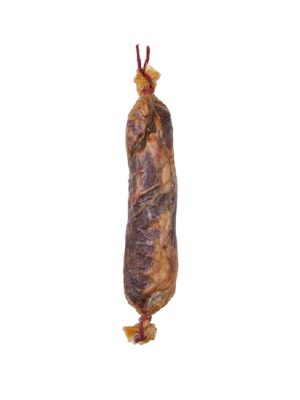 100% Iberian acorn-fed lomito (cured presa loin)
 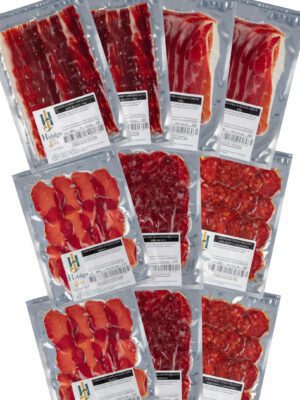 Tasting pack of 100% Iberian acorn (2x ham, 2x shoulder ham, 2x cured loin, 2x salchichón, 2x chorizo)