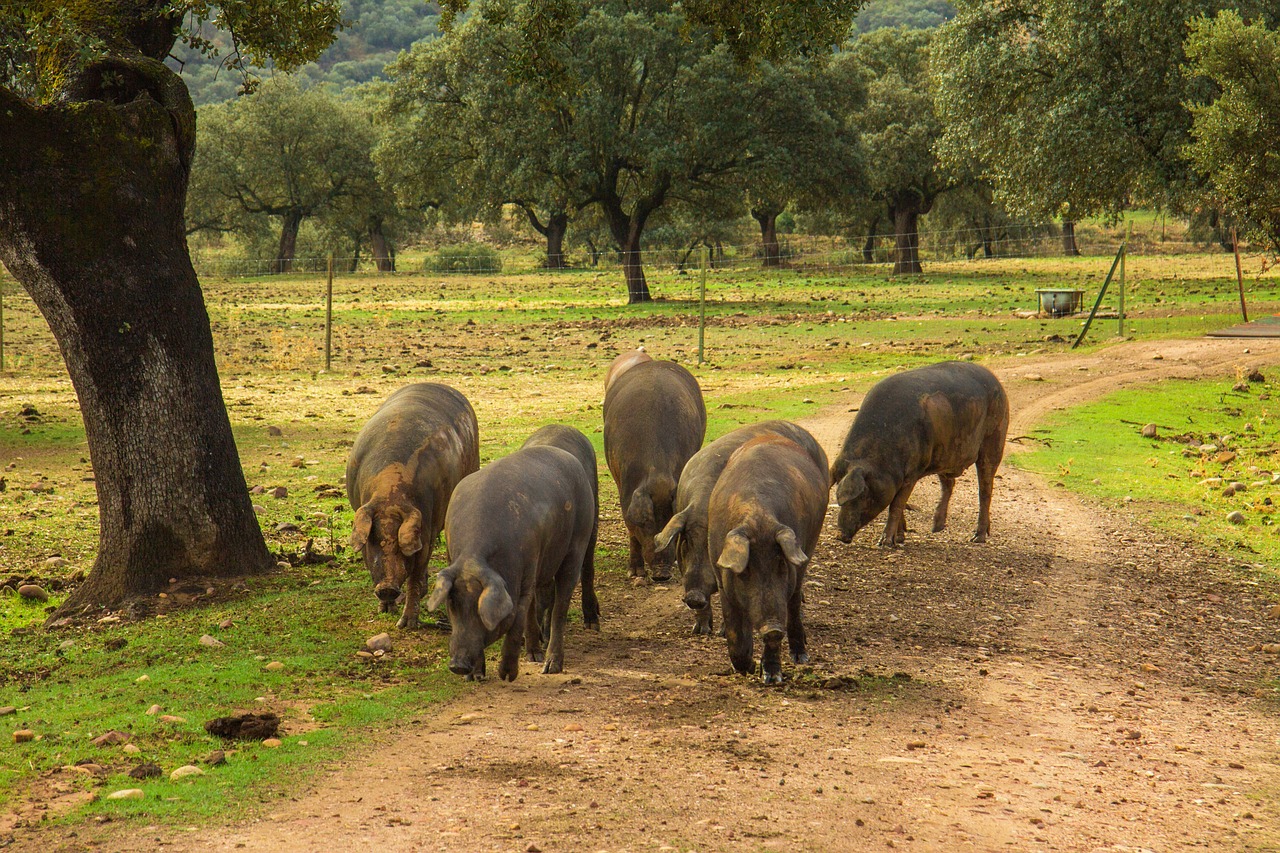
Spain has four protected designations of origin directly associated with Iberian ham and shoulder: Guijuelo, Jabugo, Dehesa de Extremadura and Los Pedroches. Each protects a geographical origin and a product specification, but the seal does not make every certified ham identical.
A designation of origin, a production area or a curing tradition provides context but does not replace reading the whole product. With Iberian ham it helps to separate three layers: geographical certification where applicable, the legal breed and feeding category, and the producer’s decisions during salting, drying and maturation. Keeping these layers separate prevents shortcuts such as assuming that a famous place name always means acorn-fed or 100% Iberian.
Quick summary
| What it protects | Geographical origin, processing and requirements defined in each PDO specification. |
|---|---|
| Main PDOs | Guijuelo, Jabugo, Dehesa de Extremadura and Los Pedroches. |
| It does not replace | The Iberian breed percentage and feeding category required by the Iberian quality standard. |
| What to check | PDO name, control label or seal and the mandatory product information. |
What a PDO actually means for Iberian ham
A PDO is not a brand or merely a place name. It is a registered geographical quality scheme governed by a product specification that defines the area and the conditions certified products must meet. The regulatory body and control system supervise registered operators and use of the protected name.
The four PDOs are not four quality levels
There is no official ranking in which one PDO is automatically better than another. Territory, production tradition, environmental conditions and some specification requirements differ. Hams within the same PDO can also differ by commercial category, producer, curing time, format and sensory profile.
How PDO information works with Iberian colour seals
The PDO is mainly about geographical origin and its specification; black, red, green or white seals identify the legal Iberian category according to breed and feeding. Reading both layers is the safest way to understand a ham. A place name alone never proves that a product is 100% Iberian or acorn-fed.
What territory contributes
Long curing depends on temperature, humidity, ventilation, drying-room management and cellar ageing. Territory therefore contributes to the identity of each PDO, but the result cannot be reduced to climate alone. Raw material and producer expertise remain decisive.
Map of the four PDOs: use this page as an index
A general guide should not repeat four specialist articles. Its job is to explain the map. Guijuelo, Jabugo, Dehesa de Extremadura and Los Pedroches protect different geographical names under their own specifications and control systems. None is simply a higher “quality level” than another.
| PDO | What the specialist guide covers |
|---|---|
| Guijuelo | Processing area, climate and certification |
| Jabugo | Mountain territory, dehesa, processing and the protected name |
| Dehesa de Extremadura | Extremaduran territory, controls and label reading |
| Los Pedroches | The Córdoba territory and the designation requirements |
Continue with Guijuelo PDO, Jabugo PDO, Dehesa de Extremadura PDO or Los Pedroches PDO.
When to look at the PDO and when to look at the seal
The PDO concerns geographical certification and a product specification; the Iberian colour seal classifies another dimension of the product. Both pieces of information can matter when buying. For the seal system, use our Iberian ham colour-seal guide.
What this index deliberately does not answer
It does not rank PDOs by taste, and it does not replace the dedicated territory pages. Nor does it imply that every ham made in a province belongs to a PDO. Its editorial role is to answer the broad designation query and then route readers to the specific entity they want to investigate.
Sources and references
This guide prioritises institutional sources and designation bodies. Current product specifications are the reference point when a specific certification requirement needs to be checked.

 Solomillo de wagyu australiano bms 6-7 (200gr. apróx.)