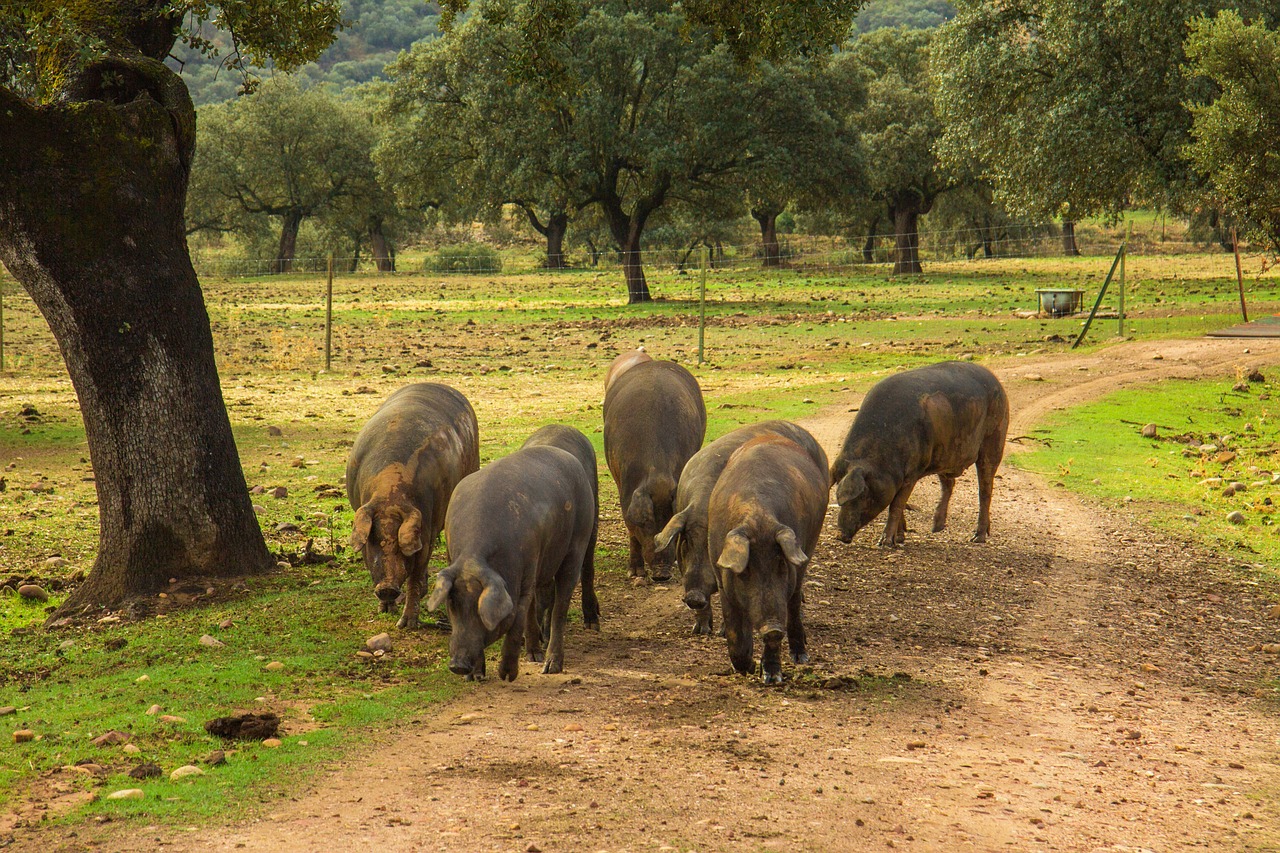
Jabugo is one of the best-known names associated with Iberian ham, which makes it especially important to distinguish casual use of the name from official Jabugo PDO certification. The designation has its own specification, geographical scope and control system.
A designation of origin, a production area or a curing tradition provides context but does not replace reading the whole product. With Iberian ham it helps to separate three layers: geographical certification where applicable, the legal breed and feeding category, and the producer’s decisions during salting, drying and maturation. Keeping these layers separate prevents shortcuts such as assuming that a famous place name always means acorn-fed or 100% Iberian.
Quick summary
| Scheme | Jabugo Protected Designation of Origin. |
|---|---|
| Regulatory body | Based in Jabugo, Huelva. |
| What it controls | Origin and conditions established in the current specification. |
| Buying tip | Check the PDO and control marks, not just the word Jabugo. |
Jabugo as a place and Jabugo as a PDO
A company can be based in Huelva or refer to the Sierra in its communication without every product automatically being PDO certified. Certification is identified through the protected designation and the control system attached to it.
Mountains, dehesa and processing
The mountain landscape and dehesa are part of the production context. The final result also depends on raw-material category, salting, drying and maturation. Territory is meaningful when understood as a complete production system rather than a marketing slogan.
Information you still need beyond the word Jabugo
To know what you are buying, read the Iberian category and breed percentage where applicable. The PDO and the Iberian quality standard answer different questions: one certifies geographical origin and specification requirements, while the other helps interpret breed and feeding.
How to compare certified products
Compare producer, category, weight, format and storage conditions. For sliced packs, also check net weight, date and serving instructions. The PDO provides a common certification framework but does not erase differences between producers.
Questions that belong specifically in a Jabugo guide
Is Jabugo only the name of a town?
Jabugo is a town, but on food labels the PDO is a protected designation with a defined territory and specification. Everyday geographic usage should be distinguished from certified use of the name.
Does the word Jabugo replace the Iberian category?
No. PDO information and the Iberian commercial classification answer different questions. A complete purchase decision reads both layers.
Does the mountain setting determine flavour by itself?
No. Territory is part of the production context, but genetics, feeding, the individual cut, salting, drying, cellar ageing and time also matter.
How to distinguish the PDO from a vague geographic reference
Look for official designation identification and the corresponding certification information. A commercial name that evokes the mountains or Huelva is not automatically a PDO-certified product.
Jabugo within the Iberian map
To compare this designation with Guijuelo, Dehesa de Extremadura and Los Pedroches without duplicating four articles, use the general Iberian ham PDO guide.
Sources and references
This guide prioritises institutional sources and designation bodies. Current product specifications are the reference point when a specific certification requirement needs to be checked.

