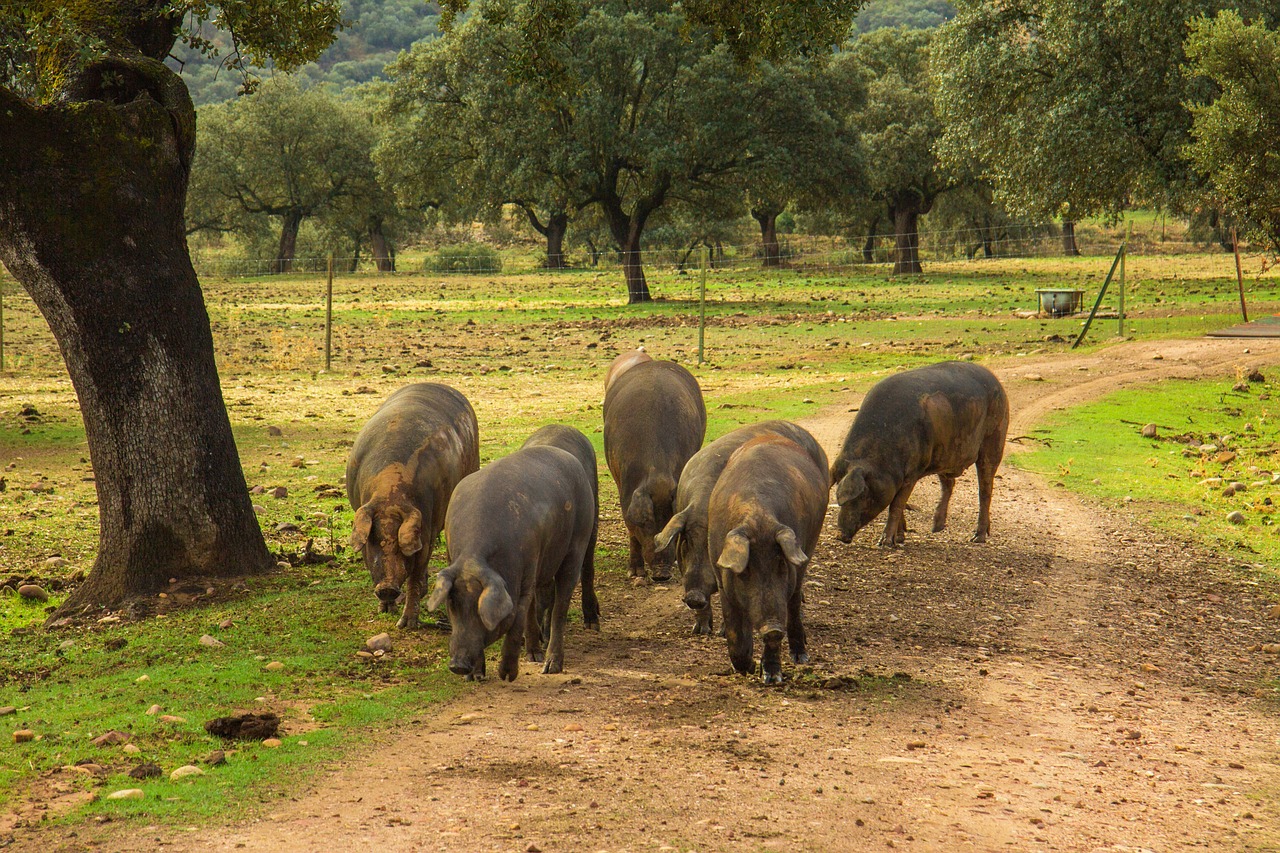
Dehesa de Extremadura links certified ham and shoulder to a territory where the dehesa has major productive and cultural importance. The designation is more than a statement of provenance: it operates under a specification and certification system.
A designation of origin, a production area or a curing tradition provides context but does not replace reading the whole product. With Iberian ham it helps to separate three layers: geographical certification where applicable, the legal breed and feeding category, and the producer’s decisions during salting, drying and maturation. Keeping these layers separate prevents shortcuts such as assuming that a famous place name always means acorn-fed or 100% Iberian.
Quick summary
| Scheme | Dehesa de Extremadura PDO. |
|---|---|
| Territory | Extremadura, within the area defined by the specification. |
| Product | Hams and shoulders that meet certification requirements. |
| Key point | Read the PDO together with Iberian breed and feeding information. |
The dehesa is more than a landscape
The dehesa is an agroforestry system combining trees, pasture and livestock. In acorn-fed Iberian production, the montanera period makes the connection between territory and feeding especially visible. Even so, the PDO name must not replace the legal category of each ham.
What the regulatory body certifies
Certification requires registered operators and products to comply with the product specification. This provides traceability beyond a simple commercial claim of origin and allows the protected name to be used under a common set of rules.
Why two certified hams can taste different
A PDO sets a framework, not an identical sensory recipe. Producer, raw material, weight, salting, drying and maturation influence texture, saltiness, aroma and fat. Consumers should expect certified origin and requirements, not total uniformity.
How to read the label without oversimplifying
First identify Dehesa de Extremadura as a PDO; then check the colour seal, breed percentage, sales designation, producer and format. This layered reading is more reliable than using a single word—acorn, Iberian or Extremadura—as a summary of the whole product.
What makes the “Dehesa de Extremadura” question different
This PDO requires a clear distinction between the dehesa as an agro-livestock system and Dehesa de Extremadura as a protected name. The presence of dehesa land does not automatically make any ham a PDO product.
Specific questions
Can every ham from Extremadura carry the PDO?
No. Regional origin alone does not replace the designation’s requirements, registration and controls.
Does PDO status make every product taste the same?
No. Products share a certification framework, but Iberian category, producer, individual piece and processing still create differences.
Are “Dehesa de Extremadura” and “ham from Extremadura” equivalent terms?
They should not be treated as equivalent. One is a protected designation; the other can be a generic geographical description.
Where to continue
For the dehesa as a production system rather than one PDO, see our guide to dehesa and territory. To place this designation beside the other three, use the Iberian ham PDO map.
Sources and references
This guide prioritises institutional sources and designation bodies. Current product specifications are the reference point when a specific certification requirement needs to be checked.

