When a label says Los Pedroches PDO, it is not merely saying that the ham is Iberian, comes from Córdoba or was produced from an acorn-fed pig. A Protected Designation of Origin links a product to a defined territory, specific production and processing requirements and a control system that makes the certified product traceable. That distinction matters because three ideas are often confused: Iberian breed percentage, commercial category and protected origin.
Los Pedroches has been registered as a PDO in the European Union since 2010 and operates under an updated product specification. Its area lies in the north of the province of Córdoba, where the dehesa landscape of holm oaks, cork oaks and gall oaks is part of the production environment. A ham or shoulder cannot use the PDO simply because one stage took place there: the official specification sets requirements for pig production and for the processing of the cured pieces.
What PDO actually means
PDO stands for Protected Designation of Origin. In the European quality system, the protected name is tied to a place and to defined production know-how. It is not a phrase that any manufacturer can add to a label. Operators must belong to the system, comply with the specification and submit to the relevant controls.
This gives the PDO a different role from a description such as “acorn-fed Iberian ham”. That description tells you about breed and feeding category under the Iberian standard. The PDO adds a geographical link and its own requirements. An excellent Iberian ham may have no PDO at all; that does not make it inferior, only different in the way its origin is certified.
What area does Los Pedroches protect?
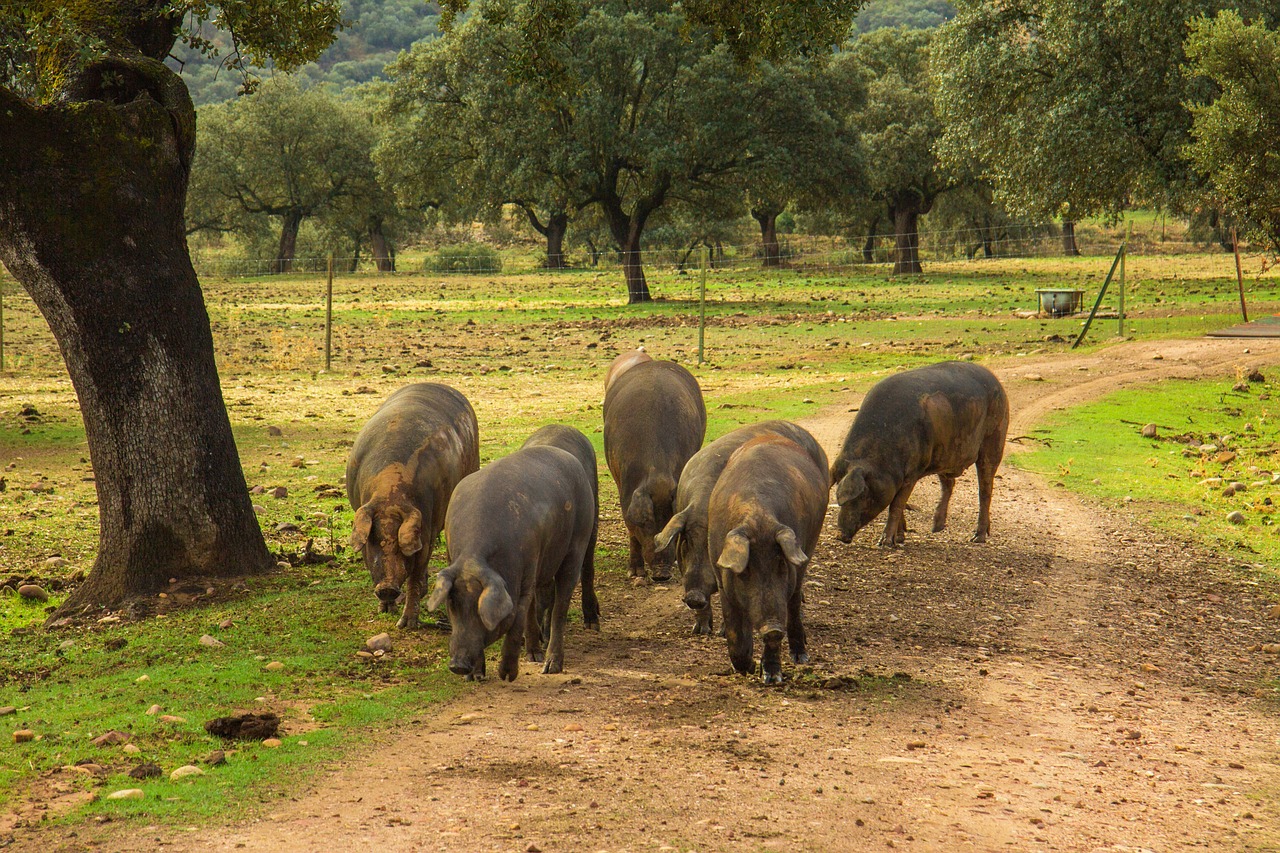
The protected area covers many municipalities in northern Córdoba and defined parts of several neighbouring municipalities. The dehesa is central to the geographical link. It provides the extensive landscape in which the pigs are raised and, for the relevant categories, natural resources used during the final fattening stage.
The current specification is not simply a rule saying the ham must be cured in Los Pedroches. It covers production of the pigs included in the scheme and the processing stages for hams and shoulders within the delimited territory and under control. “Cured in Los Pedroches” is therefore not the same claim as “Los Pedroches PDO”.
Which categories can appear?
The PDO identification works alongside the Iberian product categories. The Regulatory Council's documentation uses black for Bellota 100% Ibérico, red for Bellota Ibérico at 75% Iberian breed and green for Cebo de Campo pieces, both 100% and 75% Iberian where the PDO conditions are met. Colour is useful, but it should never be read on its own.
Check the full set of information: protected name, category, breed percentage where applicable, official seal and Regulatory Council label. A decorative ribbon in a similar colour proves nothing. The important elements are the official identifiers tied to the traceability of the piece.
How to recognise a certified whole ham
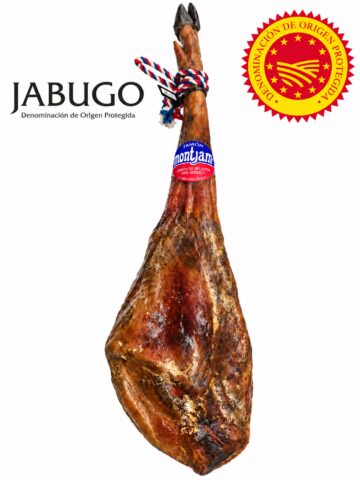
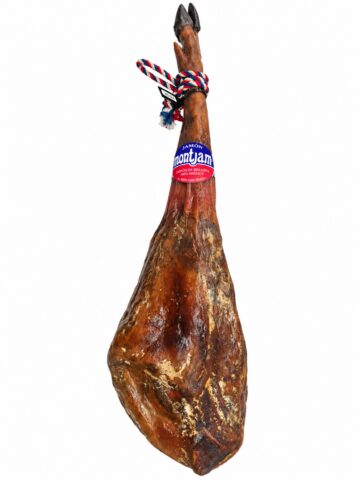
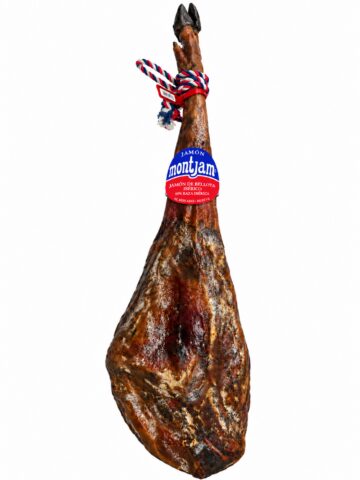
Two elements are particularly important on a whole piece. The first is the numbered seal issued within the Regulatory Council system. The second is the numbered PDO label or counter-label that accompanies the certified product when it is marketed.
The PDO rules require eligible pieces to remain identified and separated throughout production. The number is not decoration: it is part of the chain connecting the product with its controls and origin. If a seller specifically advertises a whole ham as Los Pedroches PDO and you cannot identify the official marks, ask where they are before buying.
What about sliced ham?
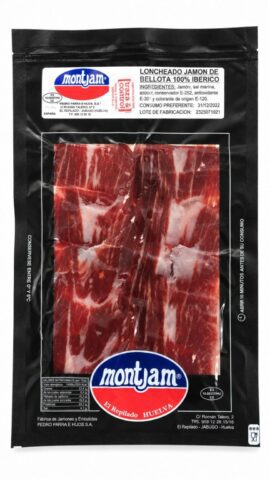
Removing the bone or slicing the piece does not remove the need for traceability. Deboning, portioning and slicing of PDO product must take place within the authorised system, and the resulting packs retain the corresponding identification. Numbered external labels issued by the Regulatory Council identify the category of the original piece.
This means you can buy PDO slices without seeing the original leg. When comparing packs, do not rely on pictures, gift-box design or vague words such as “selection” and “reserve”. Look for the protected name and the official identification.
What the PDO guarantees — and what it does not
The PDO guarantees compliance with its specification: origin within the defined area, production and processing requirements, authorised categories, controls and identification. The specification also describes characteristics that certified hams and shoulders must meet, including minimum weights, external form and sensory features.
It does not mean that every certified ham will be the personal favourite of every consumer. Pieces, vintages, producers and maturation times still create nuances. A PDO is a guarantee of authenticity and compliance, not a universal tasting score. Nor does the absence of a PDO mean that another Iberian ham is poor quality.
PDO, Iberian standard and breed percentage
It helps to read the label in layers. The Iberian standard provides feeding categories and breed designations. The PDO adds its territorial and control requirements. “100% Iberian” describes breed purity, whereas “Los Pedroches PDO” describes membership of the protected-origin scheme. The two facts complement one another; they are not synonyms.
Avoid using “pata negra” as a shortcut for every premium Iberian ham. A more reliable purchase starts with the full legal designation. Our guide to 50%, 75% and 100% Iberian breed percentages explains that part of the label in more detail.
What to check before buying
A practical check takes less than a minute. Read the full product name; find the explicit Los Pedroches PDO reference; verify category and breed percentage; identify the official seal and counter-label on a whole piece or the numbered label on a portioned pack; and check the producer. Additional traceability information from the seller is a welcome extra.
Online, a rigorous product page should make it easy to distinguish an official certification from marketing language. A photograph of a dehesa or the word “Córdoba” cannot replace the official identifiers. If the PDO is a deciding factor for you, request the details before payment.
Is a PDO worth looking for?
That depends on what you value. If you want a clearly defined origin and a certification system tied to a specific landscape and production chain, Los Pedroches PDO is a strong signal. If you prioritise a different flavour profile, producer or price-to-quality balance, there are excellent hams outside protected designations. The useful skill is understanding exactly what each label promises.
At El Mercado de Origen we favour that kind of reading: fewer grand claims and more verifiable information about producer, origin, breed, feeding and format. You can compare our hams and shoulders using those facts rather than relying only on product names.
Frequently asked questions about Los Pedroches PDO
Is every ham made in Los Pedroches a PDO ham?
No. The product must comply with the specification and be certified within the scheme. A company being located in the area is not enough.
Does Los Pedroches PDO certify only acorn-fed ham?
No. The PDO documentation includes both Bellota and Cebo de Campo categories under the breed percentages accepted by its specification.
Can sliced packs carry the PDO even though I cannot see the leg seal?
Yes. Traceability for sliced or portioned formats is transferred to the authorised packaging and numbered identification.
Does PDO automatically mean 100% Iberian?
No. Breed percentage and protected origin are separate pieces of information and should both be read on the label.
Official sources used
This guide was checked against the Spanish Ministry of Agriculture, the current Los Pedroches PDO product specification, Regulatory Council documentation and the European registration of the protected name.
In short: you do not need to memorise the full regulation to recognise Los Pedroches PDO. Understand that the protected name means territory, controls and traceability, then make sure the official identification is actually present on the piece or pack.
-
-
EMDO Selection
-