When buying sliced Iberian ham, one question appears again and again: is hand slicing better than machine slicing? The useful answer is not to label one method “artisan and good” and the other “industrial and bad”. Either can produce an excellent or a poor result. What changes is the way the slice is obtained, its consistency, how the cutter adapts to the different muscles and, above all, the eating experience you want.
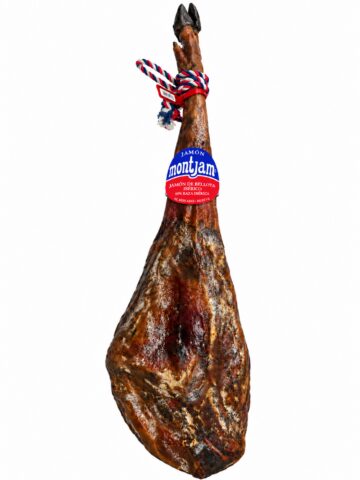
Hand slicing follows the anatomy of a bone-in ham. A skilled carver changes angle, length and thickness while moving through the maza, contramaza, punta and babilla. A professional slicer, meanwhile, produces consistency that is difficult to reproduce by hand and is particularly practical for evenly weighted packs designed for storage. Choosing between them starts by understanding these differences rather than relying on the method as a quality badge.
What defines hand slicing?
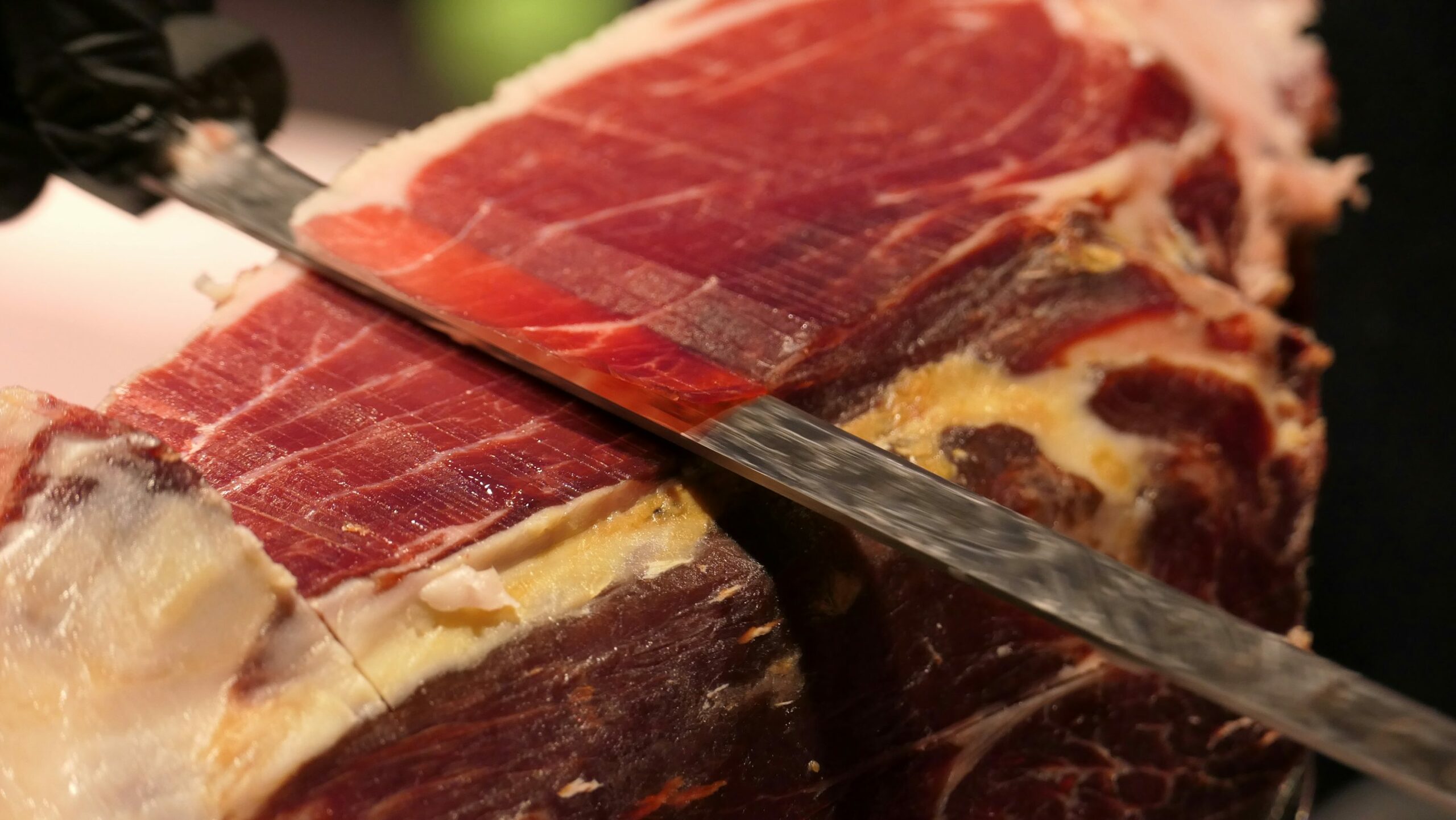
The whole ham is secured in a stand and cut with a long, narrow, flexible knife. The carver controls every pass. This makes it possible to respond to small irregularities and aim for a thin slice with a suitable balance of lean and fat for each area. The slices are not identical, and that slight variation is part of the traditional experience.
When well executed, the result is thin, manageable slices with clean edges. A carver can also present different areas separately so their textures can be compared. But “hand sliced” is not a guarantee in itself. Slices that are too thick, ragged cutting or poor maintenance of the cutting surface can still make a fine ham less enjoyable.
What does machine slicing offer?
A professional slicer can repeat a selected thickness very accurately. That is a major advantage when producing packs to a defined weight: portions are consistent, presentation is orderly and service is efficient. In specialist production, the ham is deboned and prepared before slicing, so the process differs from carving directly around the bone.
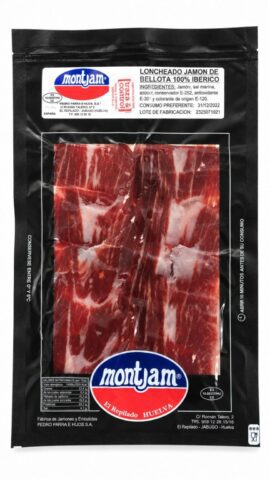
Machine slicing should not be confused with thick generic deli slices. With a sharp blade, correct setting and properly conditioned ham, very fine slices are possible. The format is especially convenient for people who want to open a pack and serve it without maintaining a whole leg at home.
Does a machine “burn” Iberian ham?
This is a common claim, but it is too simplistic. Any cutting action creates some friction. A blunt blade, inappropriate speed or careless process can warm and smear fat. That does not mean every slicer automatically damages the ham. Professional equipment is designed to cut cleanly and to keep the process controlled.
The more useful question is how the ham was sliced and packed. A well-adjusted machine can make a clean slice, while a poorly used knife can tear one. Judge the producer, thickness, cut surface and storage as well as the method.
Thickness and mouthfeel
Thickness strongly affects how the fat softens and how the lean meat feels. A slice that is too thick demands more chewing and can make a long-cured product seem tougher. A slice that is extremely thin may lose structure or become difficult to separate when tightly vacuum packed.
Hand slicing allows small deliberate variations. Machine slicing excels at repeatability. Neither quality is universally superior: a guided tasting may benefit from a carver adapting each area, whereas a large service may benefit from every pack having the same thickness.
Slice shape changes too
On a bone-in ham the knife follows muscles and contours, producing shorter or longer pieces according to the area. A deboned, prepared ham can produce more uniform shapes on a slicer. This affects presentation but does not determine the underlying quality of the ham.
Some people enjoy identifying different areas and comparing their nuances. Others prefer a balanced pack in which areas are combined to keep the experience consistent. Both approaches are valid when the seller explains what you are receiving.
Temperature can matter more than the method
Excellent ham served very cold can appear less aromatic and the fat can feel firmer. This applies to both hand- and machine-sliced packs. Follow the producer's instructions and, when appropriate, allow a sealed refrigerated pack to lose some of its chill before opening. The fat should regain gloss and flexibility without the ham being left exposed for hours.
For that reason it is unfair to compare ham freshly carved at a tasting with a vacuum pack opened straight from the refrigerator and attribute every difference to slicing. Temperature, packaging, time after opening and the quality of the original piece all matter.
Which method stores better?
Storage is mainly determined by format and packaging. Machine slicing is frequently paired with vacuum or protective-atmosphere packs because uniform portions are easy to produce. Hand-sliced ham can also be vacuum packed immediately after cutting and provide a convenient shelf life.
A whole started ham has different storage needs. Individual packs avoid keeping a cut surface exposed over many days and let you open only what you need. For households that eat ham occasionally, that convenience may matter more than the slicing method.
When to choose hand-sliced ham
Hand slicing makes particular sense when you want the classic experience of a carver working the whole piece, value differences between areas or are preparing a special table where presentation is part of the occasion. It is also attractive when a producer offers professionally hand-cut packs and clearly identifies the ham they came from.
If you buy a whole leg, learning to carve it properly — or using a professional service — has a major impact on yield. The method offers freedom but requires time, appropriate knives, safe handling and technique. The cost of professional carving is easier to understand when you consider yield and portion packing as part of the service.
When to choose machine-sliced ham
Machine slicing is a very sensible option for everyday use, hospitality, gifts and situations where uniformity and convenience matter. A good pack makes portions easy to calculate and avoids the space and consumption rate required by a whole ham.
Do not reject a product simply because it was machine sliced. Look first at the ham category, breed, producer, curing information, transparency of the product page and the appearance of the slices themselves. Excellent raw material that has been sliced well remains excellent raw material.
How to compare two packs
Check whether the slices separate easily, whether the cut is clean and whether fat and lean are reasonably balanced. Read the net weight, date, storage instructions and information about the source ham. If a pack is advertised as hand sliced, it is useful when the supplier also explains how and by whom the slicing is done.
Then compare both products at the same serving temperature. Use similar portions and avoid masking them with strong accompaniments. That tells you far more than a blanket statement about either method.
So which is better?
For a ceremonial meal, a tasting or anyone who enjoys variation between parts of the ham, hand slicing offers genuine added value. For convenience, consistency and ready-to-serve portions, professional machine slicing may be the better choice. When both are performed well, the quality of the original ham remains the main factor.
When browsing our hams and shoulders, read the full product information: producer, category, breed percentage, format and slicing method. The best pack is not automatically the one carrying the most artisanal wording, but the one that combines a good ham with slicing and storage suited to the way you will eat it.
Frequently asked questions
Is hand-sliced ham always more expensive?
It usually involves more manual work and may cost more, but the final price also depends on the original ham, category, producer, yield and packaging.
Does machine slicing change the flavour?
Slicing changes thickness and shape and therefore affects mouthfeel. A professional machine used correctly does not automatically turn a good ham into a worse product.
Can hand-sliced ham be vacuum packed?
Yes. Slicing and packaging are separate choices: a ham can be carved by hand and then sealed in portions for convenient storage.
What matters more, slicing method or ham quality?
The original piece is the foundation. Good slicing can preserve and highlight its qualities, while poor slicing can obscure them, but cutting cannot create quality that was not present in the ham.
-
-
EMDO Selection
-