Working out how much Iberian ham to buy per person sounds easy until the meal is planned in detail. A group tasting a few slices before a main course will eat very differently from guests at a table where ham is the centrepiece of the aperitif. The calculation also changes when ham is served alongside loin, chorizo, salchichón, preserves, bread and several other starters.
Rather than looking for one universal number, it is more useful to work with practical ranges and understand what makes a portion move up or down. When buying sliced packs, calculate from the net weight actually served. A whole leg is different because its gross weight includes bone, rind and external fat.
Start with the role ham will play in the meal
The most important question is not simply how many people are coming, but what role the ham has in the menu. A small tasting before several courses requires much less than a meal in which Iberian ham is one of the principal foods on the table.
As planning guidance rather than a rigid rule, these ranges are useful starting points:
- Small tasting or light aperitif: roughly 30–40 g per adult when many other starters are being served.
- Aperitif where ham has a clear role: around 50–70 g per adult.
- Ham as one of the main attractions: about 80–100 g per adult, particularly when the meal revolves around Iberian cured meats, bread and simple accompaniments.
These are not compulsory gastronomic standards. Children, a large number of following courses or a crowded starter table may reduce the amount required. A long celebration where ham is continuously available can push it higher.
Why 100 grams can look very different depending on slicing
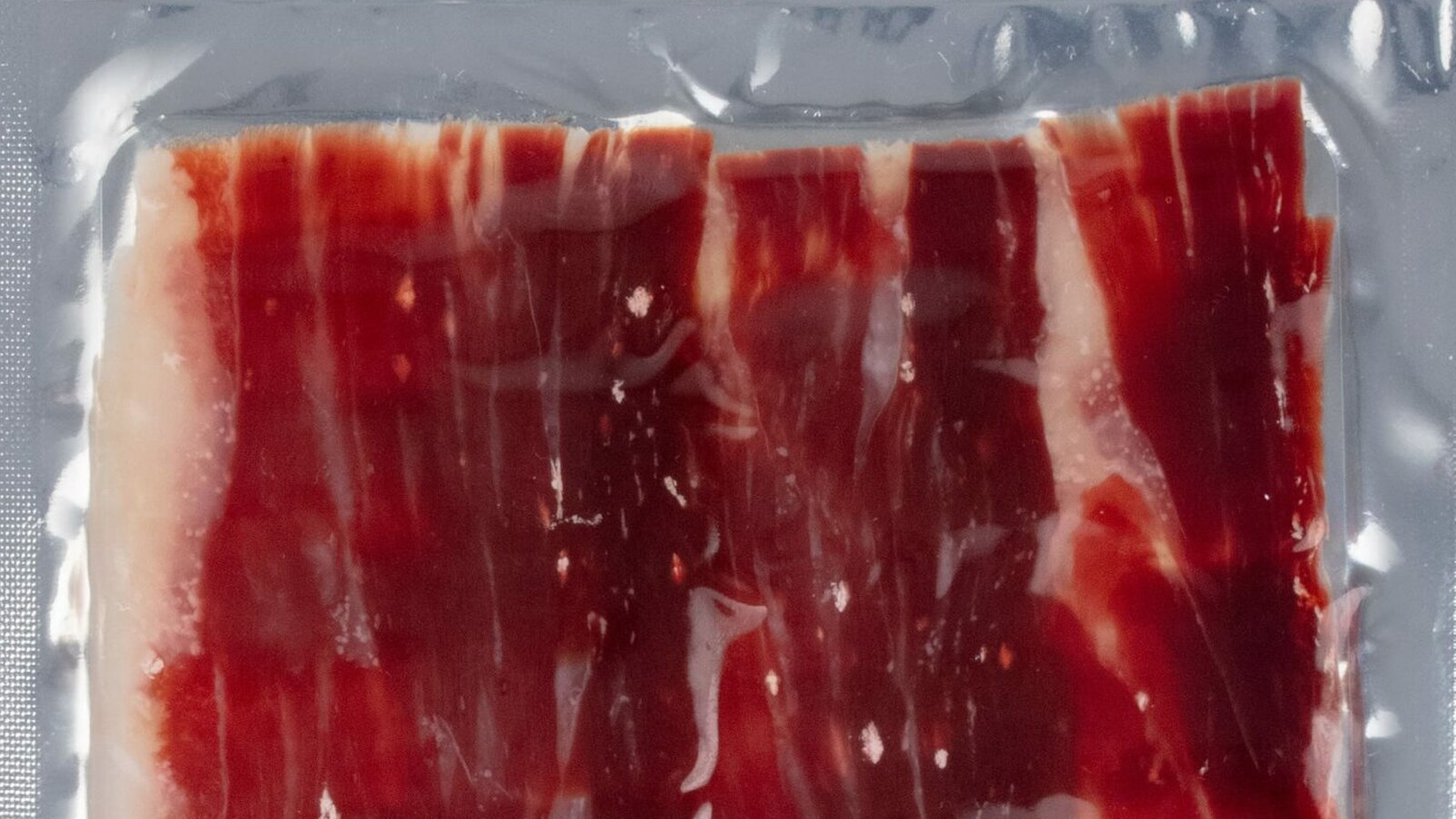
Perceived abundance depends greatly on the slice. Thin, properly sized slices laid out across a platter create a very different eating experience from thick slices piled on top of each other. A good arrangement also lets the ham temper more evenly and encourages slower tasting.
For events, several moderate platters with gradual replenishment generally work better than putting every slice out at once. The surface is less likely to dry, presentation stays fresh and it becomes much easier to see how quickly guests are actually eating.
If you serve other Iberian cured meats, reduce the ham portion
When ham shares the table with cured loin, chorizo and salchichón, adding a full standalone portion of every item usually produces too much food. For a mixed board, calculate the total amount of charcuterie and distribute it among the different products.
This lets guests taste several profiles without overwhelming the palate or accidentally turning an aperitif into a full meal. Our guide to building an Iberian charcuterie board goes deeper into serving order and accompaniments.
How to calculate sliced packs
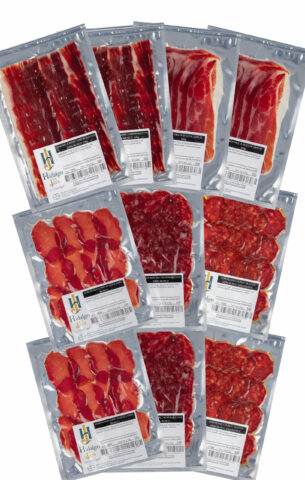
Pre-sliced packs make the arithmetic straightforward because the net weight is known. Multiply the number of guests by your target portion, then divide the result by the weight of each pack.
For eight adults at about 60 g each, for example, you would plan roughly 480 g of ham. If the packs contained 80 g, that would be six packs. With 100 g packs, you would need just under five, so the decision becomes whether you want a little margin or whether the rest of the menu already provides enough food.
Do not automatically round every calculation upwards. If there is loin, preserves, bread and several other starters, the extra pack may never need to be opened.
A whole ham cannot be divided by portions in the same way
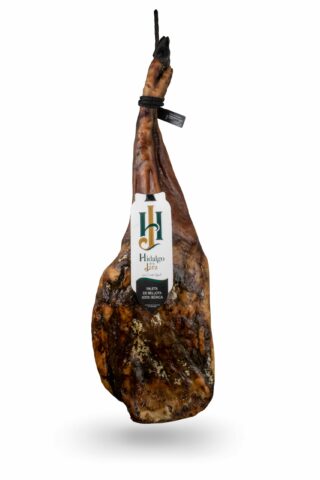
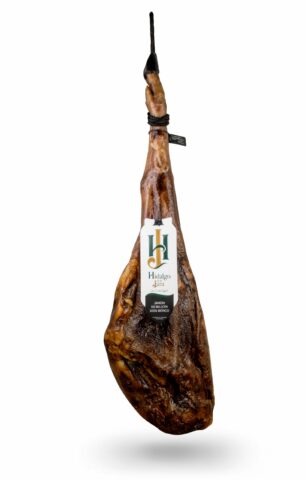
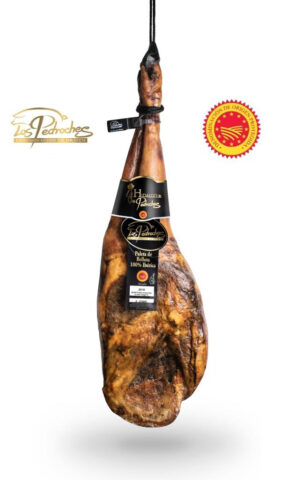
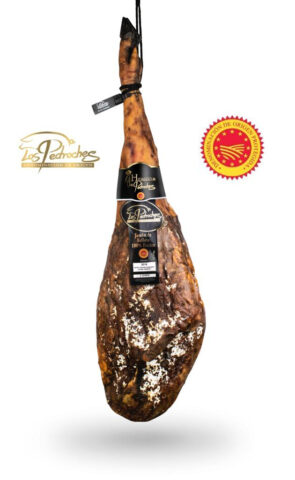
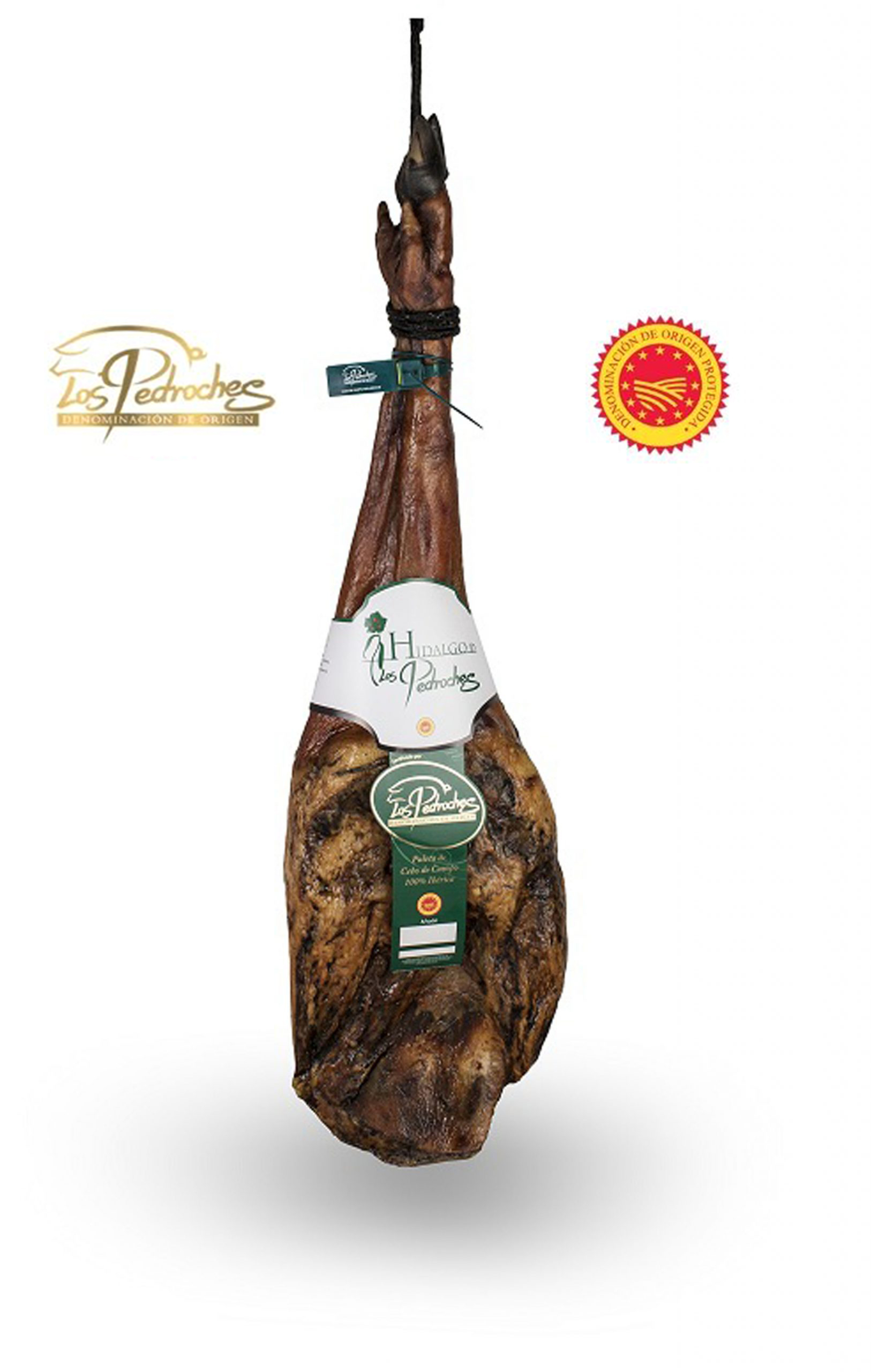
The stated weight of a whole ham refers to the complete leg. Not all of it becomes slices: there is bone, rind, external fat and sections used differently. Yield varies with the shape of the ham and carving skill. Dividing a seven-kilogram leg by 70 g and assuming one hundred clean portions would therefore be misleading.
For home use, a more useful question is how often the ham will be carved and how many people will eat it. A whole leg can be ideal for a household that consumes ham regularly, while sliced packs provide finer portion control for occasional use. Our whole versus sliced Iberian ham guide covers that decision in depth.
For celebrations, consider how long the aperitif lasts
Two events with the same guest count can consume very different quantities. A twenty-minute aperitif before a seated meal is not comparable with a ninety-minute drinks reception where ham remains available throughout.
As service time increases, gradual replenishment and menu balance become more important. Instead of simply buying much more ham, structure the table with cured meats, a vegetable or preserve element, suitable bread and drinks. Consumption then distributes naturally across the menu.
Children, enthusiastic eaters and mixed groups
Adult serving ranges are averages for planning. In a family group some people may only taste a slice while others return several times. Reduce the forecast for young children; increase it when guests are keen Iberian-ham eaters and the rest of the menu is intentionally short.
If you do not know the group well, calculate a sensible middle range and keep some packs unopened. This gives you reserve stock without exposing everything from the start, and unused sealed packs remain intact.
Accompaniments change consumption
Bread, tomato, extra virgin olive oil, preserves and other cured meats turn each slice into part of a more complete bite. Ham served entirely on its own is often consumed in greater quantities. The entire menu therefore belongs in the calculation.
At the same time, very powerful accompaniments can dominate the ham. Variety is useful, but the aim is still to appreciate aroma, fat, salt balance and texture.
A simple planning rule
For most home occasions, remember this structure: 30–40 g for a tasting, 50–70 g when ham is an important part of the aperitif and 80–100 g when it is intended to be a major attraction. Then adjust for the number of other dishes, service duration, guest profile and product format.
No calculation can predict appetite perfectly. The goal is to get close enough that the table feels generous without opening food that did not need to be opened.
Related hams and shoulders
-
EMDO Selection SaleSale!
 Select options
This product has multiple variants. The options may be chosen on the product page
Select options
This product has multiple variants. The options may be chosen on the product page
-
EMDO Selection SaleSale!Select options
This product has multiple variants. The options may be chosen on the product page
-
EMDO Selection SaleSale!Select options
This product has multiple variants. The options may be chosen on the product page
-
EMDO Selection SaleSale!Select options
This product has multiple variants. The options may be chosen on the product page
-
Sale!Select options
This product has multiple variants. The options may be chosen on the product page