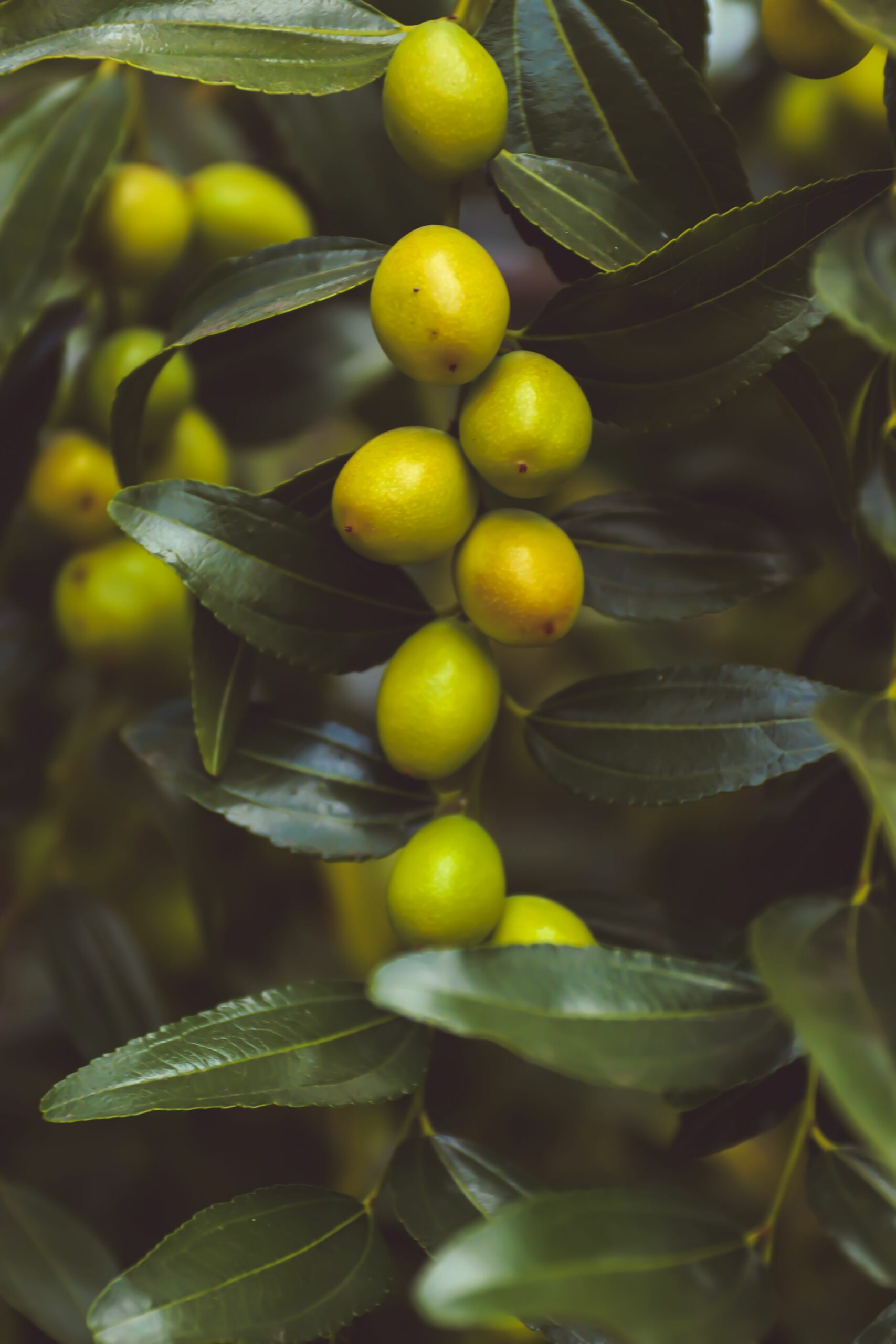
“Extra virgin olive oil” is now such a familiar phrase that it is easy to read it as little more than “good olive oil”. Technically it is far more precise. Extra virgin is a regulated commercial category, not a superlative that a producer can simply add to a label. To qualify, the oil must be produced from olives using the processes allowed for virgin oils and must meet defined analytical and sensory criteria.
Understanding this changes the way you shop. EVOO gives you an important baseline about the type of oil in the bottle, but it does not by itself tell you variety, intensity, harvest timing, producer, freshness or whether the flavour suits you. Two EVOOs can be dramatically different while both legitimately belonging to the same category.
“Virgin” first describes how the oil is obtained
Virgin olive oils are obtained directly from olives by mechanical or physical means under conditions that do not alter the oil, without using the refining processes applied to correct oils in other categories. The starting point is therefore the olive fruit and a physical extraction process.
In a modern mill, a simplified sequence includes receiving and cleaning the fruit, crushing, malaxing the paste, separating the oil by centrifugation and then managing the fresh oil. Filtration or settling can alter appearance and development, but both filtered and unfiltered oils can qualify as extra virgin if they meet the category requirements.
“Extra” requires more than simply coming out of a mill
Not every mechanically extracted oil automatically becomes extra virgin. Classification requires both physico-chemical and organoleptic criteria. The European Commission describes EVOO as the highest organoleptic quality category among virgin olive oils sold to consumers: it must have no sensory defects and must be fruity, in addition to complying with the relevant analytical limits.
The best-known figure is free acidity, which for extra virgin olive oil may not exceed 0.8%, expressed as oleic acid. Reducing quality to that single number would nevertheless be a mistake. Other analytical parameters apply, and sensory assessment is also essential to classification.
Free acidity is not an acidic taste
This is probably the most common misunderstanding. Free acidity is a chemical parameter measured in a laboratory. An oil at 0.2% does not necessarily “taste less acidic” than one at 0.7%, and the figure cannot be determined by tasting the oil at home.
Statements such as “it is very mild, so it must have very low acidity” mix two different things. Mildness, bitterness, pungency and fruitiness are sensory perceptions; free acidity is an analytical measurement.
Sensory assessment also determines the category
To qualify as extra virgin, an oil must show no sensory defects in the regulatory assessment and must have fruitiness. Professional tasting can identify defects associated, for example, with fermentation or poor handling of olives or oil. The absence of such defects is part of what separates extra virgin from lower virgin categories.
This is why quality begins long before bottling. Damaged olives or fruit stored too long before milling can undergo undesirable changes. Careful extraction cannot magically turn severely compromised raw material into excellent EVOO.
Extra virgin, virgin and “olive oil” are not interchangeable names
Virgin olive oil is also obtained using the processes characteristic of virgin oils, but it may contain certain sensory defects and has a higher permitted free-acidity limit than extra virgin. The category sold simply as “olive oil”, meanwhile, is generally a blend of refined olive oil and virgin olive oils.
Refining makes oils that are not suitable for direct sale as virgin oil usable in a different commercial category. The resulting product follows a different production logic. Not every oil that comes from an olive can correctly be called extra virgin.
Colour does not determine whether an oil is extra virgin
A deeply green oil can look visually more “premium”, but colour is not by itself a criterion for extra-virgin classification. It depends on pigments and many factors related to olive variety and maturity. Professional sensory practice deliberately avoids allowing colour to bias the taster.
So “the greener the better” is not a reliable buying rule. A golden-toned EVOO can be excellent, while a green oil can still have characteristics that colour alone cannot reveal.
Bitterness and pungency are not automatically defects either
In oils from certain varieties and harvest styles, bitterness and pungency can be natural, positive attributes when they are clean and balanced. Someone new to assertive EVOO may interpret pungency as evidence that the oil is “too strong” or has deteriorated. It is important to distinguish a clean varietal sensation from a sensory defect.
This is one reason varietal knowledge is useful. Arbequina is commonly gentler than a green-style Picual, yet both can be impeccable EVOOs. Our guide to Picual, Arbequina and Lechín explores those differences.
What to look for on the bottle beyond “extra virgin”
- Exact category: confirm that it really is extra virgin olive oil.
- Origin and producer: they help explain who is responsible for the product and where it comes from.
- Variety or blend: when provided, this gives useful clues to sensory style.
- Format and packaging: protection from light, heat and air matters during use.
- Best-before information and harvest when supplied: olive oil evolves; it does not improve indefinitely in the bottle.
- Storage instructions: these remain important after opening.
EVOO is not immune to time
An extra virgin oil can deteriorate after bottling. Oxygen, light, heat and time promote oxidation and loss of aroma. It therefore makes sense to buy a format that matches real household consumption and to store it properly. A family cooking daily may use a large container quickly; a household using little oil may preserve freshness more easily with smaller packs.
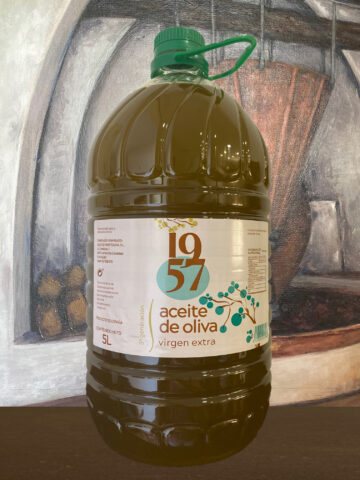
Our guide to 5-litre EVOO explains when the large format makes sense and how to reduce exposure during use.
The category is the beginning of the choice, not the end
Looking for “extra virgin” is an excellent first filter because it identifies a specific category. From there the gastronomic decision begins: variety, intensity, harvest, format and producer. That is the difference between buying a label and choosing an oil that genuinely fits your kitchen.
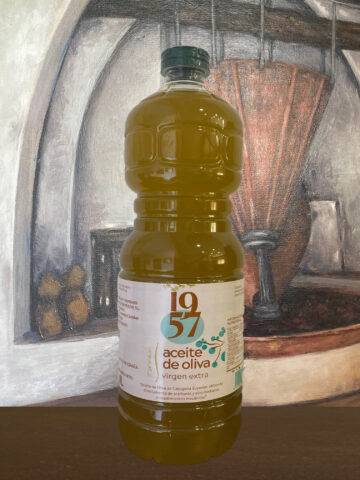
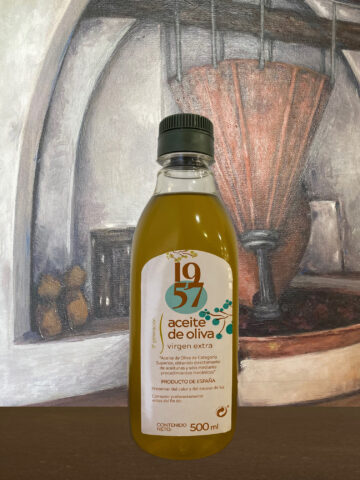
You can compare 1957's available formats in our extra virgin olive oil selection.
Technical source
For the explanation of categories we used the European Commission's information on olive-oil categories, which summarises for extra virgin olive oil the absence of sensory defects, the presence of fruitiness and the maximum free-acidity level of 0.8%, among other regulatory requirements.
Related products
-
EMDO Selection Sale
-
EMDO Selection
-
EMDO Selection

What you can check when buying from an olive mill
An identified olive mill makes it easier to look for information on where the olives were grown, their varieties, the harvest and the production process. That does not make every oil sold by a mill automatically superior, nor does a generic local-sounding claim certify a specific origin. Compare actual labels, packaging and storage advice when exploring our olive oil selection.
Knowing an olive mill can clarify where and how an oil is made, but it does not mean the mill is local to every customer. Read how to assess local food claims rather than treating every regional reference as proof of geographical closeness.