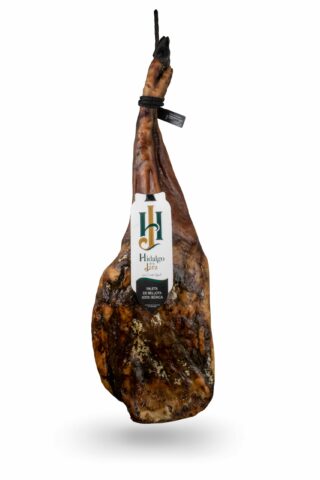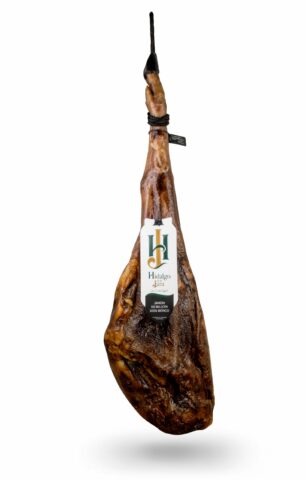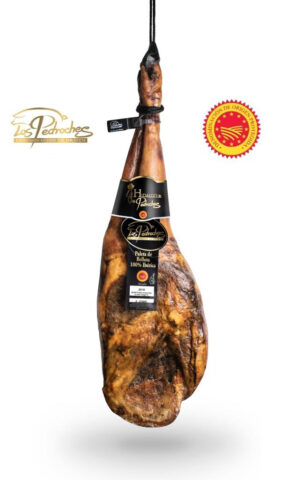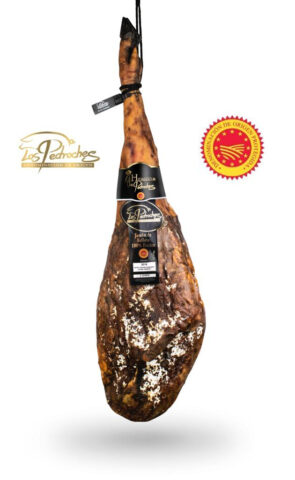
Once the type of Iberian product has been chosen, a second decision is often made too quickly: buying the whole piece or receiving it professionally sliced. This is not a minor detail. Format determines how much the product is handled, how quickly it is exposed to air, how much space is required, what slicing skill is needed and how easily a good portion can be served at the right moment.
The underlying quality can be exactly the same in both formats. A good ham does not stop being good because it has been sliced, and a whole leg is not automatically superior because the hoof is still attached. The real difference is how you want to manage the product at home.
What a whole piece offers that a packet cannot reproduce
The appeal of a whole ham is not merely visual. Cutting through the piece lets you experience its different zones. The maza provides a broad surface where slices often combine lean and fat very evenly. The babilla is narrower and can feel more cured. Near the tip and around the bones, aroma and texture change again.
That variation is part of the pleasure. A person who enjoys slicing can adapt thickness to each area, choose what to serve at a particular moment and save bones and trimmings for cooking. The uncut interior also remains naturally protected until the cutting plane reaches it.
The trade-off is consistency. Once started, the cut surface is exposed to air. There is no need to rush through a whole ham in a few days, but leaving it untouched for very long periods is not ideal. The exposed area needs protection, and a stable stand, suitable knives and safe technique are essential.
What professional slicing solves
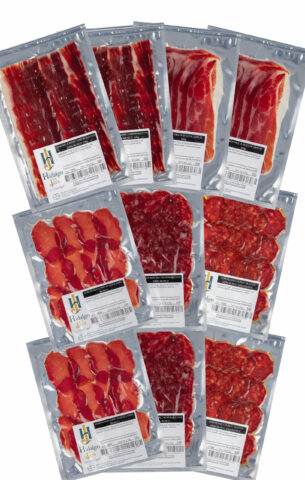
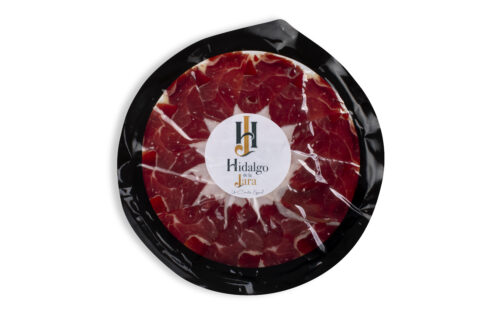
Pre-slicing turns one large piece into independent portions. Each pack remains closed until it is actually needed, so exposure is limited to a small quantity at a time. This works particularly well for irregular consumption, gifts to people who do not slice ham, or sharing one piece between different households.
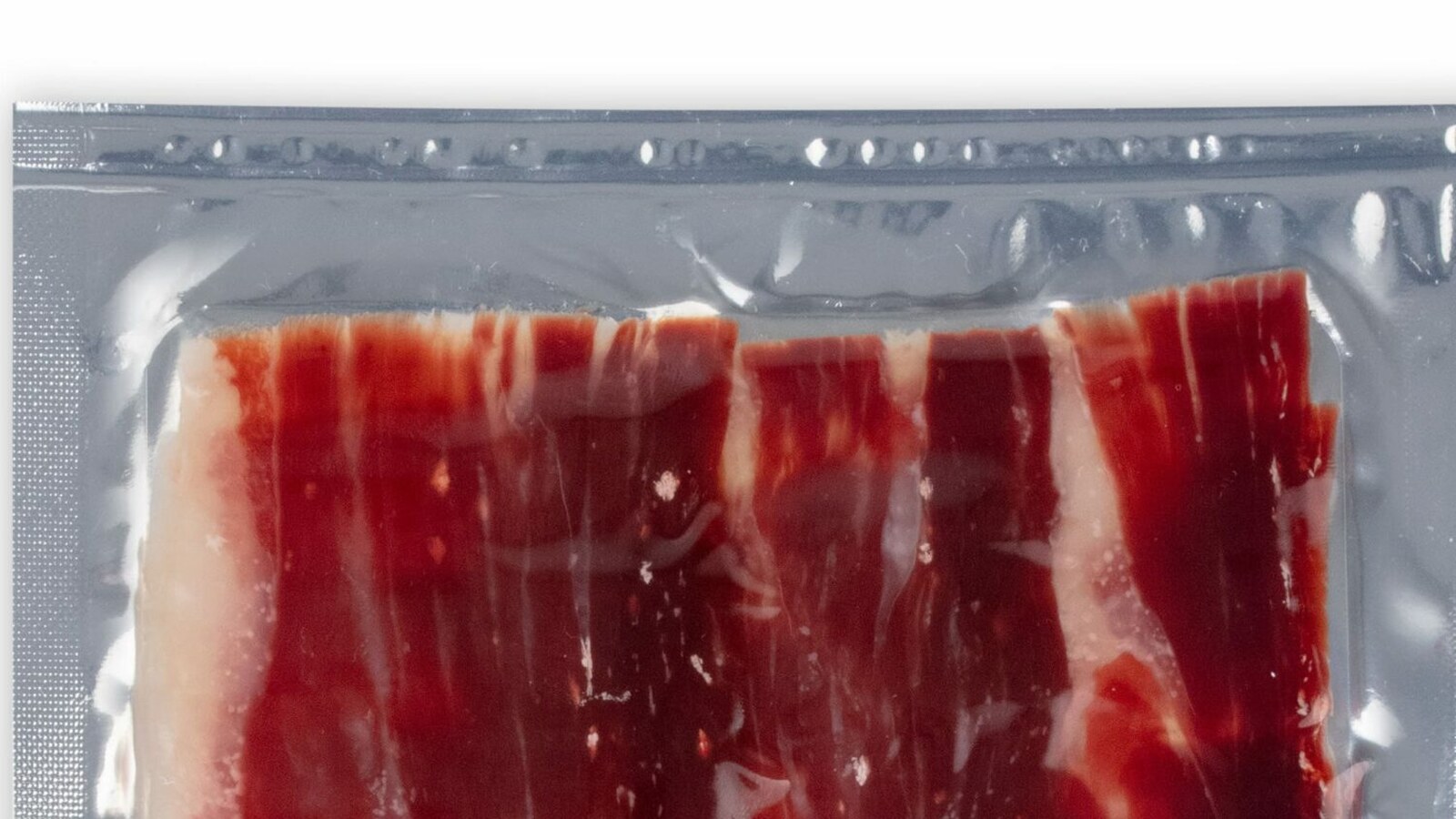
It also offers consistency. Good professional slicing aims for thin, proportionate slices arranged so that they separate easily. For many people that convenience more than compensates for losing the ritual of cutting from the leg.
Presentation still deserves attention. Check pack weight, packaging type, storage instructions and whether the origin of the sliced product is clearly identified. Good slicing should preserve the identity of the product rather than hide it.
Serving temperature can transform perception
A common mistake is to open a packet straight from a very cold environment and judge it immediately. At low temperature fat is firmer and releases fewer aromatic compounds. Once the product approaches an appropriate serving temperature, the fat softens and aroma becomes much more expressive.
There is no single magic temperature for every product; follow the producer’s instructions and the actual storage conditions. The important principle is that serving too cold can hide some of the qualities you paid for. A whole piece kept in a suitable room is often less affected because its temperature is more stable.
Oxygen, light and time after opening
With a whole ham, the freshly cut face is the main exposed surface. It should be protected and kept away from heat and direct light. With a sliced pack, protection lasts while the pack remains sealed; after opening, the quantity is small and should sensibly be eaten promptly according to the label instructions.
It therefore makes little sense to ask which format “keeps longer” without discussing consumption pattern. A family slicing almost every day can manage a whole piece beautifully. Someone eating a few slices every two weeks is more likely to preserve the experience with separate packs.
Whole, boneless or sliced?
Boneless ham sits between the two extremes. It can suit people who want to slice at home with a knife or machine but do not want to work around the bone. It takes less space and gives a regular cutting format, although it loses some of the traditional whole-leg experience.
- Whole piece: frequent consumption, people who enjoy slicing and households interested in the differences between the zones.
- Boneless: easier home slicing and more compact storage.
- Pre-sliced: occasional consumption, practical gifts, controlled portions and maximum convenience.
The mistake to avoid: treating format as a quality grade
Quality is assessed first: Iberian category, breed percentage, feeding, curing, producer, condition of the piece and correct storage. Only then should format be chosen. Comparing an excellent sliced ham with a mediocre whole leg is meaningless, just as assuming every packet is equivalent to a skilled fresh slice is misleading.
Browse the available formats in our ham and shoulder selection, choosing the product first and the presentation second.
Related products
-
EMDO Selection SaleSale!
 Select options
This product has multiple variants. The options may be chosen on the product page
Select options
This product has multiple variants. The options may be chosen on the product page
-
EMDO Selection SaleSale!Select options
This product has multiple variants. The options may be chosen on the product page
-
EMDO Selection SaleSale!Select options
This product has multiple variants. The options may be chosen on the product page
-
EMDO Selection SaleSale!Select options
This product has multiple variants. The options may be chosen on the product page
-
Last units availableSaleSale!Select options
This product has multiple variants. The options may be chosen on the product page