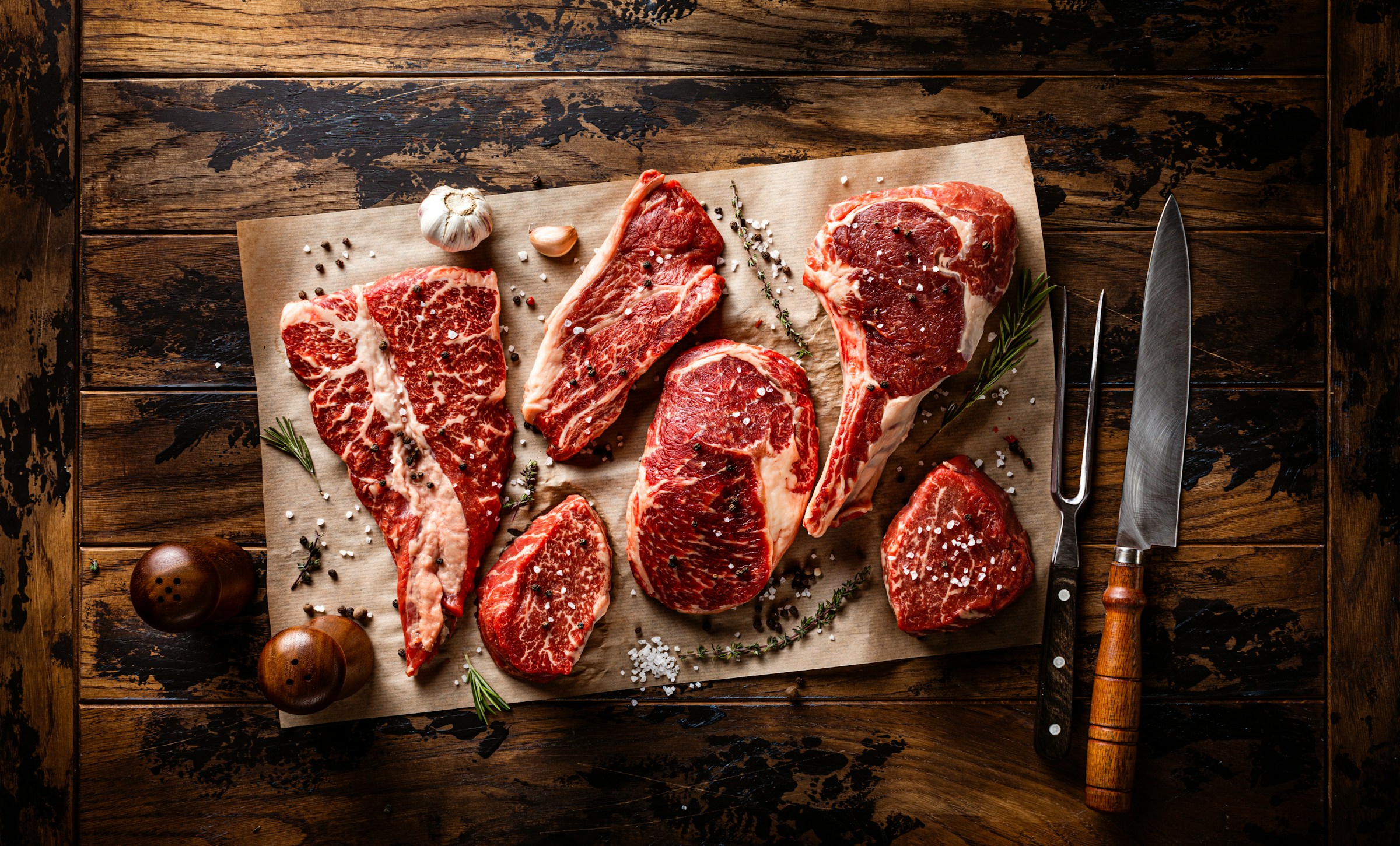
Planning a barbecue looks easy until you have to buy the meat. How much do you need? Should you choose one cut or several? Which pieces cook quickly and which need more time? Buying well matters almost as much as managing the fire. A balanced selection gives guests choice, makes cooking easier and reduces the chance of ending up with kilograms of leftovers.
The first question is what kind of meal you are serving. A barbecue with generous starters, salads, bread and vegetables needs less meat than a gathering where almost everything comes from the grill. Bone-in cuts also need to be calculated differently from burgers or boneless steaks.
How much barbecue meat should you allow per person?
As a practical starting point, allow around 300-400 g of raw meat per adult when meat is the main event. If there are plenty of starters and side dishes, around 200-300 g per adult is often enough. For children, roughly 150-200 g can be a useful guide, adjusted for age and appetite.
| Type of meal | Approximate amount per adult | When it works |
|---|---|---|
| Barbecue with plenty of sides | 200-300 g | There are starters, salads, bread, vegetables and dessert. |
| Meat-focused barbecue | 300-400 g | Most of the meal will come from the grill. |
| Very hungry group or long meal | 400-500 g | Use this only when you know the group and sides are limited. |
These are planning figures rather than strict rules. Bone-in cuts and pieces with substantial external fat require more gross weight for the same edible portion. Burgers and boneless steaks are easier to calculate accurately.
What meat should you buy for a varied barbecue?
You rarely need ten different meats. A better approach is to combine two or three formats with different cooking times: burgers or thin steaks for quick service, a thicker cut to share, and perhaps pork for variety.
El Mercado de Origen carries fresh meat and mixed packs that can make this kind of order easier. A barbecue pack can be useful if you want one straightforward purchase; if you prefer to design the menu yourself, choose individual products from the meat selection in the shop.
Beef: which cuts work on the grill?
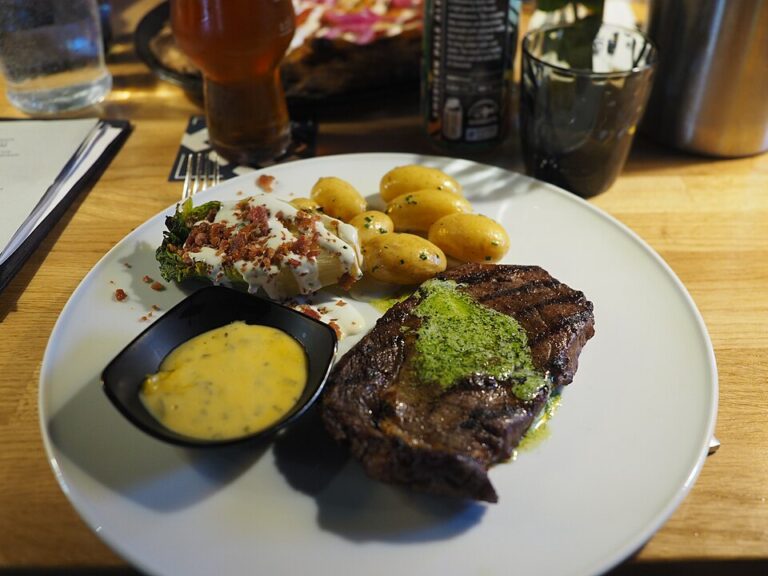
Beef ranges from thin, fast-cooking steaks to thick cuts that need much tighter heat control. For a relaxed barbecue, steaks and burgers are convenient because they can be cooked in batches and adjusted for different preferences. For a more special meal, a thick rib cut can become the centrepiece and be sliced for sharing.
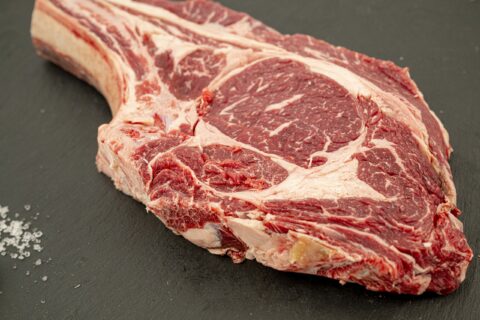
If you are cooking a rib steak, tomahawk or another thick piece, do not treat it like a thin steak. It benefits from a combination of strong browning and gentler heat. Our guide to cooking a thick rib steak explains the different approaches, while the beef doneness guide helps you judge the centre instead of relying only on minutes.
Pork is useful for balancing the menu
Pork brings a different fat level and texture to beef and can work extremely well on a grill. Depending on what is available, cuts such as secreto, ribs, chops, belly or fresh sausages can add variety. Each product should still be cooked appropriately for its format.
Mixing beef and pork can also balance the budget. You might buy one more special beef cut for sharing and complete the meal with simpler pieces that are easy to portion.
Burgers are particularly easy to count
Burgers make planning for large groups straightforward. You know the number of patties, can start with one per person and add a small buffer without dramatically increasing the order. They also make it easier to organise cooking in rounds.
If you buy formed beef patties, avoid unnecessary handling. Our guide to making a juicy beef burger covers thickness, heat, turning and how to limit moisture loss while cooking safely.
How to split the total between different meats
If you decide on 350 g per adult, that is the total amount, not 350 g of each item. For ten adults you might therefore target around 3.5 kg of raw product and divide it between formats.
- About 40% as main pieces: steaks, chops or a sharing cut.
- About 30% as burgers or easy-to-serve meat: useful for different appetites and cooking times.
- About 30% as other pieces: pork, fresh sausages or other available products.
This is simply a planning model. If everybody wants burgers, buy burgers. If the meal is built around one large beef cut, increase that share and reduce the rest.
Remember the bone when calculating quantities
Bone is included in the purchase weight but not in the edible serving. A bone-in rib steak, ribs or tomahawk therefore need more gross weight than a boneless steak or burger. Comparing one kilogram of bone-in meat directly with one kilogram of patties can leave you short.
External fat also matters. Some fat protects the meat and contributes flavour, so it is not necessarily waste, but a heavily covered cut may yield less edible lean meat than its label weight suggests.
Buying by units can make group planning easier
When products are sold with a clear number of pieces, quantities become much easier to manage. A pack of two burgers immediately tells you how many servings it may provide. The same applies to steaks or chops when the seller gives both weight and approximate piece count. For variable-weight products, leave a small margin and use the final supplied weight as the real reference.
What if you do not know how much everybody will eat?
When the group is unpredictable, it is usually better to increase the side dishes slightly than to greatly overbuy meat. Bread, vegetables, potatoes and salads make the meal generous without creating unnecessary meat waste. Choosing products that can be correctly refrigerated or frozen also gives you flexibility if some raw meat remains unused.
If the order arrives before the event, check the packaging and storage instructions immediately. Our guide to storing fresh meat and deciding when to freeze it explains how to organise a delivery that arrives ahead of barbecue day.
Organise the grill so you do not waste good meat
Do not put every piece on at the same time. Start with items that need longer and keep a gentler zone available for thick cuts that brown too quickly. Thin steaks and burgers can go on later. A food thermometer is particularly useful for thick beef and ground meat.
Keep raw meat refrigerated until it is actually needed, and do not use a plate or utensil that has held raw meat to serve cooked food unless it has been thoroughly cleaned first.
The best order is enough variety without excess
A successful barbecue is not defined by how much meat is left at the end. Start with the number of guests, decide how important the meat is within the whole menu, adjust for bone and side dishes, and only then place the order. That gives you a much better chance of serving enough without buying far more than you need.
Fresh meat for your next barbecue
-
Sale!
 Select options
This product has multiple variants. The options may be chosen on the product page
Select options
This product has multiple variants. The options may be chosen on the product page


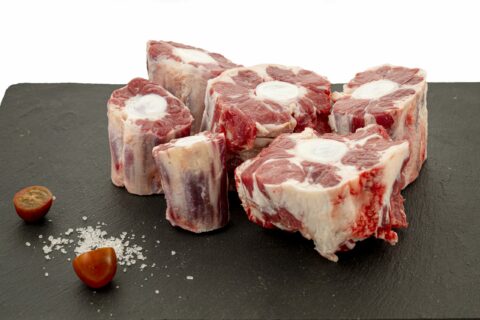


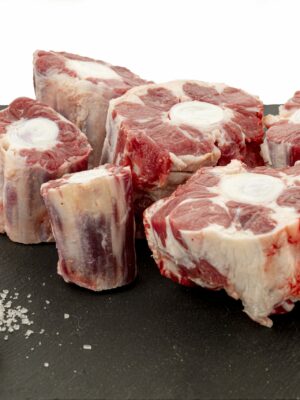 Oxtail
  100% mature beef burgers – gluten-free (2)