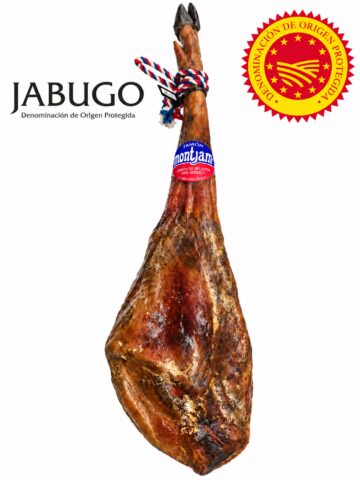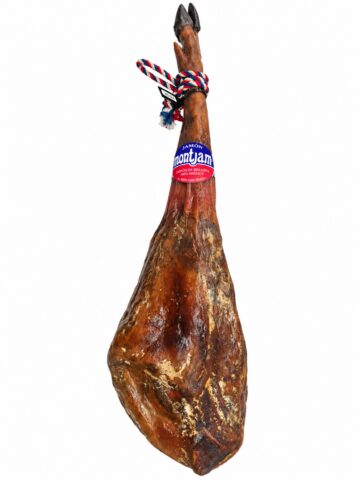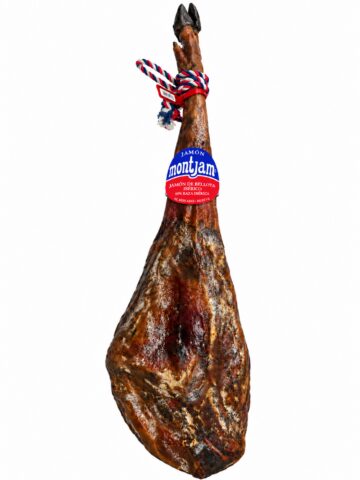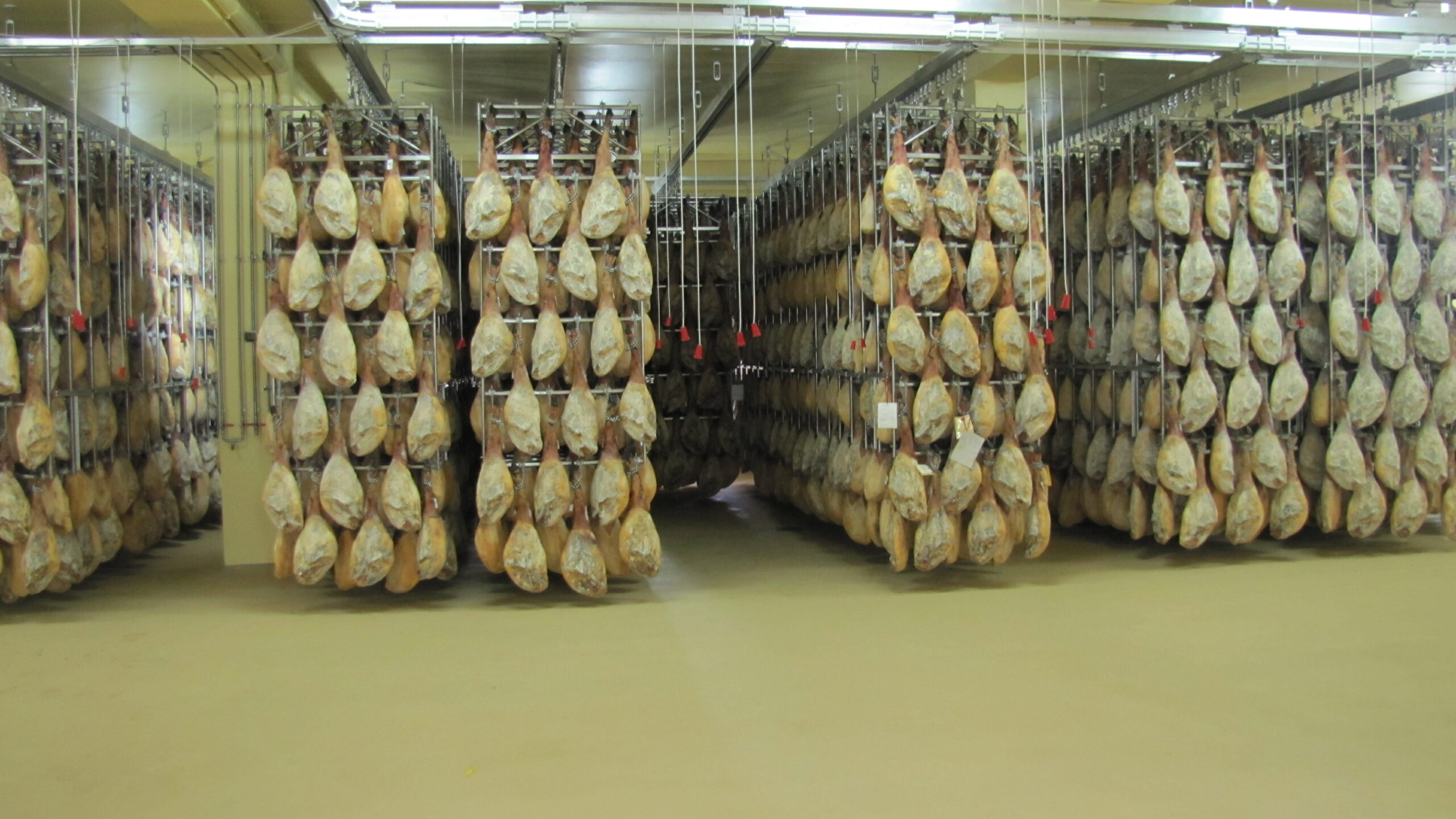
Finding a white, grey or greenish film on the outside of a whole Iberian ham can be alarming, especially if it is your first ham at home. Yet on a dry-cured whole ham, surface mould does not automatically mean the food has spoiled. During a long curing process, the piece is exposed to air, humidity and environmental microorganisms, and some can colonise the exterior without necessarily affecting the interior.
The important point is not to apply the same rule to every format. A little growth on the rind or external fat of a whole dry-cured ham is very different from mould inside a sliced pack, a slimy texture, a swollen package or a clearly abnormal odour. This guide explains the distinction, but the producer's instructions and the storage directions on the label should always take priority for a specific product.
Why can mould appear on cured ham?
Ham spends many months — and sometimes years — losing moisture and developing texture and aroma. Its outer surface is not sterile. In curing rooms and cellars, surface flora can develop as part of the maturation environment. Food-safety guidance such as that from the USDA recognises, in general, that dry-cured hams may develop surface mould during curing and that exterior mould on this type of product does not automatically mean the interior is spoiled.
This does not mean “all mould is good”. It means context matters. A whole dry-cured ham has far less available moisture than fresh meat and its exterior has undergone salting and drying. That is a very different situation from fresh moist meat or sliced ham that should remain protected inside a sealed pack.
What can be compatible with a normal whole ham?
Whole pieces can develop white, grey, greenish or bluish films over rind and external fat. They may be dry and powdery or appear in small patches. Oxidised external fat can also become yellowish and should not automatically be confused with fungal growth.
Look at the location and condition. If the growth is limited to the dry exterior, the ham has its normal cured aroma and there are no wet, slimy or decomposing areas, a superficial layer can be consistent with normal maturation or storage. Producers commonly advise cleaning the exterior before beginning or continuing to carve the ham.
How to clean superficial mould from a whole piece
Start with the producer's instructions because the maker knows how that specific ham was prepared and how it is intended to be stored. As a general approach for whole dry-cured ham, surface growth is removed before eating. A clean cloth can be used to wipe the exterior; some Spanish producers also recommend using a small amount of food-grade oil on the cleaned external area.
There is no need to soak the whole ham under running water or saturate it. Nor should you scrape aggressively through sound layers. When starting a ham that has been stored for some time, clean the area you will work on, remove rind and external fat from the cutting zone and use clean knives and surfaces.
Do not deliberately inhale mould
Even when surface flora is expected on the product, there is no benefit in bringing it close to your face, blowing on it or dispersing powder. Clean the piece in a ventilated area, avoid creating airborne dust and wash hands and utensils afterwards. People with mould allergies or respiratory sensitivities should be particularly cautious when handling visible growth.
Evaluate the ham's aroma after the area has been cleaned and opened correctly. Putting your nose directly over a visible colony is not a sensible test of whether the product is safe.
When it is more than a superficial layer
Some signs deserve greater caution. If growth appears inside freshly exposed lean meat rather than only on rind or external fat; if there are wet, soft areas that break down; if the surface is slimy; or if an abnormal putrid or strongly off odour remains after the exterior is cleaned, do not treat the problem as ordinary cellar mould.
Stop carving and contact the producer or seller. A clear photograph and the batch number make it easier to assess the issue. If the product has obvious spoilage signs or its condition cannot reasonably be verified, the prudent choice is not to eat it.
Mould inside a sliced-ham pack is different
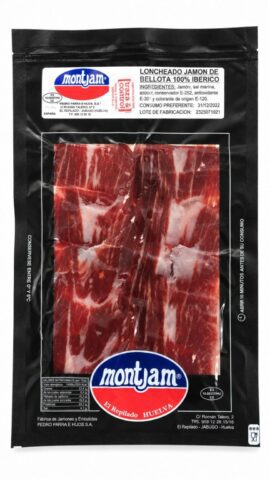
A sealed pack is designed to protect its slices. If visible growth appears inside a package that should still be sealed — especially together with loss of vacuum, unusual liquid, swelling or bad odour — do not treat it like mould on the outside of a whole leg. Removing one slice does not make the rest of the pack equivalent to a sound product.
Keep the package and label, check the date and storage instructions and contact the seller or producer. If packaging integrity has been lost or spoilage signs are present, do not consume the contents. Advice about cleaning surface mould applies to certain whole dry-cured products, not to a compromised sliced pack.
What if the pack has been open for several days?
Once opened, slices are exposed to oxygen, environmental moisture and handling. They should remain refrigerated according to the maker's instructions and be eaten within the stated period. If visible mould develops after opening, discard the affected product rather than trying to wipe individual slices clean.
A thin slice with a large exposed surface does not have the protective exterior of a whole cured ham. This is one reason to open only the amount you need and to close or wrap any product that the manufacturer says can be stored after opening.
Mould, tyrosine crystals and fat are not the same
Small white specks or crystals can sometimes appear within the lean meat. They may be tyrosine crystals, formed from an amino acid during long maturation. They are small, hard and embedded in the tissue rather than forming a fuzzy layer on the outside. They should not automatically be mistaken for mould.
White marbled fat is also normal, while external fat can change colour through oxidation. Looking at texture and location prevents every pale spot from becoming a false alarm.
How to store a whole ham to reduce problems
Before starting it, follow the producer's recommended conditions. For a whole piece intended for room-temperature storage this usually means a cool, dry, ventilated place away from direct heat and sunlight. Avoid damp cupboards, condensation and areas with large temperature swings.
Once opened, protect the cut surface as the producer advises and carve often enough that it is not left deteriorating for weeks. If you eat ham only occasionally, vacuum-packed portions may be more practical than a whole leg.
A strong smell does not always mean spoilage
Iberian ham develops complex aromas from fat and curing, and some areas close to the bone can be particularly intense. A powerful aroma does not automatically mean “rotten”. Concern rises when an abnormal persistent smell appears alongside other signs such as slime, unusual moisture, damaged packaging or decomposing tissue.
If a newly delivered ham raises doubts from the first cut, do not try to rescue it by trimming away large quantities. Document the condition and contact the seller. A quality complaint should be handled through traceability and customer service rather than guesswork.
Practical summary
- Dry superficial mould on the rind of a whole ham: check the maker's instructions, clean the exterior and prepare the cutting area properly.
- Small hard white specks inside the lean: they may be tyrosine crystals and are not the same as surface mould.
- Mould inside a sliced pack: do not eat the affected product; keep the label and contact the seller.
- Slime, unusual liquid, swollen packaging or loss of vacuum: do not consume the product.
- Clearly putrid odour or deep deterioration: stop consumption and consult the producer; when in reasonable doubt, discard it.
Frequently asked questions
Is mould on the outside of a whole Iberian ham normal?
It can be. Whole dry-cured hams can develop surface flora during maturation and storage. It must be distinguished from deep spoilage.
Can I cut away mould and keep eating?
Cleaning exterior mould is part of the normal handling of some whole dry-cured hams. If growth is inside the lean meat or there are other spoilage signs, contact the producer rather than assuming trimming is enough.
What should I do if there is mould inside a vacuum pack?
Do not treat it like mould on a rind. Do not consume the contents; keep the pack and batch details and contact the seller or manufacturer.
Are white dots in ham mould?
Not necessarily. Hard white tyrosine crystals can develop in mature ham and are different from fuzzy fungal growth.
If you are choosing a format suited to your actual consumption rate, browse our hams and shoulders. Whole and pre-sliced formats differ in storage needs as well as presentation.
-
-
EMDO Selection
-