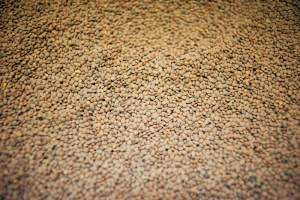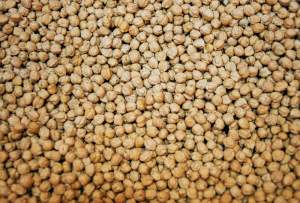
Lentils and chickpeas share many nutritional strengths: plant protein, fibre, complex carbohydrate and several minerals and B vitamins. They are not identical, however. When compared like for like — cooked, per 100 grams — useful differences appear. Lentils are generally lower in calories and very low in fat, while chickpeas naturally contain more fat, much of it unsaturated.
The comparison method matters. One hundred grams of dry pulses and 100 g of cooked pulses are not equivalent because legumes absorb a large amount of water during cooking. The values below are approximate reference figures for cooked pulses without extra recipe ingredients.
Lentils vs chickpeas per 100 g cooked
| Nutrient | Cooked lentils | Cooked chickpeas | Quick reading |
|---|---|---|---|
| Energy | ≈116 kcal | ≈164 kcal | Chickpeas are more energy-dense |
| Protein | ≈9.0 g | ≈8.9 g | Essentially a tie |
| Fat | ≈0.4 g | ≈2.6 g | Chickpeas contain more natural fat |
| Fibre | ≈7.9 g | ≈7.6 g | Very similar |
| Iron | ≈3.3 mg | ≈2.9 mg | Lentils are slightly higher |
| Folate | ≈181 µg | ≈172 µg | Both contribute useful amounts |
| Magnesium | ≈36 mg | ≈48 mg | Chickpeas are somewhat higher |
| Potassium | ≈369 mg | ≈291 mg | Lentils are higher in this reference |
These figures are not universal constants. Variety, soaking, cooking time, water uptake and draining can all change the final composition.
Which has more protein?
The difference is tiny. Both provide about 9 g of protein per 100 g cooked, so choosing one only because of a few tenths of a gram of protein makes little sense. A realistic serving size can matter much more.
Both also share the general amino-acid characteristics of pulses: relatively good lysine and lower proportions of sulphur amino acids. Read our guide to legume protein and amino acids for a detailed explanation.
Which has more fibre?
Again, the result is close. Standard references place both around 7–8 g fibre per 100 g cooked. The useful message is that both are fibre-rich foods rather than that one “wins” by a few tenths.
Blending chickpeas into hummus does not remove their fibre, although the complete recipe may add tahini, oil or other ingredients that change total calories and fat.
Iron: lentils have a small advantage in this reference
Cooked lentils provide about 3.3 mg iron per 100 g in the selected reference, compared with around 2.9 mg for chickpeas. This is non-haem iron, whose absorption is more variable than haem iron. A larger number in a food-composition table therefore does not mean the entire amount is absorbed.
Eating pulses with vitamin-C-rich foods such as peppers, tomatoes, citrus or fruit can improve non-haem iron absorption. This dietary context is more meaningful than a small numerical difference between two legumes.
Calories and fat: a clearer difference
Cooked chickpeas are generally more energy-dense. Their higher natural fat content partly explains this: roughly 2.6 g versus around 0.4 g in the lentil reference. Much of chickpea fat is unsaturated, so “more fat” does not automatically mean “worse”.
The recipe can change calorie content much more than the legume itself. Hummus with tahini and olive oil, lentils with cured meat or a stew with generous oil cannot be compared directly with plain boiled and drained pulses.
Folate, magnesium and potassium
Both provide folate. Lentils are slightly higher in the selected reference; chickpeas contain somewhat more magnesium, while lentils contain more potassium. These differences support a practical conclusion: there is no perfect single pulse, and variety is useful.
Which is more nutritious?
It depends on the objective. Lentils suit a lower-energy, very-low-fat comparison. Chickpeas are more energy-dense and provide somewhat more magnesium. Protein and fibre are extremely similar. Lentils show a modest iron advantage in standard tables.
For most diets, rotating both foods is more useful than declaring an absolute winner.
Canned versus home-cooked
For canned pulses, read the product's own nutrition label and check whether values refer to drained weight. Sodium can be higher when brine contains salt. Rinsing and draining may remove some surface sodium, but the exact result varies by product.
Always compare the same format: dry with dry, cooked with cooked, or equivalent portions.
Conclusion
Lentils and chickpeas are very similar for protein and fibre. Lentils are generally lower in calories and fat per 100 g cooked and, in this reference, somewhat higher in iron and potassium. Chickpeas naturally contain more fat and somewhat more magnesium. Variety, recipe and serving size matter as much as the table.
Sources and method
Approximate values are based on USDA FoodData Central reference data for mature lentils and chickpeas, cooked/boiled. Values are rounded to avoid false precision. Actual composition varies with variety, cooking, water uptake, salt and draining.