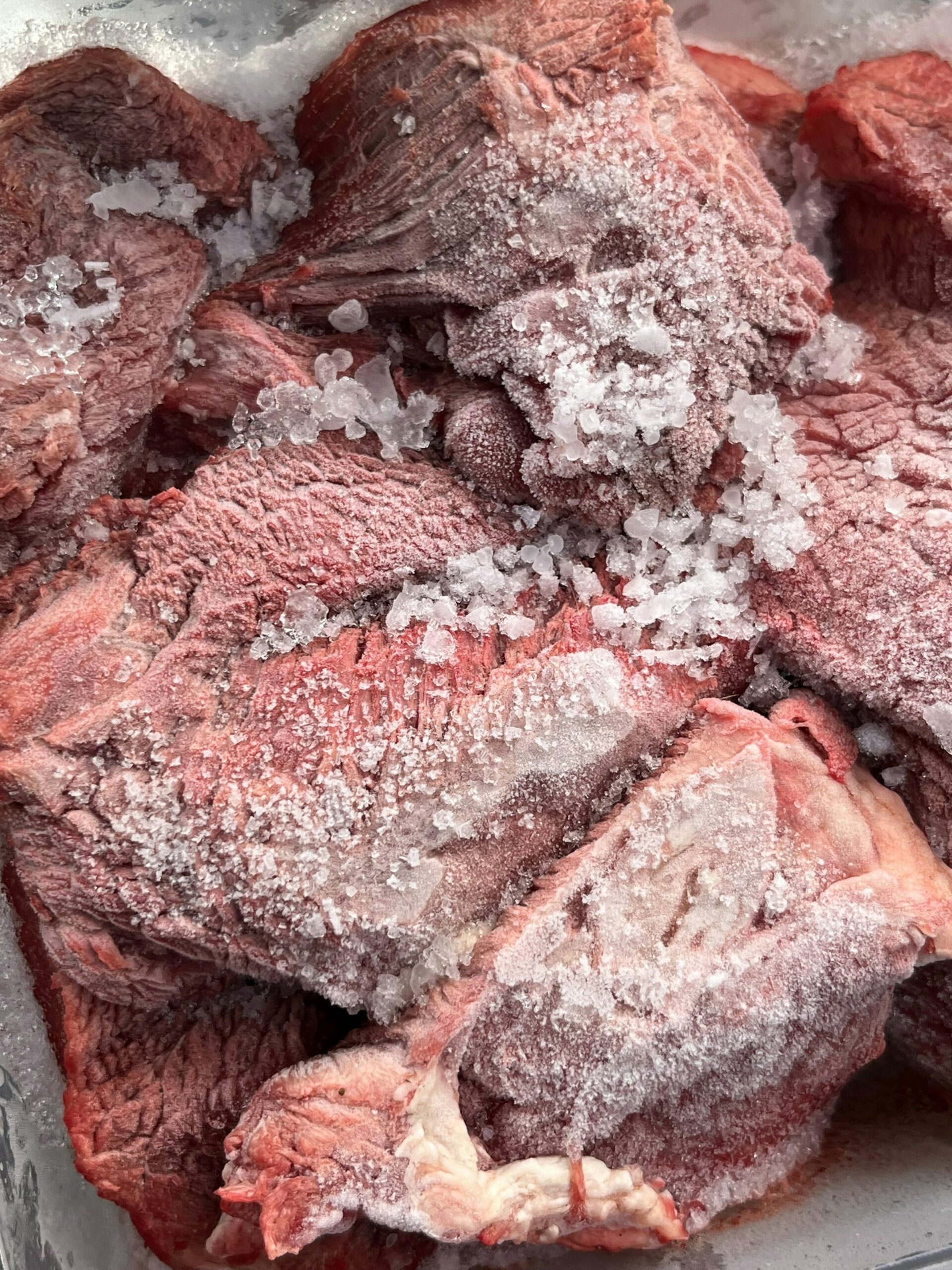
Thawing meat safely is not simply about making a frozen piece soft again. The aim is to thaw the centre without leaving the surface warm for too long, while preserving as much of the meat's texture as possible.
The three standard household methods are the refrigerator, cold water and the microwave. They serve different situations. The fridge is best when you can plan ahead, cold water is useful when you need to speed things up, and the microwave is the emergency option when you are ready to cook immediately.
The preferred method: thawing in the refrigerator
Refrigerator thawing is generally the best option because the meat stays at a low temperature throughout the process. Keep the package on a plate, tray or container that can catch liquid, and place it in a cold part of the fridge away from ready-to-eat food.
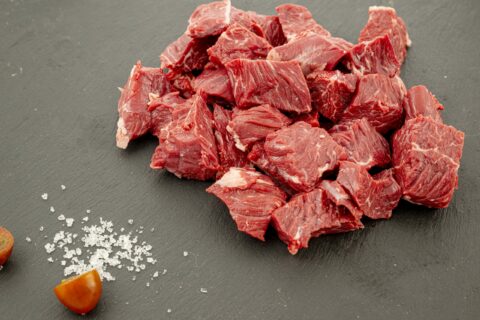
Timing depends heavily on size. Ground beef, stew meat and steaks may thaw in about a day, while larger roasts and bone-in cuts can need two days or longer. USDA gives those timings as broad planning guidance rather than a stopwatch rule.
Why the fridge is also good for texture
Slow thawing reduces the temperature difference between the outside and centre. It cannot undo all of the structural changes caused by freezing, but it usually produces a more even result than rapid warming.
It also gives you more flexibility. USDA advises that raw ground beef thawed in the refrigerator is generally used within one or two additional days, while many whole beef cuts can remain refrigerated for three to five days. Your product label and use-by instructions should always take priority.
How to thaw meat in cold water
When you need a faster method, use cold water, never hot water. Keep the meat in an airtight, leak-proof package, submerge it and replace the water about every 30 minutes so it stays cold.
This is useful for small packs, steaks, minced meat and individual portions. Small packages may thaw in roughly an hour; a large roast can take several hours. Do not use time alone as proof that the centre is fully thawed.
Why the package must not leak
If water reaches the meat directly, the surface can absorb water and lose quality. A leaking bag can also introduce contamination from the surrounding environment. Cold-water thawing therefore does not mean placing an unwrapped steak directly in the sink.
Dry the outside of the package before opening it so water from the sink does not run onto the meat or cutting board.
Cook immediately after cold-water thawing
Food thawed by the cold-water method should be cooked as soon as thawing is complete. The surface can become warmer than it would in a refrigerator even when the water itself remains cold.
If you want to thaw today and cook tomorrow, choose the refrigerator. Cold water is a same-session method.
How to thaw meat in a microwave
The microwave is fastest but least even. Use the defrost setting or low power, turn and reposition the meat during the process, and separate portions as soon as they loosen.
Some edges may begin to warm or cook while other areas are still frozen. For that reason, food-safety guidance recommends cooking immediately after microwave thawing.
Which meat works best in the microwave?
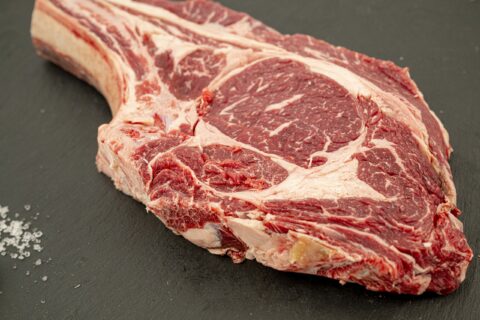
It can be practical for ground beef, burger patties, small steaks and portions that will be cooked thoroughly straight away. For a thick rib steak, tomahawk or another cut where you care about precise doneness, refrigerator thawing normally produces a much better starting point.
Uneven thawing makes internal-temperature control harder because edges can already be warm while the centre remains icy.
Can you thaw meat on the kitchen counter?
It is not a safe method. The outside thaws long before the centre and may spend hours at room temperature while the inside remains frozen. USDA specifically advises against thawing meat on the counter, in hot water or in other uncontrolled locations.
Cooking later does not make poor handling a good idea. Safe preparation starts before the pan is heated and helps reduce both bacterial growth and cross-contamination around the kitchen.
Can you use hot water?
No. Hot water warms the outer layer rapidly while the centre remains frozen. If you use the immersion method, keep the water cold and the package sealed.
Should meat stay in its packaging?
For refrigerator thawing, the original packaging can usually stay in place if it is intact and suitable for storage. Put it on a tray in case liquid escapes. For cold water, the package needs to be genuinely leak-proof.
For microwave thawing, check whether the original tray or film is microwave-safe. Retail packaging is not automatically suitable for heating.
How long does thawing take?
| Format | Refrigerator | Cold water | Microwave |
|---|---|---|---|
| Burger or small portion | Several hours to overnight. | Often under an hour. | Minutes; cook immediately. |
| Steaks | About a day as a planning guide. | Around an hour or more depending on thickness. | Possible, but less even. |
| Ground beef | About a day. | An hour or more depending on pack size. | Fast; cook immediately. |
| Large or bone-in cut | Two days or more. | Several hours. | Usually a poor choice for even thawing. |
These are approximate planning times. Weight, thickness, package shape, refrigerator temperature and microwave power all matter.
Can meat be cooked from frozen?
Some products can be cooked from frozen when their instructions are designed for it. A thick fresh steak that you froze at home is a different case: starting from a frozen centre makes it much harder to brown the outside and reach an even internal temperature.
Follow the label for burgers or other products specifically intended for cooking from frozen rather than assuming the same method works for every cut.
Can you refreeze thawed meat?
Guidance differs in how conservative it is. USDA states that foods thawed safely in the refrigerator can in some cases be refrozen without cooking, although quality may decline. EFSA consumer guidance takes a more cautious approach and advises against refreezing food once thawed.
For a European consumer, the safest practical rule is to follow the product label and producer instructions. If you do not have clear guidance, plan portions so you only thaw what you intend to cook.
How to reduce watery meat after thawing
Liquid can collect in the package because freezing and thawing change the muscle's ability to retain water. Before pan-frying, open the pack, discard excess liquid and pat the surface dry with kitchen paper.
You do not need to leave meat at room temperature for hours. Brief, safe handling, a dry surface and a properly preheated pan are more useful. See our guide to why meat releases water in the pan for more detail.
Freeze in a way that makes thawing easier
- Freeze meat in portions you are likely to use at once.
- Separate steaks so individual pieces can be removed.
- Use well-sealed packaging to reduce freezer burn.
- Label packs with content and date.
- Avoid freezing a huge block when you will only need two steaks later.
Good thawing actually starts on the day you freeze the food. Flat, smaller packs thaw faster and more evenly.
Frequently asked questions
What is the safest way to thaw meat?
The refrigerator is the preferred method when you can plan ahead because it keeps the food cold throughout the process.
Can I leave meat out overnight?
No. The surface can spend too long at room temperature while the centre is still cold or frozen.
Can I use hot water if I am in a hurry?
No. Use cold water in a leak-proof package, or use the microwave if you will cook the meat immediately.
What if I do not need all of the meat?
Ideally, thaw only the portion you need. Once meat is thawed, follow the product's storage and refreezing instructions.
Plan your fresh-meat meals more easily
Buying good meat is only the first step. Freezing it in practical portions, thawing it safely and matching the cooking method to the cut help protect both quality and food safety.
-
Sale!
 Select options
This product has multiple variants. The options may be chosen on the product page
Select options
This product has multiple variants. The options may be chosen on the product page

Food-safety sources: USDA FSIS, safe thawing, USDA FSIS, beef thawing and EFSA, proper food handling.

 Beef picanha (rump cap)
 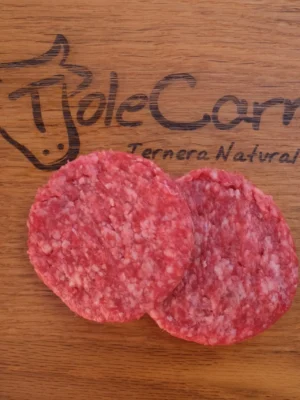 100% beef burgers – gluten-free (2)