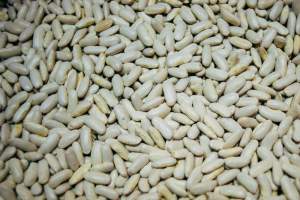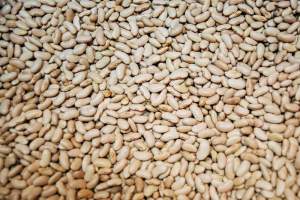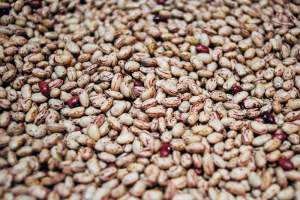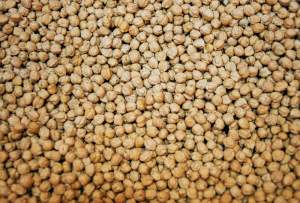
Chickpeas, lentils and beans are three of the most recognisable dry legumes in Spanish cooking. They share many nutrients, but they are not nutritionally identical: lentils contain more protein in this reference, beans more fibre, and chickpeas more fat.
That is why «which is more nutritious?» has no single answer. It depends on the nutrient being compared and, more importantly, on the wider diet.
Chickpeas vs lentils vs beans: nutrition table
For a fair comparison, every value below refers to 100 g of dry product from the same reference table.
| Nutrient | Chickpeas | Lentils | Dry beans |
|---|---|---|---|
| Energy | 373 kcal | 351 kcal | 349 kcal |
| Protein | 19.4 g | 23.8 g | 19.0 g |
| Fat | 5.0 g | 1.8 g | 1.4 g |
| Carbohydrate | 55 g | 54 g | 52.5 g |
| Fibre | 15.0 g | 11.7 g | 25.4 g |
| Iron | 6.7 mg | 7.1 mg | 6.7 mg |
| Magnesium | 160 mg | 78 mg | 160 mg |
| Potassium | 797 mg | 737 mg | 1160 mg |
| Phosphorus | 375 mg | 240 mg | 400 mg |
Approximate values per 100 g dry weight from tables compiled by the Spanish Nutrition Foundation. Actual composition can vary.
For protein: lentils come first
In this comparison, lentils provide 23.8 g of protein per 100 g dry weight. Chickpeas and beans are close to one another at 19.4 and 19.0 g respectively.
Lentils therefore lead this trio, although other legumes have different figures. Our guide to which legume has the most protein also includes soybeans, broad beans and dried peas.
For fibre: beans stand out
The largest difference in the table is fibre. Dry beans reach 25.4 g per 100 g, compared with 15.0 g in chickpeas and 11.7 g in lentils in this reference.
These are dry values. Cooked beans have absorbed water, so their fibre concentration per 100 g will be much lower. See the full legume fibre ranking.
For iron: lentils are slightly higher
The differences are much smaller than for fibre. Lentils provide 7.1 mg of iron per 100 g dry weight, while chickpeas and beans each provide 6.7 mg.
All three contain non-haem plant iron, whose absorption is more variable than haem iron. A 0.4 mg difference should therefore not be used to present one food as universally «better». See the full iron comparison.
Chickpeas contain more fat
Chickpeas contain about 5 g of fat per 100 g dry weight in this table, compared with 1.8 g in lentils and 1.4 g in beans. This contributes to their slightly higher energy value.
More fat does not automatically make a food worse. The total amount remains moderate compared with high-fat foods, and nutritional quality cannot be reduced to one macronutrient.
Which has fewer calories?
The dry values are fairly close: 373 kcal for chickpeas, 351 for lentils and 349 for beans. The difference between lentils and beans is minimal.
In an actual dish, oil, sausage, meat, vegetables, sauces and other ingredients can affect total calories far more than the small difference between these legumes.
Minerals: no one wins everything
Beans stand out for potassium and phosphorus in this reference; chickpeas and beans are level for magnesium; lentils are slightly higher for iron. All three also provide other minerals and B vitamins.
This is exactly why «which legume is more nutritious?» needs context. Each has different strengths.
What changes when they are cooked?
All three absorb water during soaking and cooking. Their cooked values per 100 g are therefore much lower than those shown here. That does not mean protein or fibre has vanished: much of the difference comes from 100 g of cooked food containing more water and less dry matter.
When comparing packaged products, also check whether the label refers to net weight, drained weight or prepared food.
Which should you cook?
The practical choice also depends on the dish:
- Lentils: generally cook relatively quickly and work in stews, salads and soups.
- Chickpeas: have a firm, creamy texture and suit Spanish cocidos and potajes as well as hummus and salads.
- Beans: come in a wide range of sizes and textures and form the basis of many traditional stews.
Alternating them makes good culinary and nutritional sense.
So which is more nutritious?
There is no absolute winner. Looking only at dry protein, lentils lead these three. Looking at fibre, beans win. Lentils are slightly higher in iron, while chickpeas contain more fat and a little more energy.
The more useful conclusion is that chickpeas, lentils and beans complement one another. Variety makes more sense than always choosing the legume that leads one particular nutrient.
Frequently asked questions
Which is better, chickpeas or lentils?
It depends on the measure. Lentils contain more protein and iron in this table; chickpeas contain more fat and somewhat more fibre than lentils.
Which is better, lentils or beans?
Lentils lead for protein and slightly for iron; beans contain much more fibre in this reference and more potassium.
Which is better, chickpeas or beans?
Their protein and iron figures are close. Beans stand out for fibre, while chickpeas contain more fat.
Sources
Comparison based on values in the Spanish Nutrition Foundation (FEN) report on legumes, nutrition and health. For the broader nutrient picture, see what nutrients legumes provide.