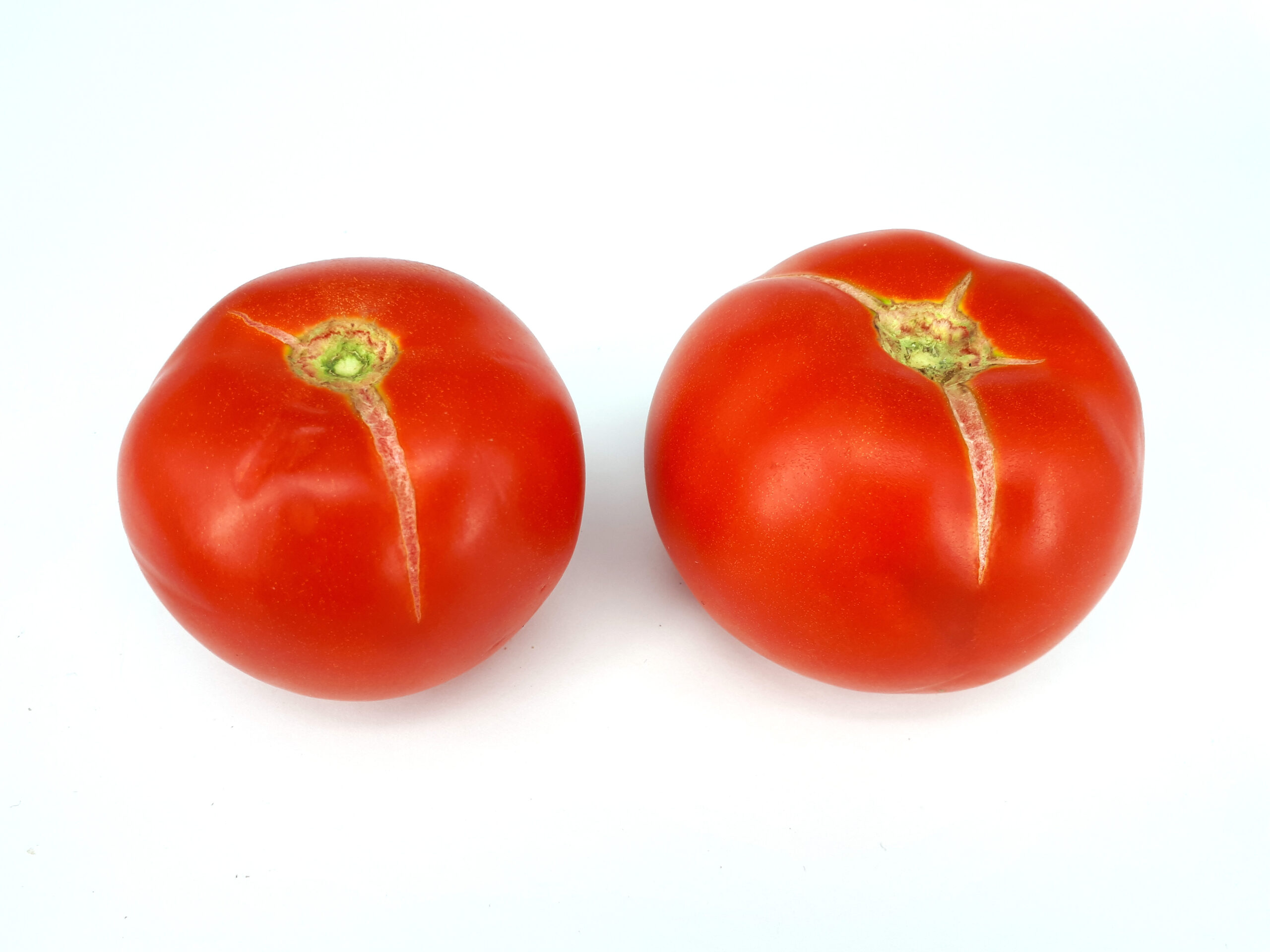
A tomato may arrive in the kitchen with a split around the stem, a line running down the side or an opening that seems to have appeared suddenly. It looks dramatic, but a crack alone does not mean the tomato is rotten. Many cracks are a consequence of fruit growth and changing water availability.
The useful distinction is between a dry, healed, stable scar and a recent deep opening that exposes moist inner tissue. The first may be largely cosmetic; the second makes the tomato more vulnerable and requires closer inspection.
Why tomatoes split
Tomato skin expands as the fruit grows. If the inside increases in volume faster than the skin can accommodate, the surface may rupture. This is particularly common when water availability changes abruptly, such as a relatively dry period followed by heavy rain or irrigation.
The fruit takes up water, internal pressure rises and sensitive parts of the skin can split. Variety, ripeness, temperature and growing conditions all influence susceptibility.
Radial and concentric cracking
Two common horticultural patterns are described. Radial cracks start near the stem and extend down the fruit. Concentric cracks form arcs or rings around the shoulder.
Both can be physiological growth disorders. The pattern itself does not decide edibility; what matters is whether the crack is dry and sealed or fresh and open.
A dry scar is not the same as an open wound
Some cracks form in the field and the tomato continues growing. Firm, dry scar tissue develops across the damaged surface. The mark remains visible even though the split is no longer fresh.
If the tomato smells normal, remains firm and has no mould, watery decay or breakdown, the crack may mainly affect appearance. The scarred section can be trimmed if its texture is unpleasant.
When a crack deserves more caution
A fresh split exposes pulp and juice. The surface can retain moisture and is more vulnerable to contamination and spoilage. The deeper and wetter the opening, the less sensible it is to treat it as a harmless cosmetic mark.
Discard tomatoes with visible mould, fermented odours, soft watery tissue around the crack, abnormal leakage or decay extending inside.
Can a freshly cracked tomato still be eaten?
If a recent crack is clean, the fruit remains firm and there are no spoilage signs, use it promptly rather than storing it for several more days. Damaged skin shortens keeping quality.
A small clean split can be directed to a sauce, sofrito or immediate meal. The aim is neither to waste every imperfect tomato nor to ignore deep damage.
What if it was already healed when purchased?
A dry scar may have formed long before harvest and simply be part of the fruit's appearance. Produce that is selected less aggressively for cosmetic uniformity can show more marks without necessarily having inferior flesh.
Our guide to choosing and storing tomatoes explains why appearance and actual condition should be judged separately.
Should you cut around the crack?
For a dry scar on an otherwise sound tomato, trimming is mostly a culinary choice. For an open crack, remove damaged tissue generously and evaluate the whole fruit. Once mould, rot or widespread breakdown is present, trimming is no longer an appropriate rescue strategy.
Why cracking often happens near ripeness
As tomatoes ripen, skin and internal tissues change. A fruit at an advanced stage can be less able to accommodate rapid water uptake than one earlier in development. Rain or irrigation can therefore trigger splitting close to harvest.
This explains why a cracked tomato can still be aromatic and properly ripe: the split does not necessarily mean it aged badly in storage.
Does cracking change flavour?
There is no simple rule that cracked tomatoes taste worse. Flavour depends on variety, ripeness, cultivation and composition. A limited crack may have little effect on sound flesh.
What clearly changes is storage potential. Intact skin is a better physical barrier, so a cracked but sound tomato should move to the front of the eating order.
Reducing waste in a box of tomatoes
Separate tomatoes with recent cracks or bruises and plan to use them first. Keep firmer intact fruit for later. A very ripe but healthy cracked tomato can be excellent for grating, blending or cooking.
A practical rule
- Old dry healed crack: usually mainly cosmetic if the fruit is sound.
- Fresh clean crack: inspect and use promptly.
- Wet crack with soft tissue, mould or bad smell: discard.
- Very ripe but healthy cracked tomato: prioritise it for immediate cooking or eating.
Frequently asked questions
Does every cracked tomato contain bacteria?
No. A crack increases exposure and reduces storage life, but its presence alone cannot prove contamination.
Are cracks caused by too much water?
Rapid changes in water availability and fruit expansion are common causes, while variety, ripeness and weather also matter.
Can scarred tomatoes be used for sauce?
Yes, if they are otherwise sound. Sauce is an excellent use for ripe produce that has lost cosmetic value.
Vegetables available now
- EMDO Selection