Olive-oil labels use phrases that sound similar but do not mean exactly the same thing. Two of the most frequently confused are “first cold pressing” and “cold extraction”. They are often treated informally as synonyms for “good oil”, even though they describe different extraction systems.
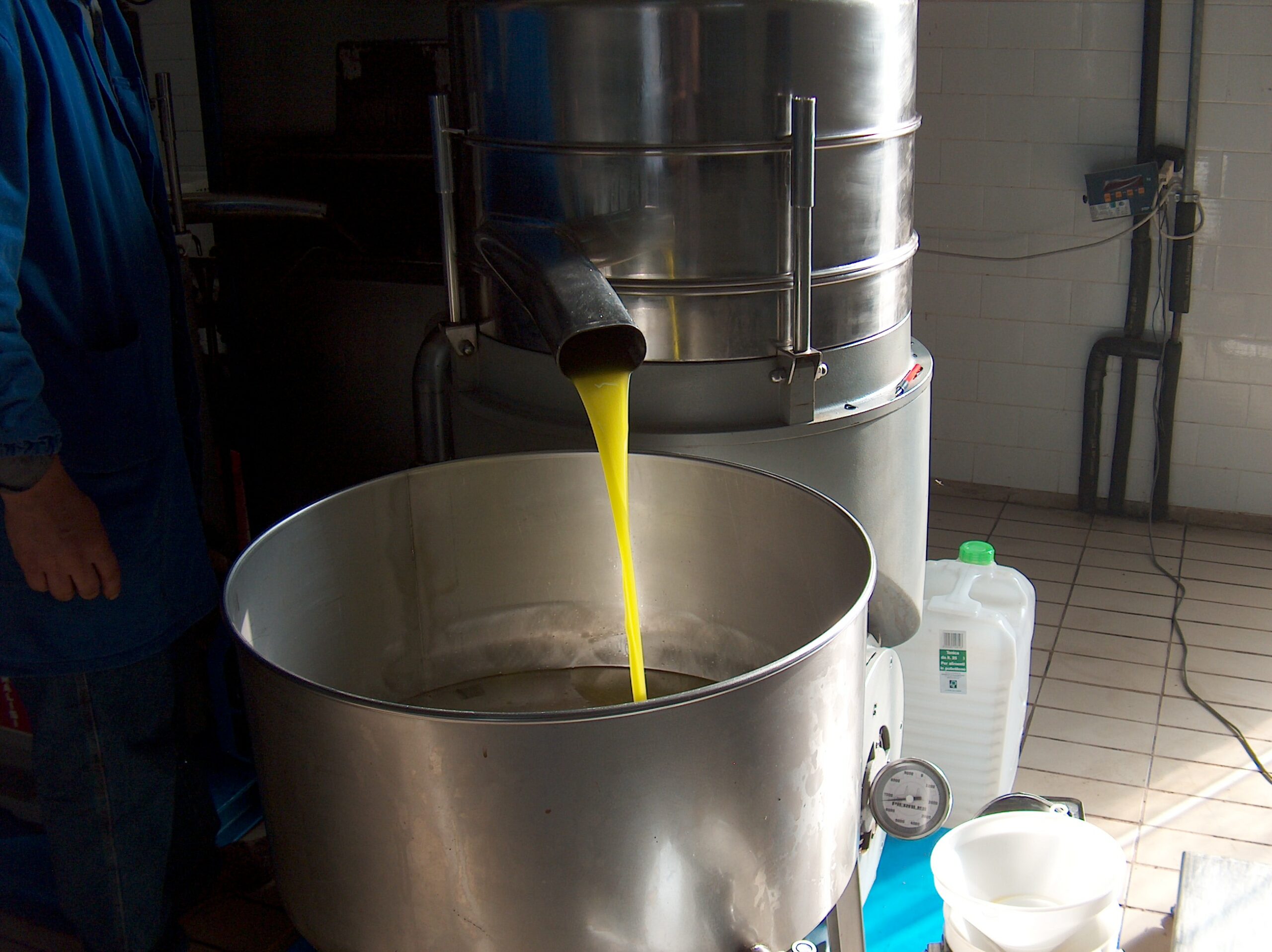
EU rules are specific. “First cold pressing” is reserved for virgin or extra virgin olive oils obtained below 27°C from a first mechanical pressing of olive paste using a traditional hydraulic press. “Cold extraction” is reserved for virgin or extra virgin olive oils obtained below 27°C by percolation or centrifugation.
The main difference is the extraction technology
Both terms share the same regulatory temperature threshold. The difference is the equipment and separation method. First cold pressing belongs to the traditional hydraulic-press system. Cold extraction applies to percolation or centrifugation.
A modern EVOO should therefore not be described as first cold pressed merely because it was processed at low temperature. If it was separated by centrifugation, “cold extraction” is the relevant reserved expression when the legal conditions are met.
What does “cold” actually mean?
It does not mean refrigerator temperatures. In this legal context the relevant threshold is below 27°C.
Moderate processing temperatures can help preserve aroma and temperature-sensitive compounds, but final quality depends on many other factors: olive condition, speed from harvest to milling, hygiene, oxygen exposure, malaxation time, storage and later protection from heat and light.
Why “pressing” is not automatically superior
A traditional press is visually attractive and historically important, but tradition should not be confused with automatic superiority. Modern mills use continuous centrifugation because it can offer efficient, hygienic and highly controlled processing.
Excellent extra virgin olive oil can be produced by cold centrifugation. This is standard technology across much of today's quality-focused olive-oil industry.
What does “first” mean?
In the traditional system it refers to the first mechanical pressing of the paste. It should not be interpreted as if all modern oils normally undergo comparable second and third pressings.
Continuous modern extraction does not fit that terminology, which is why EU labelling rules distinguish the two expressions.
EVOO status does not come from either phrase
An oil is not extra virgin simply because the label says “cold extraction”. To qualify as extra virgin olive oil, it must meet the chemical and sensory criteria established for that category.
Consumers can otherwise give too much weight to one attractive production phrase while overlooking legal category, origin, producer, harvest information when available, storage and traceability.
See our guide to reading an olive-oil label for the wider picture.
Does lower temperature always mean better oil?
There is no simple linear rule. Excessive heat can compromise volatile aromas and other valuable components, but extraction requires a balance between separation efficiency, yield and quality.
Two oils produced below 27°C can still be dramatically different because the olives, varieties, timing, hygiene, oxygen exposure and storage are different. Temperature is important, but it is not a complete quality score.
What happens during milling and malaxation?
Olives are milled into a paste. During malaxation, tiny oil droplets combine so that separation becomes easier. Time and temperature influence this stage. Careful control aims to facilitate extraction without unnecessarily sacrificing freshness.
Modern centrifugation then uses density differences to separate phases. There is no hydraulic press physically squeezing the paste in the traditional sense.
Why marketing language creates confusion
“Cold pressed” has become a broad phrase across foods and cosmetics. Olive-oil labelling in the EU is more specific: reserved terms come with defined conditions.
Informal descriptions and legally reserved label statements are not the same thing. When a producer uses the regulated wording, the process should match it.
Does cold extraction guarantee more polyphenols?
No. Phenolic content depends on cultivar, ripeness, growing conditions and many process decisions. Temperature control can help preserve compounds, but two cold-extracted EVOOs can still have very different phenolic profiles.
The same is true of bitterness and pungency. Those sensations cannot be predicted from the phrase alone.
How to interpret the terms when buying
- First cold pressing: first mechanical pressing using a traditional hydraulic press below 27°C.
- Cold extraction: percolation or centrifugation below 27°C.
- Neither phrase: absence does not by itself prove poor quality.
- EVOO: the category has its own chemical and sensory requirements.
Frequently asked questions
Is first cold pressing better than cold extraction?
Not by definition. They describe different technologies. Judge the finished oil by category, freshness, sensory quality and storage.
Can modern centrifuged EVOO say first cold pressed?
Not as an equivalent expression. That reserved wording is linked to the traditional hydraulic-press method.
Is cold extraction useful information?
Yes. It tells you something specific about production conditions, but it should not be your only buying criterion.
Olive oils available now
-
EMDO Selection
-
EMDO Selection
-
EMDO Selection Sale

Technical reference: Commission Delegated Regulation (EU) 2022/2104, Article 10, on optional reserved terms for olive-oil labelling.