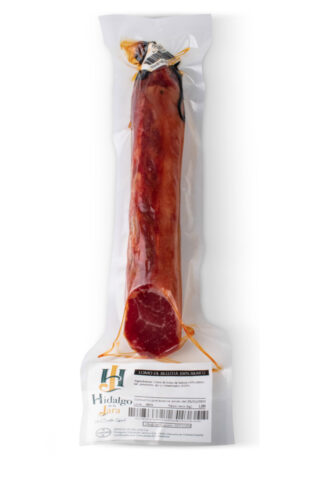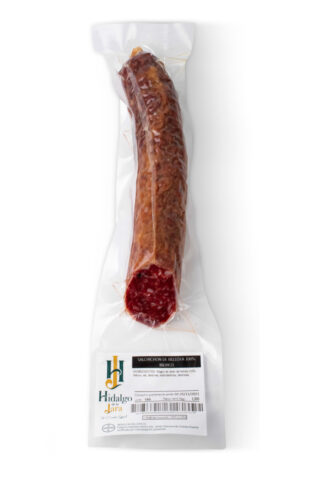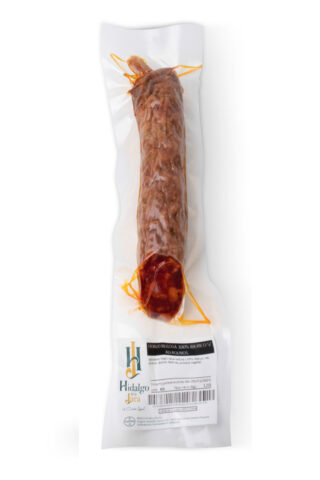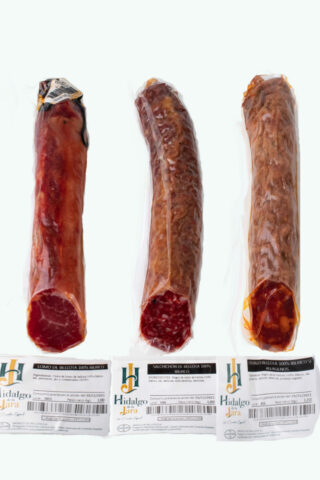
Chorizo and salchichón share the same broad technology: seasoned meat and fat are stuffed into a casing, dried and matured. Yet one taste is enough to show that they are not two versions of the same sausage. The most visible difference is paprika in chorizo, but seasoning, grind size, recipe and maturation all shape the texture and aroma.
Our current 100% Iberian acorn-fed chorizo and salchichón come from the same producer. That makes the comparison particularly useful: with a broadly comparable raw-material base, you can clearly see how much the recipe changes the final cured sausage.
Related cured-meat guides: how to store cured meats after openingwhen white mold on cured sausage is normalhow to freeze chorizo, salchichón and cured loin
The easiest difference to recognise: paprika
Spanish chorizo is closely associated with paprika. It provides the familiar red colour and aromas that can range from sweet and earthy to hot or smoky depending on the paprika and recipe. Fat distributes those aromatic compounds throughout the slice.
Salchichón does not use paprika as its defining seasoning. Its colour is generally closer to cured meat and white fat, while other spices take the lead. Pepper is a classic reference, although each producer can build a distinctive seasoning profile within the applicable rules.
Colour alone does not measure quality
Red makes many chorizos easy to identify, but deeper colour does not mean higher quality. Colour depends on the paprika variety and amount, maturation, oxidation and other permitted ingredients.
Salchichón also varies in colour depending on lean-to-fat ratio, diameter and maturation. Ingredient lists tell you far more than an online photograph.
How flavour changes
Chorizo normally gives an immediate seasoned profile. Paprika can be sweet, earthy, hot or smoky, and garlic is important in many recipes. The result often makes a strong first impression.
Salchichón tends to leave more room for cured pork and spices such as pepper. It may feel less dominant on a charcuterie board without being less complex. In a mature Iberian piece, meat, fat and seasoning can produce a deep profile that is best appreciated when the sausage is not served excessively cold.
Meat and fat still determine quality
Paprika cannot rescue mediocre chorizo and pepper cannot guarantee excellent salchichón. The quality of lean meat, the type and proportion of fat, freshness of the mixture, hygiene and control of drying all matter.
In Iberian products, the fat can create a particularly supple mouthfeel. That does not mean every good piece needs very large visible cubes of fat: grinding and formulation determine how it is distributed.
Grind size changes the bite
Some sausages use a coarser grind where pieces of lean and fat remain visually distinct; others have a finer, more even mixture. This choice changes texture, fat release and the way spices are perceived.
Two chorizos with similar ingredients can feel completely different if one is coarse and the other finely minced. The same is true of salchichón. These names describe product families rather than one universal texture.
Curing: diameter matters as much as the calendar
A thick sausage needs moisture to migrate slowly and evenly from the centre. A narrow piece reaches its balance sooner. The aim is not to collect the largest possible number of curing months but to achieve appropriate moisture, texture and aromatic development.
If the surface dries too quickly, it can harden while the centre remains too moist. Controlled maturation is designed to prevent that imbalance. Our guide to how cured sausages are made explains the role of salt, humidity, temperature and time.
Which is more intense?
If “intense” means immediate spice impact, chorizo often leads because of paprika and, where used, garlic or heat. If you mean depth of cured pork, pepper and fat, a high-quality salchichón can be just as persistent in a different way.
The best comparison is to serve both with neutral bread or water and avoid strong accompaniments. You can then decide whether the difference you value most is spice, fat, salt balance or texture.
How to serve chorizo and salchichón
Slice them thinly but not so thinly that all structure disappears. If refrigerated, let them lose enough chill for the fat to soften before serving. Temperature makes a major difference to aroma.
Remove the casing when it is not edible or when the manufacturer instructs you to do so. Natural and artificial casings behave differently, so check the label when unsure.
Order on a charcuterie board
A useful sequence moves from more delicate flavours to more heavily seasoned ones. If your chorizo has assertive paprika or chilli, taste the salchichón first so the paprika does not dominate everything that follows.
When lomo or lomito are also present, arrange the board from cleaner whole-muscle cured meats toward the most seasoned sausage. Our guide to preparing an Iberian charcuterie board covers serving order and quantities.
Sandwiches and cooking
Chorizo quickly brings paprika and fat to bread, eggs, stews and other dishes. When heated, some fat melts and carries flavour through the food, so consider that before adding extra oil or salt.
Salchichón is commonly enjoyed cold because its cured-meat and pepper profile works naturally in sandwiches and appetisers. It can be heated, but doing so may lose some of the aromatic balance for which it was chosen.
What to check when buying
- Ingredients: check meat, fat, paprika or spices and declared additives.
- Raw-material origin: if you want Iberian, read the full product information rather than relying on appearance.
- Format: a whole piece suits frequent consumption; smaller pieces or sliced packs spend less time open.
- Texture: look at grind size and diameter.
- Profile: choose chorizo for paprika-led character; choose salchichón for pepper, cured meat and a less paprika-driven flavour.
Products at El Mercado de Origen
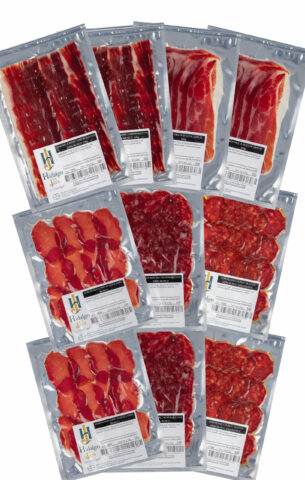
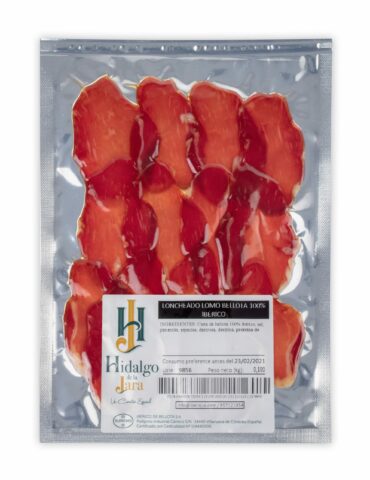
You can currently compare 100% Iberian acorn-fed chorizo and 100% Iberian acorn-fed salchichón from the same producer. Sliced and assortment formats also make it possible to taste both without buying two full sausages.
Comparing products from the same origin is a useful way to isolate the effect of formulation: similar raw-material quality, but paprika, spices and recipe produce clearly different results.
Frequently asked questions
Does salchichón contain paprika?
It is not the defining seasoning. Recipes vary, but paprika characterises chorizo, while salchichón is generally built around other spices such as pepper.
Which contains more fat?
The name alone cannot tell you. It depends on the recipe. Compare nutrition values per 100 grams if fat content matters to you.
Can cured chorizo and salchichón be eaten without cooking?
Yes when they are cured products sold as ready to eat, always following the manufacturer's storage and serving instructions. Do not confuse them with fresh sausages that require cooking.
Which should I choose for a board?
Both create useful contrast. If choosing only one, take chorizo for a paprika-led flavour or salchichón for cured pork and pepper with less seasoning dominance.
Browse the current Iberian cured-meat selection at El Mercado de Origen.
-
Sale!
 Select options
This product has multiple variants. The options may be chosen on the product page
Select options
This product has multiple variants. The options may be chosen on the product page
-
-
-