Introduction
Iberian ham is one of Spain’s most distinctive foods. Its character comes from the Iberian pig, the animal’s diet and way of life, and a long curing process in which salt, temperature, humidity and time all play a part.
The curing process
Salting
Fresh hams are covered with salt at very low temperature. The exact salting time depends on the weight of the piece. High humidity allows the salt to dissolve gradually and penetrate the ham while the cold protects the fresh meat.
Post-salting
After salting, the pieces rest in controlled chambers. During this stage the salt redistributes through the ham while temperature slowly rises and humidity is reduced. This helps stabilise the piece before natural drying.
Natural drying
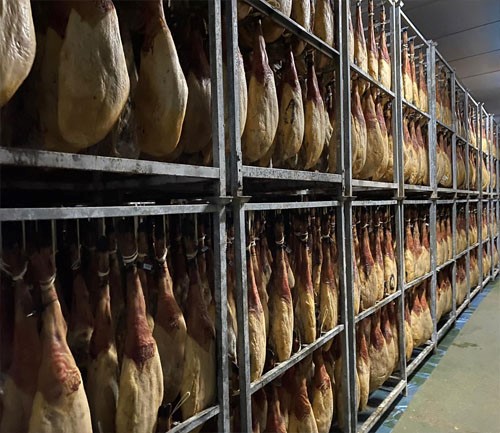
The hams then move to drying rooms where seasonal temperature changes encourage slow dehydration and the development of the aromas associated with cured Iberian ham. In traditional natural drying rooms, ventilation can be adjusted as conditions change.
Cellar ageing
The final stage takes place slowly in the cellar. Temperature should remain relatively stable and the ham is given the time it needs to mature. Acorn-fed hams may spend several years curing before they are ready.
Understanding the coloured tags
The official Iberian quality system uses coloured tags to make the production category easy to identify.
- Black tag: 100% Iberian acorn-fed.
- Red tag: acorn-fed Iberian, normally 50% or 75% Iberian breed.
- Green tag: free-range grain-fed Iberian.
- White tag: grain-fed Iberian raised on farm.
The Iberian pig in the dehesa
The dehesa is a Mediterranean agroforestry landscape of holm oaks and cork oaks, pasture and open land. Iberian pigs can roam freely there and feed on grass, roots and other natural resources. During the montanera finishing season, acorns become the defining part of the diet for acorn-fed pigs.
Our 100% Iberian pigs are born and raised with access to the outdoors. Depending on the time of year, their diet combines the natural resources of the dehesa with cereals and legumes grown for the herd. Animals destined for the acorn-fed category enter the montanera season when the acorn crop is available.
Why time matters
Curing is not a fixed recipe measured only in months. Weight, fat infiltration, temperature and humidity all affect how each piece evolves. A good cellar allows the ham to mature gradually until texture, aroma and flavour are in balance.
Our best-selling hams and shoulder hams
-
SaleSale!
 Select options
This product has multiple variants. The options may be chosen on the product page
Select options
This product has multiple variants. The options may be chosen on the product page
-
SaleSale!Select options
This product has multiple variants. The options may be chosen on the product page
-
SaleSale!Select options
This product has multiple variants. The options may be chosen on the product page
-
SaleSale!Select options
This product has multiple variants. The options may be chosen on the product page
-
Last units availableSaleSale!Select options
This product has multiple variants. The options may be chosen on the product page
-
Sale!Select options
This product has multiple variants. The options may be chosen on the product page
-
-
Sale!Select options
This product has multiple variants. The options may be chosen on the product page