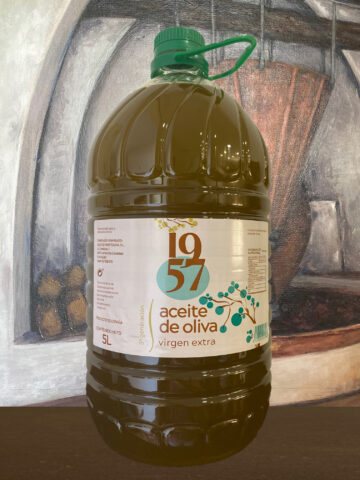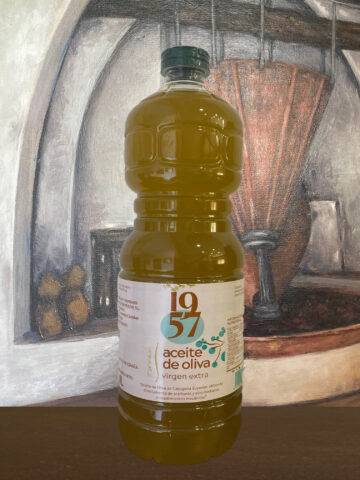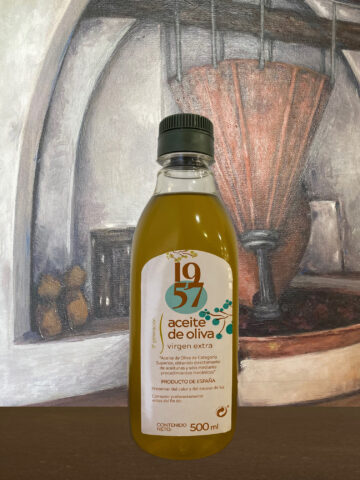
Reading an olive oil label properly requires more than spotting words such as “premium”, “artisan”, “selection” or “traditional”. Some statements are defined by law and communicate specific information. Others are perfectly legitimate marketing descriptions, but they are not official quality grades.
The most useful method is to read the bottle in layers. First establish the legal category of oil. Then check origin, quantity, date, lot and storage information. Finally interpret optional details such as olive variety, crop year, cold extraction and tasting notes. That order prevents attractive packaging from outweighing essential information.
1. Start with the legal sales designation
“Extra virgin olive oil”, “virgin olive oil”, “olive oil” and “olive-pomace oil” are not interchangeable ways of describing the same product. They are legally distinct categories with different definitions and requirements. If you are looking for EVOO, the words to find are extra virgin olive oil.
In practical terms, extra virgin identifies oil obtained directly from olives solely by mechanical means and meeting the required chemical and sensory limits. Establish the category before focusing on variety or label design.
2. Origin: brand location is not the same as provenance
A Spanish brand name does not automatically mean every olive came from one specific region of Spain. EU rules establish detailed origin-labelling requirements for virgin and extra virgin olive oils. Where olives and mill are located in different areas, origin wording must reflect that under the applicable rules.
If provenance matters to you, look for a clear origin statement rather than inferring it from a brand name, decorative flag or company address.
3. Olive variety: Picual, Arbequina, Lechín and others
Variety provides useful sensory clues but does not determine final quality on its own. Picual is often associated with stronger profiles and good stability, Arbequina with softer and fruitier sensations, and Lechín with its own vegetal balance. Grove, ripeness, crop year and processing still change the result significantly.
When variety is stated, it helps predict style. For flavour-focused comparison, see our Picual, Arbequina or Lechín guide.
4. Harvest year: what it can actually tell you
Harvest year can help place an oil in time, but its use is regulated. For virgin and extra virgin olive oils, the crop indication may appear when 100% of the contents come from that harvest, using the formats permitted by EU rules.
Do not confuse harvest year with best-before date. The former refers to when olives were harvested; the latter concerns the period in which the producer expects the product to retain its intended characteristics under stated conditions.
5. “Cold extraction” has a specific definition
“Cold extraction” is not simply decorative language. EU law permits this expression for virgin and extra virgin olive oils obtained by percolation or centrifugation of olive paste below 27 °C.
“First cold pressing” is a different reserved expression connected with traditional hydraulic-press systems and specific requirements. Using “first pressing” for a modern centrifugal process can therefore be technically misleading if no pressing is involved.
6. Early harvest is not the same as cold extraction
Early harvest describes when olives were picked. Cold extraction describes production conditions. Both can appear together, but they answer different questions. An early-harvest oil need not necessarily carry a cold-extraction statement, and cold-extracted oil can be made from olives at different stages of ripeness.
For the full distinction, read our guide to early-harvest EVOO.
7. Acidity: why one number tells less than many shoppers think
Acidity is an important chemical parameter in olive-oil classification, but consumers often mistake it for a measure of sour taste. It is not perceived that way on the palate.
EU rules also set conditions for highlighting maximum expected acidity on a label. If stated, it must be accompanied by other analytical parameters — including peroxide value, wax content and ultraviolet absorption — under comparable display conditions. A label turning acidity alone into a major marketing message therefore deserves careful interpretation.
8. Tasting notes are useful when they are precise
“Fruity”, “bitter” and “pungent” belong to the sensory vocabulary of virgin and extra virgin olive oil. EU rules set conditions for certain organoleptic statements on labels. A serious tasting description can help match an oil to tomato, salads, meat, vegetables or hot cooking.
Vague phrases such as “superior flavour”, “ultra-premium” or “gourmet” do not replace a specific sensory description. They are marketing language, not official categories equivalent to extra virgin.
9. Best-before date and storage
Olive oil does not improve indefinitely in the bottle. Oxidation progresses over time and accelerates with light, heat and oxygen. Read the best-before date together with storage instructions and packaging type.
Dark glass, tins and well-stored larger containers can protect oil from light better than clear glass left on a sunny counter. Once opened, closing the container tightly and keeping it away from heat and light matters more than obsessing over one isolated number. Our EVOO storage guide explains why.
10. Lot number, net quantity and responsible operator
Lot number, net quantity and food-business operator may look administrative, but they are essential to traceability. The lot identifies a specific production if a question or incident needs to be investigated.
EU marketing rules also cover packaging. Commission Delegated Regulation (EU) 2022/2104 provides, for the relevant categories sold to final consumers, packaging up to five litres and opening systems that cannot be resealed in the same way after first opening.
How to compare two bottles in under a minute
A useful sequence is: category → origin → producer → variety → crop year if shown → packaging/light protection → best-before date → sensory profile. Only then compare price and intended use.
This method makes two common mistakes less likely: paying extra only because of impressive marketing words, or overlooking an excellent oil because the label design is simpler.
Sources and references
Commission Delegated Regulation (EU) 2022/2104 — olive oil marketing standards.
EUR-Lex — marketing standards for olive oil.
Related extra virgin olive oils
-
EMDO Selection Sale
-
EMDO Selection
-
EMDO Selection