Lentils are famous for their iron, but they are not always the legume with the highest iron content per 100 g. When the common dry legumes eaten in Spain are compared using one reference source, soybeans and dried broad beans come out higher.
There is another important point: the iron in legumes is non-haem iron, so understanding iron involves more than simply ranking the number of milligrams.
Ranking: iron in legumes per 100 g dry weight
| Rank | Dry legume | Iron per 100 g |
|---|---|---|
| 1 | Soybeans | 9.7 mg |
| 2 | Dried broad beans | 8.5 mg |
| 3 | Lentils | 7.1 mg |
| 4 | Chickpeas | 6.7 mg |
| 4 | Dry beans | 6.7 mg |
| 6 | Dried peas | 5.3 mg |
Approximate values per 100 g dry product from tables compiled by FEN. Figures can vary by variety and composition source.
So are lentils high in iron?
They contain a relevant amount of iron within the legume group. What needs correcting is the idea that lentils are always the legume with the most iron. In this comparison they rank third behind soybeans and dried broad beans.
Among the three classics — lentils, chickpeas and dry beans — lentils are slightly higher at 7.1 mg versus 6.7 mg per 100 g dry chickpeas and beans.
Iron from legumes is not absorbed in the same way as iron from meat
The iron in legumes is mainly non-haem iron. Its absorption is more variable than that of haem iron in animal foods. Two foods showing the same amount of iron in a composition table therefore do not necessarily result in the same amount being absorbed by the body.
A responsible comparison distinguishes between content and bioavailability. This guide ranks content: the milligrams present in 100 g of dry food.
Vitamin C and plant iron
Vitamin C consumed in the same meal can improve the absorption of non-haem iron. In practical terms, legumes can be served with foods that provide vitamin C, such as peppers, tomatoes, citrus fruit and other fruit and vegetables.
The useful idea is not to turn every plate into a formula, but to recognise that the overall meal can influence how plant iron is used.
Do soaking and cooking change iron?
Soaking and cooking change the structure of the food and reduce some compounds that can interfere with mineral availability. At the same time, some nutrients may move into the cooking water. The final result depends on method, time and whether the liquid is discarded or eaten as part of the dish.
For this comparison, the crucial distinction is water uptake: a cooked legume weighs much more than a dry one, so iron per 100 g cooked will be lower even though the dish still supplies iron.
How much iron is in a serving?
The table does not describe a 100 g cooked serving. For a particular recipe, use the dry weight that went into the dish or a composition table specifically for the cooked food.
A serving made with 60–80 g of dry legumes cannot be directly compared with a table describing 100 g cooked food. The food state must match.
Which is better for iron: lentils, chickpeas or beans?
If we look only at dry iron content in this reference, lentils are slightly higher. The differences are not large, however, and all three provide iron alongside protein, fibre and other minerals.
Choosing only on the basis of a few tenths of a milligram would oversimplify the bigger nutritional picture.
Iron rankings are not the same as protein or fibre rankings
Each nutrient produces a different order. Soy leads this iron comparison and also our protein comparison, whereas dry beans stand out for fibre. See our overview of all the main nutrients in legumes for the full picture.
Conclusion: which legume has the most iron?
Dry soybeans contain the most iron in this comparison at 9.7 mg per 100 g. Dried broad beans follow at 8.5 mg, then lentils at 7.1 mg. Chickpeas and dry beans are level at 6.7 mg, while dried peas provide 5.3 mg.
These figures allow like-for-like food comparison. They should not be confused with the amount the body will absorb or with values for a cooked serving.
Frequently asked questions
Which has more iron, lentils or chickpeas?
In the dry-food table used here, lentils provide 7.1 mg per 100 g and chickpeas 6.7 mg.
Which has more iron, lentils or beans?
Lentils are slightly higher: 7.1 mg versus 6.7 mg per 100 g dry product.
Does soy contain more iron than lentils?
Yes in this reference: 9.7 mg per 100 g dry soybeans versus 7.1 mg for lentils.
Sources
Comparative values come from the Spanish Nutrition Foundation (FEN) report on legumes, nutrition and health. Figures are approximate and can vary between varieties and composition tables.


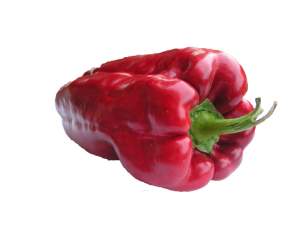 Red Lamuyo Pepper