Choosing extra virgin olive oil for cooking should not be reduced to finding “a good one” and using it identically for every dish. An excellent EVOO may still be too assertive for a delicate mayonnaise or too mild to finish a robust stew. A more useful approach is to separate two questions: which cooking technique are you using, and how much olive-oil character do you want in the finished dish?
EVOO is remarkably versatile. It can be used raw, for sautéing, roasting and frying. The International Olive Council highlights olive oil’s high oleic-acid content and its stability under heat when used correctly. Once that technical foundation is clear, choosing Picual, Arbequina, Lechín or another variety becomes mainly a sensory and practical decision.
Start with the oil’s role, not the variety name
In a dressing or on toast, the oil reaches the plate with very little transformation, so aroma, bitterness and pungency remain obvious. During a long cook, some of those notes merge with other ingredients. In frying, thermal stability, temperature control and the oil’s condition become especially important.
It helps to think in three groups: raw use and finishing, where flavour leads; moderate cooking such as sautéing and roasting, where balance matters; and frying, where technique and heat management have even greater weight.
For dressing and finishing: flavour comes first
On salads, cooked vegetables, bread, soups, pulses or finished meat, EVOO behaves almost like a seasoning. Arbequina is often gentler and fruitier, making it useful when you do not want to overwhelm delicate ingredients. Picual — also called Marteña in some contexts — is commonly more intense, bitter and pungent, which can be particularly effective with tomatoes, roasted vegetables, beef and hearty dishes.
Lechín can sit somewhere between those profiles depending on harvest and producer. These descriptions are not absolute rules: two oils from the same cultivar can taste different because of fruit maturity, crop year, extraction and storage.
For soffritto and sautéing: look for balance
In a slowly cooked vegetable base, oil does not disappear; it becomes part of the sauce. Medium or assertive oils can add depth alongside onion, garlic, pepper, tomato and spices. With delicate mushrooms, white fish or subtle vegetables, a milder EVOO may give the main ingredient more space.
It is a mistake to assume that cooking with EVOO “wastes” a quality oil. Cooking fat affects flavour and heat performance. The more sensible distinction is whether you want to spend a particularly aromatic, limited oil on a long cook or reserve it for finishing, where its nuances remain easier to appreciate.
For roasting: EVOO influences texture as well as flavour
On vegetables, potatoes and meat, oil helps transfer heat, encourages browning and carries the aroma of herbs and spices. Even coating is usually more useful than simply pouring on a large amount. Picual can give Mediterranean roast vegetables extra character, while Arbequina often integrates smoothly into baking and recipes where a gentler flavour is preferred.
Variety alone never determines the result. Oven temperature, time, food surface area and water content all matter. The best approach is to test and adjust rather than force every cultivar into a single “correct” use.
For frying: technique matters more than slogans
The International Olive Council describes olive oil as highly suitable for frying and notes that its smoke point is generally above normal frying temperatures. At home, the practical goals are to keep the oil from smoking, maintain a reasonably steady temperature and avoid adding very wet food, which can cause splashing and a sudden temperature drop.
Picual is particularly attractive when you want an intense oil with strong oxidative stability, but that does not mean only Picual can be used for frying. A properly stored EVOO can perform well. What matters is heat control, removing food debris when reusing the oil, and discarding it when smell, flavour, viscosity or smoking behaviour clearly indicate deterioration.
Can frying oil be reused?
It can under suitable conditions, but there is no universal number of reuses. Deterioration depends on temperature, cooking duration, crumbs and batter, moisture and exposure to air. One short, clean fry stresses oil very differently from repeated long batches full of food particles.
If you reuse it, let it cool, filter it and store it covered away from light and heat. Do not routinely mix badly degraded oil with fresh oil in an attempt to restore it. Persistent foam, rancid odours, unpleasant flavour or unusually early smoking are useful warning signs.
Picual, Arbequina and Lechín: a simple starting rule
As a practical starting point, think of Arbequina for gentle profiles, emulsions, baking and delicate dishes; Picual/Marteña for tomato, meat, assertive vegetables, stews and hot cooking where you want more character; and Lechín as another versatile option with its own personality. After that, your palate is the best guide.
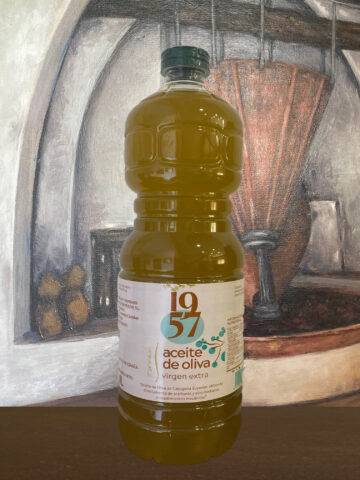
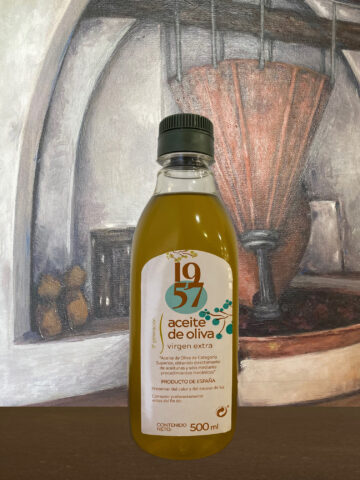
The 1957 oils in our shop include these varieties and formats. For a deeper sensory comparison, see our guide to Picual, Arbequina and Lechín.
Format matters too
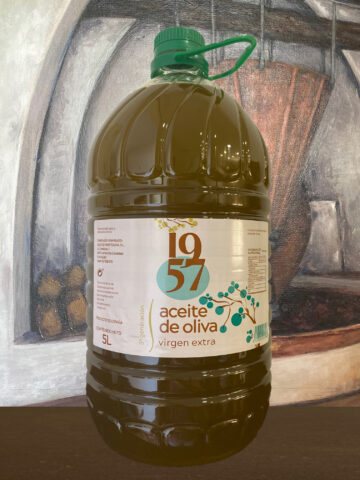
For a household that cooks daily, a five-litre container can be practical if consumption is fast enough and storage is good. For occasional use, a smaller format reduces the time the oil remains open. With a large container, one sensible habit is to keep the main package tightly closed and decant a smaller amount for everyday use.
Storage can matter as much as the initial purchase. Even excellent EVOO deteriorates if exposed to light, oxygen and heat. Our EVOO storage guide covers those variables in detail.
One kitchen can use more than one EVOO
You do not need several oils, but having a mild and a more intense EVOO can be genuinely useful. It lets you treat olive oil much like seasoning: selected according to the dish instead of used automatically.
The best choice combines technique, flavour and consumption rate. For frying, manage heat. For cooking, decide how prominent you want the oil to be. For raw use, let the sensory profile lead.
Related EVOO
-
EMDO Selection Sale
-
EMDO Selection
-
EMDO Selection

Sources
International Olive Council — Olive oils and gastronomy · Olive Oils from Spain — Picual and culinary uses.