
When buying a whole Iberian ham, one of the most practical questions is which weight to choose. Shops commonly offer 6–7 kg, 7–8 kg and 8–9 kg bands. Bigger may look better value, but it is not automatically the best choice.
The right weight depends on household size, how often you eat ham, how quickly you will work through an opened piece and the usable yield you expect. Sometimes a shoulder or sliced format makes more sense than a larger whole ham.
Piece weight is not sliced yield
A whole ham includes bone, rind and external fat. An 8 kg ham therefore does not produce 8 kg of slices. Yield varies with anatomy, curing, fat level and cutting skill.
See our guide to how many packs can be obtained from an Iberian ham for a fuller explanation.
What weights are common?
Spanish Iberian-ham rules establish minimum finished weights: 100% Iberian hams must reach at least 5.75 kg, while other Iberian hams have a 7 kg minimum. Commercial pieces around 7–9 kg are therefore common.
Shoulder hams are smaller and can be easier for small households to finish, although their proportional meat yield is lower.
One or two people
If you eat ham only occasionally, vacuum-packed slices are usually the easiest format. If ham is part of daily breakfasts, dinners or aperitifs, a shoulder or smaller whole ham can make good sense.
Three or four people
For a family of three or four with regular consumption, a ham around 7–8 kg is often a versatile choice: generous without forcing you to rush through a very large piece.
Large households or frequent consumption
For five or more people, or a household where ham is eaten almost every day, 8–9 kg can be practical. Larger pieces are also common around Christmas and for frequent entertaining.
Is a heavier ham always better?
No. Weight alone does not define quality. Production category, Iberian breed percentage, raw material, curing and producer skill matter much more.
A superb 7 kg ham may be a better purchase than a larger piece from a lower category. See our guide to acorn-fed, field-fattened and fattened Iberian ham.
Weight and curing
Heavier pieces generally need more time for salt and moisture to evolve evenly. That does not mean you should always buy the biggest ham. Our guide to how long Iberian ham is cured explains the relationship.
Ham or shoulder for a small household?
A shoulder weighs much less and can be finished sooner, which is useful when one or two people still want to carve at home. The trade-off is a lower proportional meat yield.
What happens if you buy too much?
An opened ham does not suddenly expire, but the exposed cut gradually oxidises and dries. If progress through the piece is extremely slow, the final sections may be enjoyed below their best condition.
Quick guide
- 1–2 people, occasional: sliced packs or shoulder.
- 1–2 people, frequent: shoulder or smaller ham.
- 3–4 people: roughly 7–8 kg.
- 5+ people or very frequent consumption: 8–9 kg can be practical.
- Events: calculate portions first and combine a whole piece with sliced packs when useful.
These are guidelines, not fixed rules. Two enthusiastic ham eaters can consume more than a family of five that serves it once a week.
Yield changes how you should think about price
Comparing two hams only by their total price can be misleading. A heavier piece costs more but spreads that cost across more servings; at the same time, two hams of identical weight can produce different edible yields because of shape, fat cover and bone proportion. When choosing between weight bands, think about how much ham you will actually eat, not just the kilograms printed on the label.
For a household, the best value is not always the lowest price per kilogram of whole piece. A slightly smaller ham that is finished in excellent condition can be a better purchase than an oversized one whose final slices become dry because consumption is too slow.
For Christmas or a celebration, calculate servings first
If the ham is being bought for Christmas, a family gathering or an event, estimate the number of diners and decide whether ham will be one appetiser among many or the centrepiece. A tasting portion alongside several starters requires much less per person than a table where ham is the main aperitif.
If the event is occasional and you will not keep carving frequently afterwards, combining a sensibly sized whole piece with pre-sliced packs can be efficient. It provides service capacity without buying several extra kilograms simply as insurance.
Four questions to answer before choosing a weight
- How many people regularly eat ham at home?
- Do you eat it daily, several times a week or only occasionally?
- Do you want the ritual of carving a whole piece or maximum convenience?
- Should your budget buy more quantity or a higher production category?
Once those questions are answered, weight becomes a practical decision rather than an abstract number. For many households, buying the category they genuinely want in a size they can finish well makes more sense than sacrificing quality merely to take home a larger ham.
The right question
Instead of asking which weight is “best”, ask which format and quantity your household can enjoy while the opened piece is still at its best. Then choose production category, producer and budget. Weight should fit the purchase to your home, not act as a quality score.
Iberian hams and shoulders
Explore the selection available at El Mercado de Origen:
-
Sale!
 Select options
This product has multiple variants. The options may be chosen on the product page
Select options
This product has multiple variants. The options may be chosen on the product page
-
Sale!Select options
This product has multiple variants. The options may be chosen on the product page
-
EMDO Selection SaleSale!Select options
This product has multiple variants. The options may be chosen on the product page
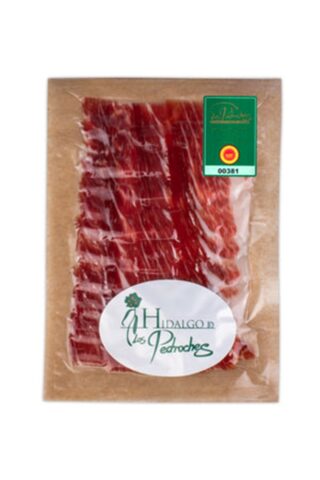

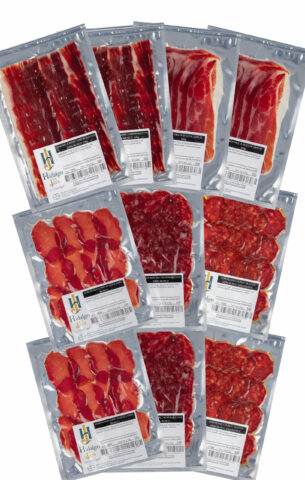
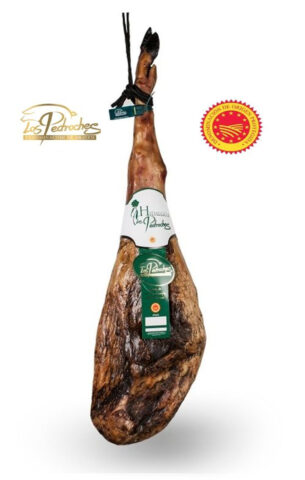
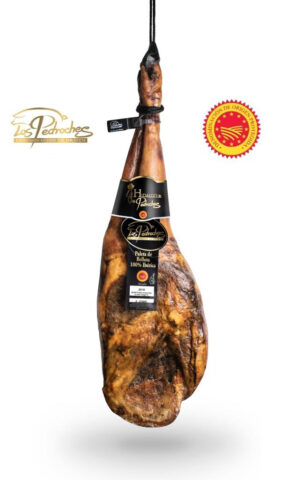

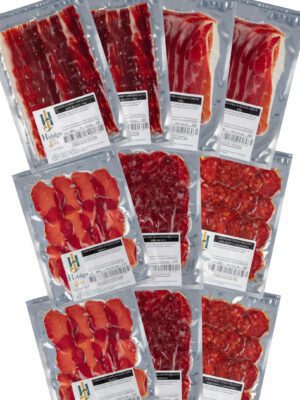 Tasting pack of 100% Iberian acorn (2x ham, 2x shoulder ham, 2x cured loin, 2x salchichón, 2x chorizo)