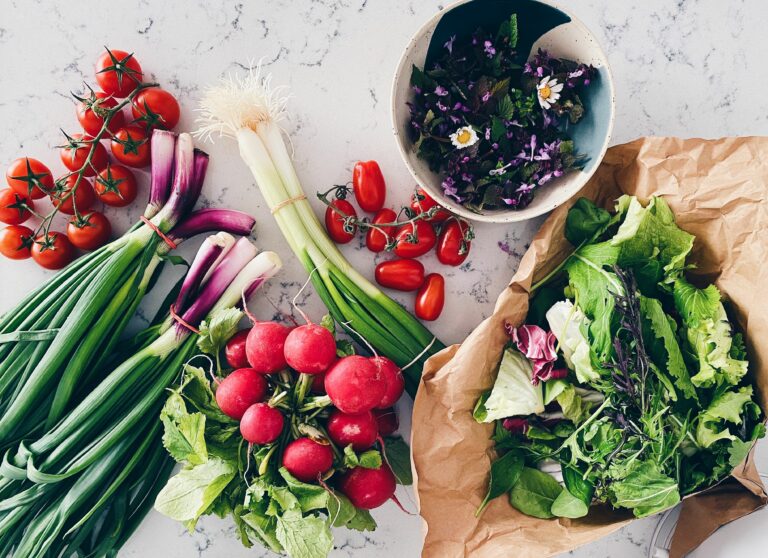
Potassium is widely distributed across vegetables. It is not limited to bananas or any one food group. Among common vegetables, spinach, Brussels sprouts, Swiss chard and artichokes can provide substantial amounts per 100 g.
As in our other comparisons, the values below refer to 100 g raw food so cooking-related water changes do not distort the ranking.
Ranking: vegetables with the most potassium per 100 g
| Raw vegetable | Approx. potassium |
|---|---|
| Spinach | 558 mg |
| Brussels sprouts | 389 mg |
| Swiss chard | 379 mg |
| Artichoke | 370 mg |
| Carrot | 320 mg |
| Broccoli | 316 mg |
| Tomato | 237 mg |
Rounded reference values per 100 g raw food.
Spinach leads this selection
In the reference values used here, spinach exceeds 500 mg of potassium per 100 g raw. Brussels sprouts, chard and artichokes form a fairly close second group.
Small differences between second, third and fourth place should not be overinterpreted because cultivar and analytical source can easily shift close rankings.
What does potassium do?
Potassium is an essential mineral involved in normal nerve and muscle function and fluid balance. Vegetables are one of many dietary sources, alongside fruit, legumes, tubers, nuts and other foods.
For general nutrition content, it is more accurate to discuss dietary contribution than to present one vegetable as a treatment for a medical condition.
What about potatoes?
Potatoes also provide substantial potassium, but nutrition guidance often treats them separately from non-starchy vegetables because of their higher starch content. Spanish guidance does not count potatoes as a vegetable serving in the same way as other vegetables.
That is why potatoes are not included in the main ranking.
Can boiling reduce potassium?
Potassium is water soluble. During boiling, some can move from the vegetable into the cooking liquid. If that liquid is discarded, the final food may contain less potassium.
The effect depends on piece size, water volume, cooking time and whether the broth is consumed. Steaming, baking, microwaving and stir-frying use less water and can retain more mineral in the food.
Why do cooked values change so much?
Cooking changes both food water content and mineral movement. A vegetable may lose water and become more concentrated or absorb water and become more diluted. Raw and cooked tables should therefore not be compared directly.
Potassium and fibre often overlap
Artichokes and Brussels sprouts rank highly here and also provide useful fibre. See which vegetables have the most fibre for that comparison.
This overlap is a reminder that choosing a vegetable for one nutrient does not mean it only provides that nutrient.
What is the best vegetable for potassium?
There is no single answer. Spinach has a high concentration per 100 g, but serving size, frequency and the rest of the diet matter more than a small difference between vegetables.
People who have been given medical advice to restrict potassium need individual guidance; a general food ranking cannot replace that.
Conclusion
Spinach leads this comparison of common vegetables for potassium, at roughly 558 mg per 100 g raw. Brussels sprouts, Swiss chard and artichokes form a relatively close second group.
To retain potassium from vegetables, vary your foods and remember that boiling in plenty of water can transfer part of the mineral into the cooking liquid.
Frequently asked questions
Which has more potassium, spinach or broccoli?
Using approximate raw values per 100 g, spinach contains considerably more potassium than broccoli.
Are artichokes high in potassium?
They are one of the stronger vegetables in this selection, at around 370 mg per 100 g raw.
Does boiling reduce potassium?
It can if potassium leaches into the water and the cooking liquid is then discarded.
Sources
Approximate values were cross-checked against BEDCA and USDA FoodData Central, with Spanish nutrition guidance used for the treatment of potatoes.