
Opening a vacuum pack and finding a steak that looks burgundy, purple or far darker than the bright red beef on a supermarket counter can be unsettling. Yet this colour is a normal consequence of how myoglobin behaves when very little oxygen is available and, by itself, it does not prove that the meat is spoiled.
A cut can look dark inside the package and become noticeably redder after opening. Understanding the chemistry helps separate a normal packaging effect from warning signs that genuinely matter.
Why vacuum-packed beef can look purple
Beef colour is controlled largely by myoglobin, an oxygen-binding protein in muscle. Meat does not have one permanently fixed “natural” colour. The pigment changes according to its chemical state and the amount of oxygen around it.
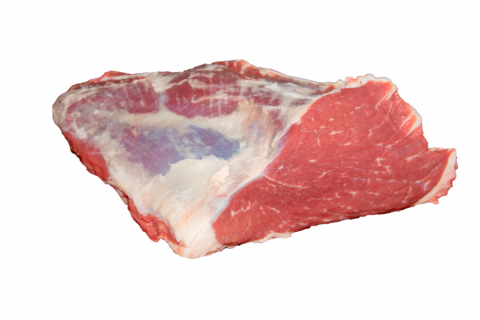
Vacuum packaging removes most of the air. With little oxygen available, myoglobin is mainly in a form that makes beef look purplish-red, burgundy or deep red. USDA food-safety guidance describes this as a normal colour for fresh meat protected from contact with air.
That is why comparing vacuum-packed meat with meat displayed under oxygen-permeable film can be misleading. The packages create different environments, so they naturally create different colours.
Why does the meat become redder after opening?
Once the bag is opened, oxygen can reach the surface again. Myoglobin binds oxygen and forms oxymyoglobin, the pigment responsible for the bright cherry-red appearance many shoppers associate with fresh beef.
The change can happen within minutes. USDA guidance notes that vacuum-protected beef can move from burgundy or purple toward bright red after roughly 15 minutes of exposure to air. The entire cut does not need to change at exactly the same rate: moist areas, folds and compressed surfaces can develop differently.
Do you need to wait before cooking it?
There is no requirement to leave the meat outside the refrigerator until its colour changes. After opening a vacuum pack, you can remove the cut, pat excess moisture away with disposable kitchen paper and leave it for a few minutes while preparing the pan or grill. Oxygen exposure will alter the pigment, but the meat does not need to “turn red again” in order to be fit for cooking.
Avoid extending this into a long period at room temperature in the belief that the meat must warm up. Food safety depends on an intact cold chain and appropriate cooking. The colour shift happens because of oxygen, not because the steak needs to sit warm on the counter.
Purple, red and brown can all occur normally
A simple way to understand the pigment changes is:
- Purplish-red or burgundy: little oxygen exposure; common in vacuum packs.
- Bright red: oxygenated myoglobin after contact with air.
- Brownish-red: metmyoglobin produced as the pigment oxidises. It can develop during storage and does not automatically mean spoilage.
This is why “the redder, the fresher” is a poor rule. Packaging and oxygen exposure can make one product look intensely red while another perfectly sound cut remains much darker.
When should dark colour become a concern?
Colour matters more when it appears with other problems. If the meat is extensively discoloured and also has a persistent offensive odour, slimy or distinctly tacky surface, a broken cold chain, an exceeded use instruction or an abnormally swollen package, do not explain everything away as a vacuum effect.
The practical rule is to judge the whole product. USDA guidance states that colour changes alone can be normal, whereas spoilage is more likely to come with off odours, tackiness or slime. If storage history is genuinely uncertain, tasting the meat is not a safe way to test it.
What if there is a smell when the bag is opened?
Vacuum packaging can also concentrate aromas that seem stronger at the instant the bag is cut open. That issue should be assessed separately from colour. A closed-package aroma that quickly dissipates is not the same as a putrid, sulphurous or clearly offensive smell that remains.
Most importantly, do not let one normal sign cancel out every other sign. Purple colour can be normal, but that does not make every odour, texture or swollen package normal.
What about the red liquid inside the pack?
The same myoglobin involved in surface colour can tint water released from the muscle during storage. A vacuum pack may therefore contain dark reddish purge. It is not a pool of blood; it is mainly muscle moisture mixed with proteins and pigments. See our guide to what the red liquid in meat really is for the full explanation.
Freezing, thawing and colour
Freezing can also alter appearance. Muscle pigments continue to undergo chemical changes, while ice crystals can damage tissue structure and increase the amount of purge after thawing. Colour change in frozen meat is not, on its own, evidence that it is unsafe.
For better quality, wrap meat well to limit air exposure and thaw it under refrigeration. Our guide to thawing and storing beef safely covers the methods and common mistakes.
How to open and prepare vacuum-packed meat
- Keep it refrigerated until you are ready to use it.
- Check that the pack still holds its vacuum and has no leaks or abnormal swelling.
- Open it with clean utensils and avoid contaminating nearby surfaces.
- Remove the cut and pat away excess moisture if you plan to sear it.
- Assess smell and texture as well as colour.
- If you want to observe the pigment change, allow a few minutes of air contact without leaving the meat warm unnecessarily.
- Cook appropriately for the cut and use a thermometer when safety depends on reaching a specific internal temperature.
Why can the inside remain a different colour?
After cutting a piece of beef, the outside and the newly exposed centre may not have the same shade. That is normal because oxygen does not penetrate the whole muscle evenly or instantly. The outer surface reacts with air first, while the centre remains in a lower-oxygen environment for longer. A freshly cut steak can therefore show a more purple centre and a redder exterior without anything being wrong.
If the new cut surface is exposed to air for a few minutes, that colour can also evolve. This outside-versus-inside difference is another reason not to use one snapshot of colour as the sole test of freshness or spoilage.
The rule worth remembering
Purple vacuum-packed beef does not equal spoiled beef. In a low-oxygen environment, that shade is a normal expression of myoglobin. Oxygen can make the surface redder after opening. Your decision should be based on storage, package integrity, smell, texture, date and temperature together.
Knowing this prevents unnecessary waste, while the broader checklist prevents the opposite mistake: dismissing genuine spoilage signs simply because purple colour can be normal.
Meat cuts available
Explore beef cuts, burgers and other meat available from El Mercado de Origen:


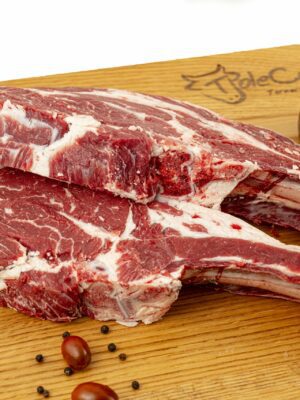 2 chuck tomahawk steaks & wine box
  100% beef burgers – gluten-free (2)