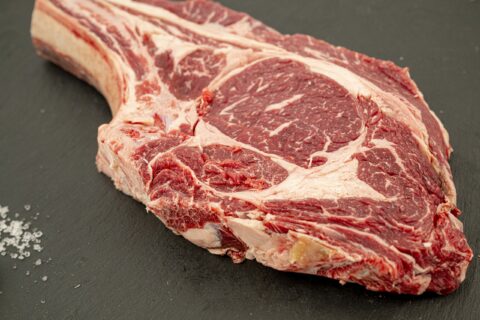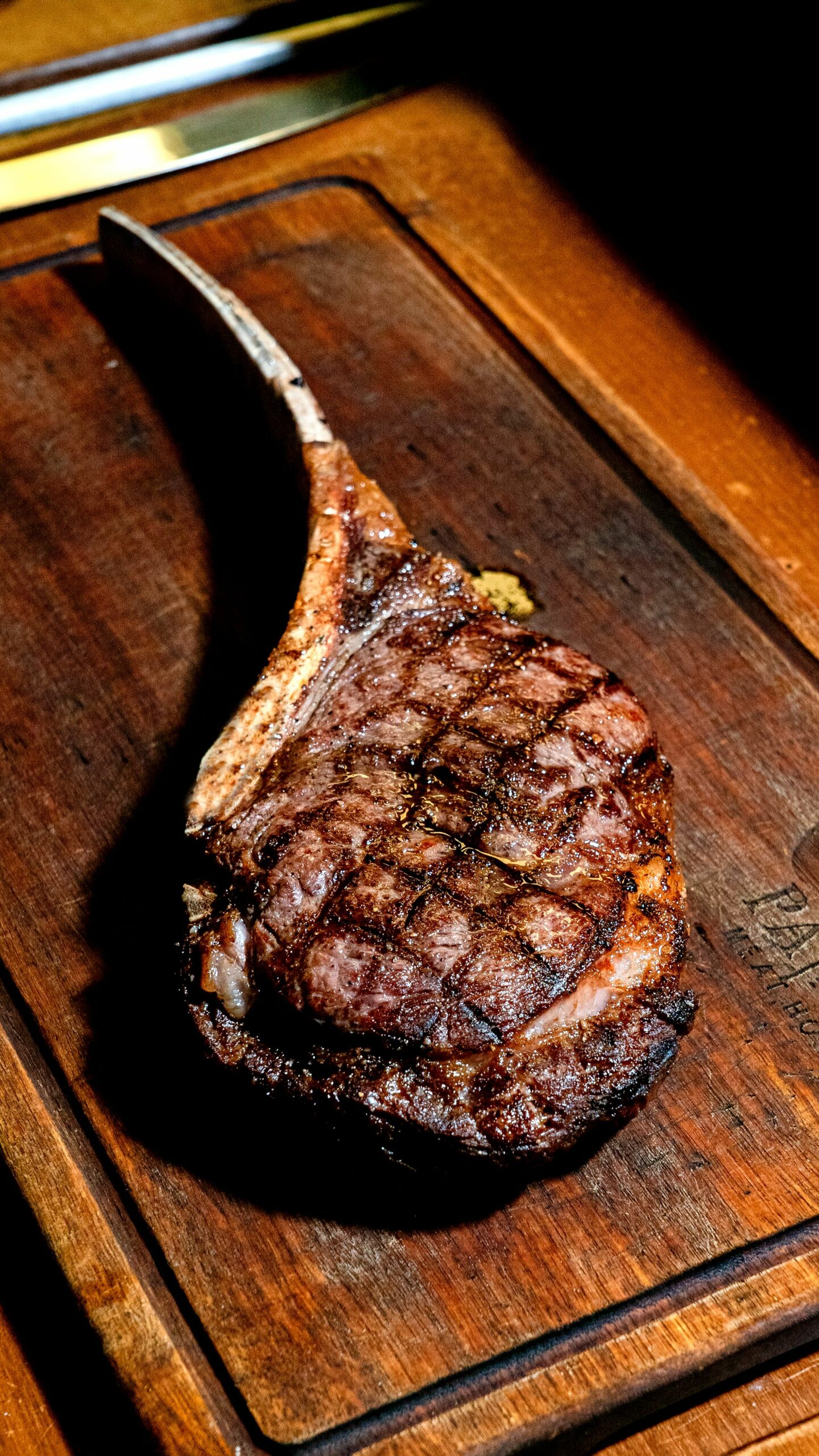
The tomahawk steak is one of the most recognisable cuts on a grill: a thick rib steak with a very long, cleaned rib bone left attached. Its silhouette resembles the axe that gives it its name. The presentation is dramatic, but understanding what lies behind it helps you decide whether it is worth buying for your meal.
Essentially, it is a steak from the rib area — closely related to ribeye and other bone-in rib steaks — with an extended section of rib left on. That means a meaningful part of the gross weight and price is bone and presentation rather than edible beef.
Where does a tomahawk come from?
It is cut from the rib section. The edible centre contains the muscles and fat associated with a ribeye-style steak, while the rib is extended and “frenched”: meat and tissue are cleaned from much of its length to create the characteristic handle.
Exact specifications vary between butchers. For a useful comparison, look at weight, thickness, origin, marbling and aging rather than relying on the name alone.
Tomahawk vs ribeye vs bone-in rib steak
Ribeye is commonly sold without a long bone. A standard bone-in rib steak keeps part of the rib but not necessarily the long, presentation-focused bone of a tomahawk. Depending on the exact position, the edible muscle can be very similar.
| Cut | Bone | Typical format | What contributes to price |
|---|---|---|---|
| Tomahawk | Very long, cleaned rib. | Very thick sharing steak. | Meat, bone, preparation and presentation. |
| Bone-in rib steak | Bone present, variable length. | Thick grilling steak. | Meat + bone with less emphasis on shape. |
| Ribeye | Usually boneless. | Individual or thick steak. | Higher edible proportion of the purchased weight. |
If your priority is maximum edible beef for the money, a steak without the extended bone may be more efficient. If you want a centrepiece and enjoy the ritual of cooking a large steak, the tomahawk has obvious appeal.
Does the long bone add more flavour?
It should not be treated as a magic flavour source. The centre is influenced mainly by the beef itself, fat, aging and cooking. Bone changes the geometry of the cut and can protect nearby areas, but a longer external bone does not suddenly send more flavour deep into the muscle.
The strongest reasons to choose a tomahawk are the combination of a thick rib steak, good fat, cooking potential and presentation.
How much does a tomahawk weigh?
Steaks close to or above one kilogram are common, although size varies substantially. Remember that the bone may account for a notable proportion. A large steak is often suitable for two people and can feed more when served with starters and substantial sides.
When comparing with entrecôte or ribeye, do not compare gross weight alone. Consider the bone and the delivered price.
The real challenge: thickness
The main cooking difficulty is not the bone; it is the thickness. Maximum heat from beginning to end can burn the outside before the centre is ready. The solution is to separate browning from internal cooking.
A probe thermometer is especially useful. Insert it from the side toward the thick central area without touching bone. Use our beef doneness guide to interpret the reading.
How to grill a tomahawk
A two-zone barbecue is probably the most natural setup.
- Preheat one strong direct-heat zone and keep another area gentler or indirect.
- Dry and season the steak.
- Sear the main faces and render a thick fat edge where useful.
- Move to indirect heat once the crust is ready.
- Close the lid if available and monitor the centre with a thermometer.
- Remove before overshooting the final target and rest.
Move away from sustained flare-ups. Dripping fat can create flames that blacken the outside before the centre has had time to cook.
Oven cooking with a final sear
Reverse searing suits a tomahawk extremely well: use a low oven to bring the centre close to target, briefly organise the high-heat stage, then finish with an intense sear in a pan or on the grill. Slow initial heating generally creates a more even band of doneness.
You can also sear first and finish in the oven. Both work; one advantage of reverse searing is that the oven dries the surface slightly before the final browning stage.
Can you cook it in a frying pan?
Yes, if the edible section actually fits. That qualification matters because many tomahawks are longer than a domestic pan and the bone can prevent good contact. If it fits, brown the meat in the pan and finish in the oven. Do not try to cook a 5-6 cm steak entirely over maximum direct heat.
Our guide to cooking thick bone-in steak at home covers the same techniques in greater detail.
Seasoning and side dishes
Good beef does not require a powerful marinade. Salt, pepper if you like it and perhaps butter, garlic or herbs near the end are enough. If the steak is dry-aged, simple seasoning makes it easier to taste the aging character.
Potatoes, roasted peppers, salad or grilled vegetables balance a rich steak without competing too much with it.
How to slice and serve
After resting, remove the meat from the long bone and slice across the main direction of the muscle fibres. Arrange the slices, adjust seasoning and place the bone back on the board if you want the visual presentation.
Common tomahawk mistakes
- Comparing gross weight without accounting for the bone.
- Using maximum direct heat for the entire cook.
- Not measuring the centre of such a thick steak.
- Slicing immediately after cooking.
- Buying a steak that physically does not fit your equipment.
- Paying for very long aging without knowing whether you enjoy that flavour profile.
Is a tomahawk worth it?
If pure efficiency is the goal, boneless formats provide more edible meat per gross kilo. If you want a sharing steak, a slow and controlled cook and a presentation that becomes part of the occasion, tomahawk can be an excellent choice. It is not a “magic cut”; it is good rib beef in a spectacular format.
Beef for your next grill
-
Sale!
 Select options
This product has multiple variants. The options may be chosen on the product page
Select options
This product has multiple variants. The options may be chosen on the product page