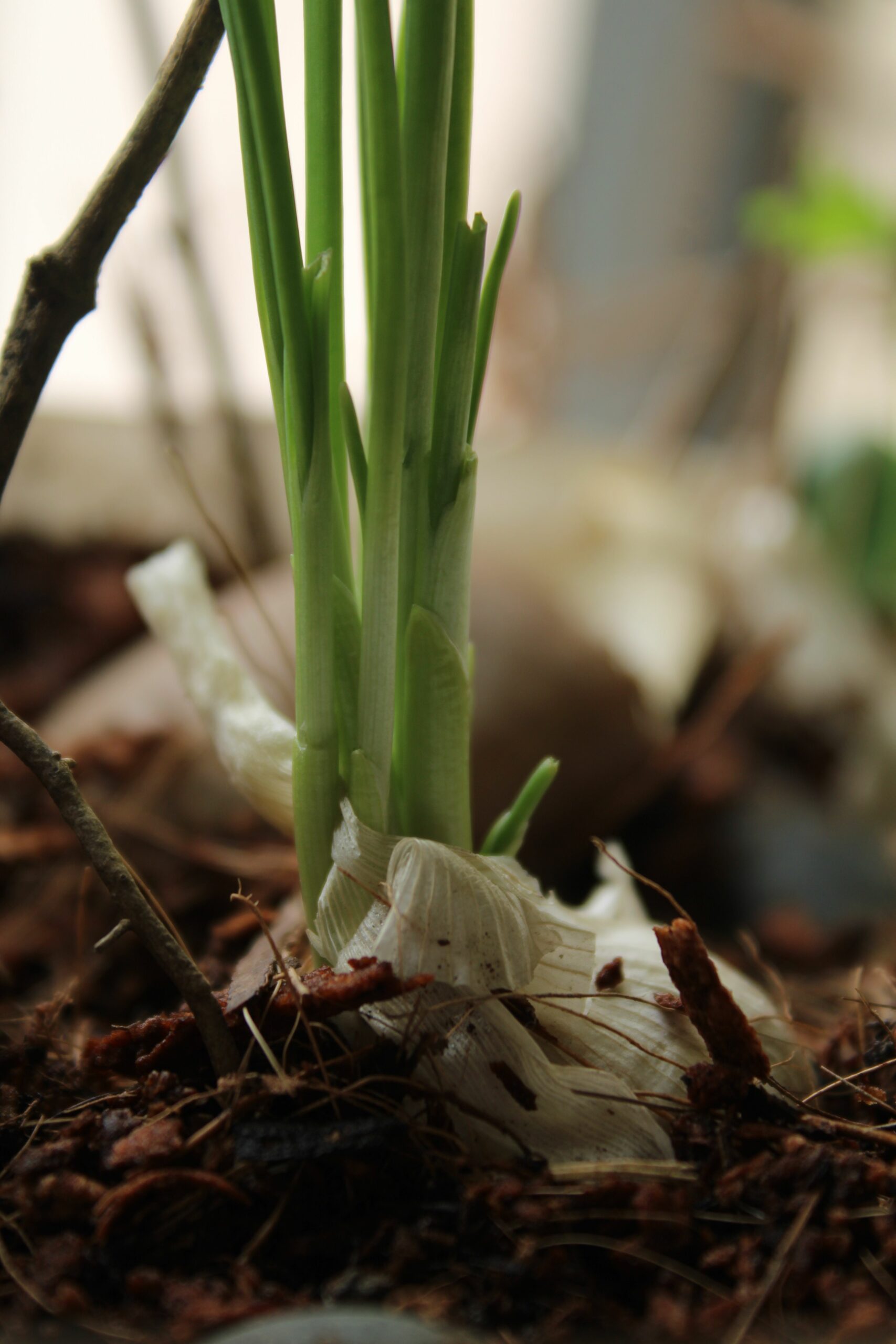
You open a bulb of garlic and several cloves have a small green shoot in the centre. It is often assumed that sprouting means the garlic is no longer edible, but sprouting on its own does not make a garlic clove toxic. What changes is its age, texture and often its flavour.
Garlic is a living storage organ. Even after harvest it continues to respire and, once dormancy ends and conditions are suitable, a new shoot can begin to grow. This is a normal stage in the plant's life cycle. In the kitchen, the useful question is not simply “has it sprouted?” but what condition is the rest of the clove in?
Can you eat a sprouted garlic clove?
Yes, provided the clove is still firm, dry, free from mould and not rotten. A small shoot shows that the garlic is ageing and beginning to use stored reserves for growth, but it does not automatically need to be discarded.
Sprouted cloves can be less juicy and may taste sharper or slightly more bitter. That may be unimportant in a stew, roast or cooked sauce, while it can matter more if you wanted mild, fresh garlic for a raw preparation.
Can you eat the green shoot?
The green shoot is edible. It does not have to be removed for safety. The main reason to take it out is sensory: a well-developed green germ can contribute a more bitter or vegetal note.
When the shoot has barely started and is still pale, many people notice little difference. When it is green, long and firm, its flavour can be more obvious. Removing it can be useful in delicate raw sauces or preparations where the garlic should taste smooth rather than aggressive.
Why does garlic start to sprout?
Sprouting depends on cultivar, time since harvest and storage conditions. Temperature, humidity and duration influence the end of dormancy. Garlic kept for many weeks in a warm kitchen is more likely to produce shoots.
This is why two bulbs bought on the same day may behave differently if they come from different varieties or storage histories. Sprouting is a natural physiological response, not necessarily proof of poor retail handling.
What changes inside the clove?
The new shoot uses reserves stored in the clove. As growth progresses, the surrounding flesh can lose water and become lighter, rubberier or wrinkled. The clove does not become empty overnight, but its culinary quality gradually changes.
A heavily sprouted clove is often less crisp and juicy than freshly cured garlic. It can still be useful for cooking, but it should not be expected to taste identical.
When should you remove the germ?
If the clove is firm and sound but you dislike the green centre, split it lengthways and lift the germ out with the tip of a knife. Use the remaining garlic normally.
This makes the most difference in raw or lightly cooked recipes. In long-cooked stews, roasting and deep sautéing, the sensory difference may be much smaller.
When the problem is no longer sprouting
Do not confuse a sprouted clove with a spoiled clove. Discard garlic that is very soft, wet, slimy, foul-smelling or visibly mouldy. A completely dried, hollow or extensively brown clove may also be so poor in quality that there is little reason to use it.
Different cloves in the same bulb can be in different conditions. You do not necessarily have to throw away the whole bulb because one clove is damaged, provided the remaining cloves are separate, firm and unaffected.
What do brown areas mean?
A small dry colour change from ageing is different from wet, translucent or soft tissue. If a peeled clove has deep brown areas and poor texture, assess it cautiously. Good garlic should retain firm flesh and a clean, characteristic aroma.
If deterioration affects a large part of the clove, discarding it is the easy choice. Saving one old clove is rarely worth adding unpleasant flavour to a dish.
Does sprouted garlic taste stronger?
There is no universal rule for every garlic variety, but aged cloves and their green germ are often perceived as harsher or more bitter. Storage and shoot development alter the balance of flavour compounds.
Preparation matters as well. Crushing or grating breaks more cells and promotes reactions that form intense sulphur compounds. A grated sprouted clove used raw can seem far stronger than the same clove slowly cooked whole.
Can you plant sprouted garlic?
Yes, a viable sprouted clove can be planted, although success depends on variety, season, climate and whether the garlic is suitable as planting material. It is a simple reminder that the food in the pantry was still a living plant organ.
That does not mean sprouted garlic needs to be planted. If its culinary condition is good, it can simply be eaten.
How to store garlic to slow sprouting
Whole bulbs prefer a dry, dark, well-ventilated place. Avoid sealed containers that trap humidity. Mesh bags, baskets and open containers allow air to move around the bulbs.
Sustained warmth speeds ageing. Keep garlic away from steam and condensation. Our guide to storing vegetables properly explains why dry bulbs behave differently from leafy greens.
Should whole garlic go in the refrigerator?
For ordinary household storage, a cool, dry, ventilated place is often more practical. Refrigerators are relatively humid and repeated movement between cold and warm conditions can be unhelpful.
Once garlic is peeled or cut, the situation changes: refrigerate it in a clean covered container and use it promptly. Garlic stored in oil requires particular care because an oxygen-poor oil environment is not equivalent to a dry whole clove.
A ten-second decision guide
- Firm clove + small shoot: use it.
- Firm clove + large green shoot: edible; remove the germ if you dislike its flavour.
- Slightly dry but otherwise sound: still useful for cooking, though quality is lower.
- Soft, wet, slimy or mouldy: discard.
Frequently asked questions
Is the green garlic shoot poisonous?
No. It is part of the plant's new growth and is edible. It is commonly removed for flavour rather than safety.
Do I always need to remove the germ?
No. It is a culinary choice. Removing it can soften the flavour in raw sauces, while it may make little difference in long cooking.
Is sprouted garlic lower quality?
It shows that the garlic is further through storage. The clove may lose firmness and its flavour can change, even though it remains usable.
Can I use garlic that is slightly wrinkled?
If it is still dry, reasonably firm and free of spoilage, it may be fine for cooking. If it is hollow, wet, slimy or mouldy, discard it.
See the current vegetable selection from El Mercado de Origen below.
- EMDO Selection

 Artisan Tomato Fritada, 314 ml