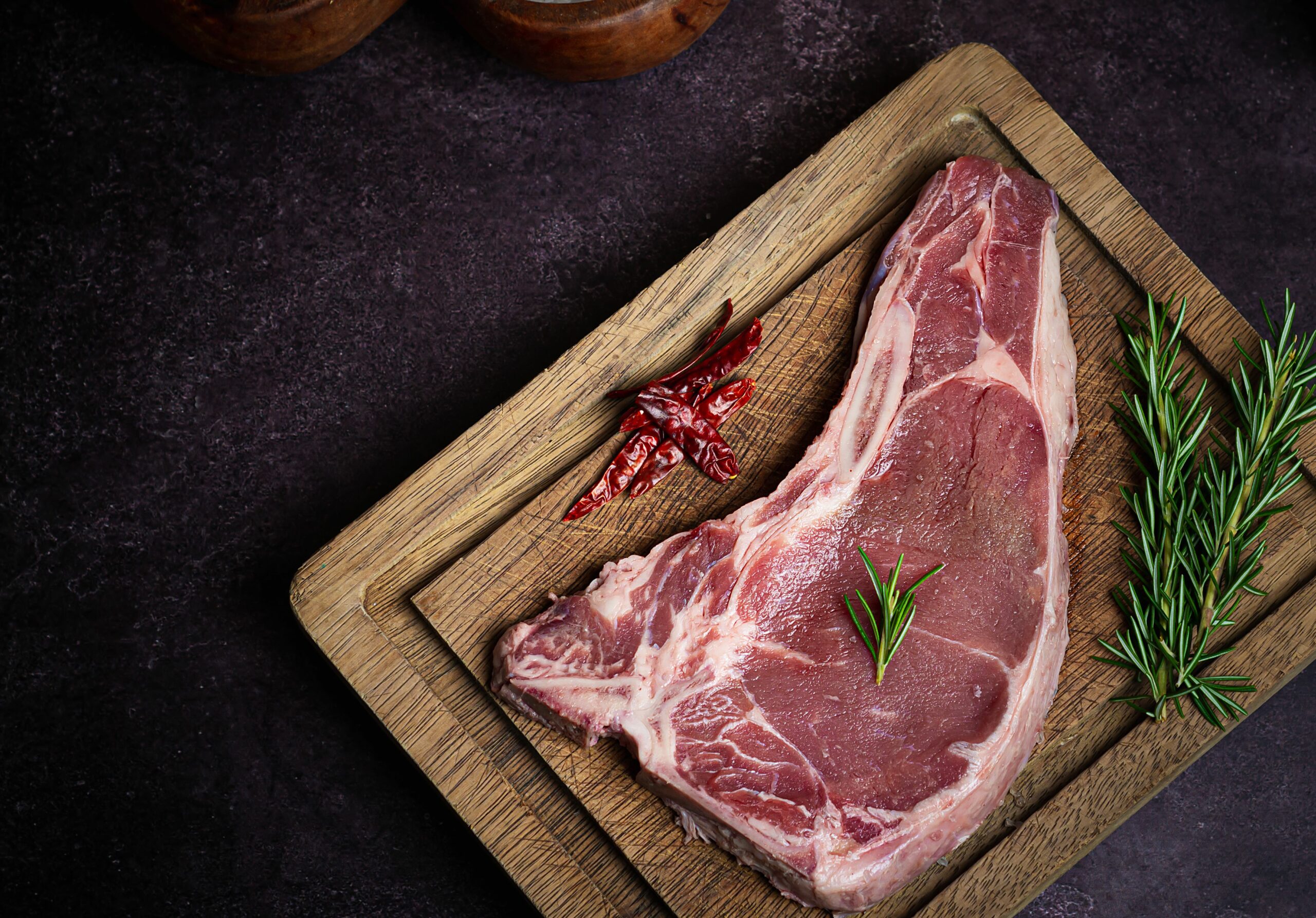
Cooks are often told to bring meat to room temperature before cooking, usually by leaving it out of the refrigerator for twenty, thirty or forty minutes. The common explanation is that this makes cooking more even. The idea contains some logic, but it is often overstated: a thick steak does not move from refrigerator temperature to room temperature all the way through in such a short time.
What can change is the surface temperature and, more importantly, the condition of the exterior. If you use that preparation time to dry the meat, season intelligently and heat the pan properly, the result improves. But calling all of that “tempering” hides the real mechanisms.
What does tempering meat actually mean?
It should not mean leaving raw meat on the counter until the whole piece reaches the temperature of the room. In home cooking it is better understood as simply taking the strongest chill off the surface before cooking.
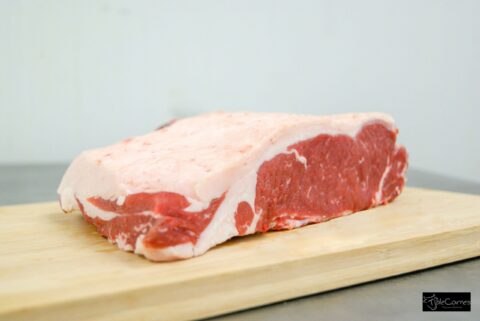
The centre of a thick tenderloin, entrecote or rib steak has considerable thermal mass. Air transfers heat slowly, so the outside can warm several degrees while the core remains distinctly cold.
Why thickness matters so much
A thin steak changes temperature far faster than a piece four or five centimetres thick. With a thin cut, cooking is also so quick that the difference between cooking straight from the refrigerator and waiting briefly is usually small compared with other factors.
With a thick piece, the temperature difference between surface and centre matters more, but time on the counter does not remove that gradient completely. More effective tools for even cooking include controlling heat, combining oven and pan, measuring internal temperature and adapting time to thickness.
A dry surface matters more than many cooks realise
Good browning requires surface water to disappear. While the meat is wet, much of the pan's energy is spent evaporating moisture and the surface takes longer to reach the temperatures where Maillard reactions become intense.
That is why drying with kitchen paper before cooking can have such a visible effect. Cold meat with a dry surface may brown better than supposedly “room-temperature” meat that is still wet.
Should meat sit out for a long time?
No. Leaving raw meat at room temperature for long periods gives no proportional cooking advantage and makes hygiene harder to control. A kitchen counter should not become a holding cabinet for raw meat.
A practical approach is to take the meat out while you prepare the side dishes or preheat the pan. That may be enough to reduce the surface chill without turning a culinary preference into unnecessary prolonged exposure.
Can you cook straight from the refrigerator?
Absolutely. You simply need to account for thickness and method. A very thick, cold piece may require slightly more time to reach the desired internal temperature, while a thin steak may show little difference.
For thick cuts, a thermometer is the most useful tool. Our guide to beef internal temperatures explains why exterior colour and fixed cooking times are less reliable than measuring the centre.
Tempering does not replace doneness control
Two steaks of the same weight can have different thicknesses, fat levels and starting temperatures. Cooking both for exactly the same number of minutes can therefore produce very different results.
“Take it out half an hour before” is not a precision formula. At most, it is one small variable in a system dominated by thickness, heat input, internal temperature and resting.
What if the pan is too cool?
If the pan has not stored enough energy, adding cold meat drops its temperature further. The result can be grey meat, visible water release and something closer to surface steaming than proper browning.
The solution is not necessarily an hour on the counter. Use a suitable pan, preheat it correctly, avoid overcrowding and maintain stable contact.
Does salting change the issue?
Salt is a separate variable. Salting immediately before cooking or sufficiently far in advance can both work well; an awkward middle period can temporarily wet the surface because salt draws out moisture before it has time to redistribute.
If you want the detail, see our guide to when to salt meat. Salting and tempering should not be treated as the same process.
Rib steak, entrecote and tenderloin
With a thick rib steak, controlling the core matters more than making the whole piece “room temperature” before cooking. A medium-thickness entrecote can often be cooked entirely in a pan or on a grill if heat and timing are well managed.
Cut composition also changes behaviour. Tenderloin and entrecote do not cook identically because their fat and muscle structures differ.
The reverse-sear example
The reverse-sear method shows clearly why pre-tempering is not essential. A steak can begin relatively cold, cook gently in the oven until close to target temperature and then finish over intense heat to build a crust.
In that technique, thermal control happens during cooking rather than on the counter.
What about burgers?
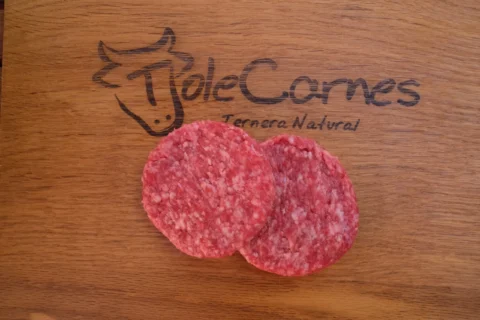
Burgers have different priorities from a thick steak. Very warm mince can soften the fat too much and make handling more difficult. For a smash burger, relatively cold meat can actually help maintain structure until the patty hits the hot plate.
There is therefore no universal rule that all meat must be brought to room temperature.
Our practical approach
- Take meat out with a reasonable preparation window, not for hours.
- Prioritise a dry surface.
- Preheat the pan, griddle or grill properly.
- Adjust cooking to the actual thickness.
- For thick cuts, use a thermometer.
- Do not confuse surface tempering with bringing the whole centre to room temperature.
The key idea
Letting meat lose some surface chill can help slightly, but it is not the secret that determines juiciness or even cooking. Cut quality, thickness, surface moisture, heat input, internal doneness and resting are all more important.
And before cooking, remember that washing raw meat is not recommended: it increases the risk of splashing and cross-contamination without giving a culinary benefit.



 100% beef burgers – gluten-free (2)