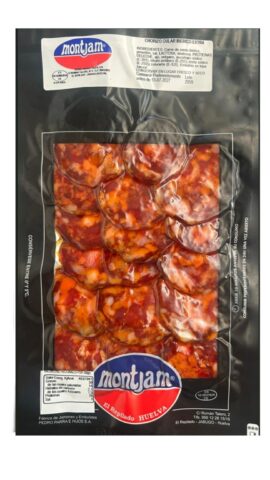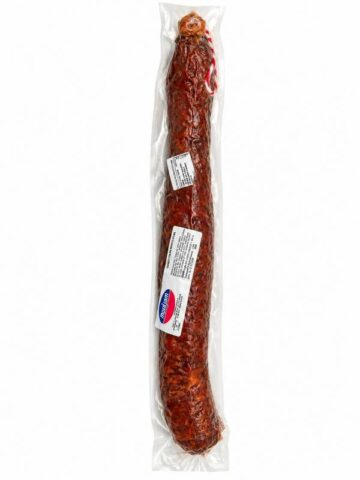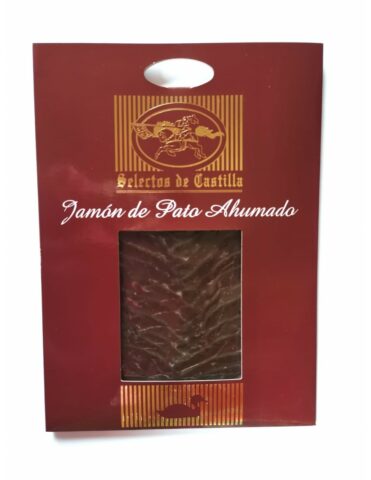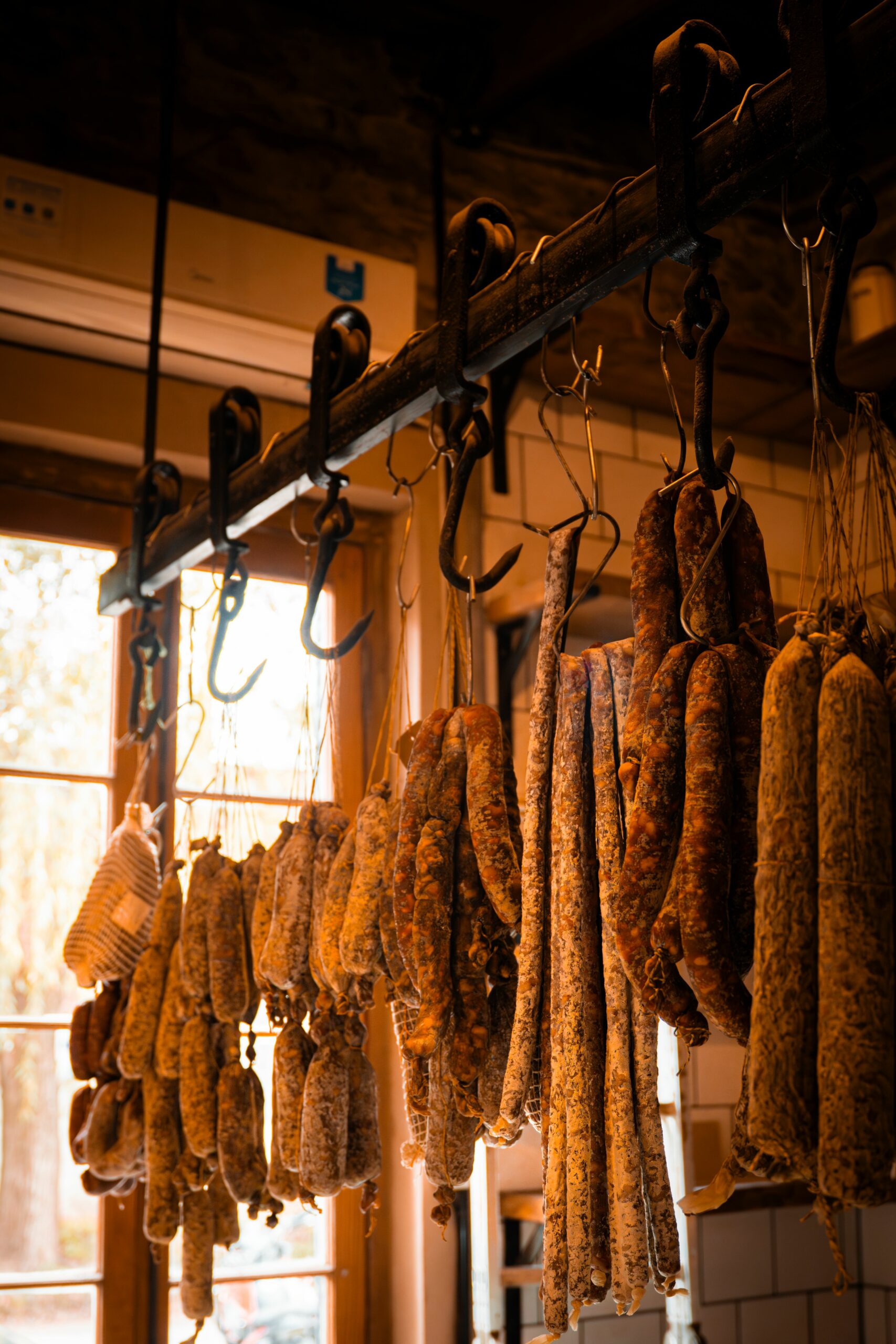
A cured sausage is a meat product that has undergone salting, stuffing, drying and maturation, transforming fresh meat into a food with firmer texture, more complex aromas and much greater stability. Spanish chorizo, salchichón, morcón and several cured loins belong to this broad family, even though each product uses its own ingredients, casing size and maturation time.
The word “cured” does not simply mean that a sausage has been hanging for a few weeks. The process depends on a controlled combination of salt, temperature, humidity, time and gradual moisture loss. Together, those factors change the structure of the meat and create the characteristics associated with a properly matured sausage.
Related cured-meat guides: how to store cured meats after openingwhen white mold on cured sausage is normalhow to freeze chorizo, salchichón and cured loin
What does cured actually mean?
In a fresh sausage, the mixture of meat and fat remains essentially raw and moist and normally needs to be cooked before eating. A cured sausage is processed so that available moisture is progressively reduced while the product matures under controlled conditions. When the producer labels it as ready to eat, it can be sliced and served without cooking.
There is no single curing formula. Thin sausages mature more quickly than large-calibre products. Some recipes include fermentation, smoking or other specific stages. “Cured” therefore describes a family of processes rather than one universal method.
How cured sausages are made
Production begins with the raw material. The balance between lean meat and fat, their origin and their condition all matter. The meat is prepared or minced and mixed with salt and seasoning. Depending on the sausage, that may include paprika, pepper, garlic, other spices and any authorised technological ingredients listed by the producer.
The mixture is then filled into a natural or suitable artificial casing. This is where the process begins to diverge clearly from fresh sausage: the product moves into controlled temperature and humidity so that it loses moisture gradually and matures without the outside drying too quickly.
What happens during drying and maturation?
As water is lost, flavour becomes more concentrated and texture becomes firmer. Changes in proteins and fats also contribute to the characteristic aromas of mature charcuterie. If the outside dries too quickly, it can become hard while the centre remains too wet. If drying is poorly controlled in the opposite direction, defects may develop.
This is why curing is not simply a matter of leaving meat to dry. Producers work with drying rooms, cellars or chambers where airflow, temperature and relative humidity can be adjusted. Traditional local climate can still play a role, but the process must remain controlled.
Cured sausage versus fresh sausage
The clearest difference is how they are eaten. A fresh sausage normally requires thorough cooking. A cured salchichón, for example, is sliced and eaten as sold. Their structure is also different: fresh sausage contains more water, is softer and more perishable, while cured sausage is firmer, more concentrated and more stable.
That does not mean cured meat can be stored anywhere forever. Packaging, whether the piece is whole or opened, room temperature and the manufacturer's instructions still matter. A vacuum-packed sliced product, a whole sausage and a soft spreadable sobrasada may all require different storage conditions.
Does cured mean the same as dried?
Not quite. “Dried” mainly describes loss of moisture, while “cured” includes the broader set of changes that occur during maturation. A good cured sausage is not designed to lose as much water as possible; the goal is an appropriate balance of texture, aroma, stability and juiciness.
It should also be distinguished from cooked deli meats. A cooked product may be stable because of heat treatment and packaging rather than because it has matured for weeks or months. The technologies are different even if the foods appear next to one another at the deli counter.
The role of salt
Salt provides flavour, but in cured meats it also contributes to water-activity control and the way the product develops. It works together with drying conditions. The appropriate amount depends on the recipe, diameter and process, so quality cannot be judged simply by whether a sausage tastes more or less salty.
If salt intake matters to you, the nutrition panel lets you compare finished products on the same basis. Values per 100 grams are more useful than broad marketing claims.
What to check when buying cured sausage
- Product name: identify whether it is chorizo, salchichón, loin, morcón or another type.
- Ingredients: check meat, fat, spices and declared additives.
- Origin and category: for Iberian products, read how breed and, where relevant, feeding are described.
- Format: whole piece, half piece, block and sliced packs behave differently once opened.
- Storage: follow the label, particularly for vacuum-packed or softer products.
- Date and batch: these are basic traceability information.
Why do some cured sausages have mould on the outside?
Some cured pieces develop a controlled surface flora as part of maturation. That should not be confused with any accidental growth. The expected appearance depends on the type of sausage and the producer's process. If a product has an unusual smell, swollen packaging, unexpected moisture or a markedly different appearance, contact the producer before eating it.
Is an Iberian sausage automatically cured?
No. “Iberian” refers to the pig breed category in the way applicable to the product, while “cured” describes processing. Many famous Iberian sausages are cured, but the words are not interchangeable. Good buying decisions come from reading the complete product description rather than relying on a single claim.
Why calibre matters
A thick sausage loses moisture more slowly than a thin one. A large morcón or cured loin can therefore need substantially longer maturation than a narrow chorizo. Diameter also influences the relationship between the surface and centre, the final texture and the development of aroma.
This helps explain why products made from similar ingredients can taste and feel very different. Size, casing, grind and cellar time all matter alongside the recipe.
Frequently asked questions
Do you have to cook cured sausage?
If the manufacturer sells it as a cured, ready-to-eat product, normally not. Always follow the label. Fresh sausage, by contrast, requires cooking.
How long does it last once opened?
There is no universal number. It depends on moisture, format, packaging and storage temperature. Follow the producer's instructions and protect the cut surface from unnecessary air exposure.
Does longer curing always mean better quality?
No. Every product has a diameter and intended maturation point. Extending curing beyond that point can simply make a product too dry.
Are cured and smoked the same thing?
No. Smoking is a separate technique that can add flavour and contribute to preservation. A sausage can be cured without being smoked, and smoked products can follow different processing routes.
Browse our cured meats to compare chorizo, salchichón, cured loin, lomito, sobrasada and morcón made by producers.