
Before a cured ham is opened, its exterior provides useful information: shape, fat condition, firmness, weight and surface evolution. Yet much of the decisive sensory information is inside. The traditional cala test gives trained professionals clues about internal aroma without cutting the ham open. A narrow probe is inserted briefly at selected points and smelled immediately after removal.
The cala is not a way to taste the ham and it cannot guarantee that every part of the piece is identical. It is a professional control tool combining anatomy, smell, experience and speed. Used correctly, it can reveal aromas associated with normal maturation and warn of internal abnormalities.
What exactly is the cala?
The word can refer both to the operation and to the probe. The traditional tool is narrow, strong and relatively non-absorbent, often made from specially prepared bone. It enters the ham only briefly and is then brought immediately to the nose.
The aim is not to remove a visible cylinder of meat. The small puncture allows volatile compounds from inside the piece to adhere to the probe. The professional's trained sense of smell is therefore the central part of the test.
Why internal aroma matters
During curing, transformations in fats and proteins generate a large range of aromatic compounds. A correctly matured ham develops complexity that cannot be judged merely from the rind, hoof or external fat.
At the same time, some internal alterations can create abnormal odours before a clear external sign appears. The cala offers a way to look for those clues without commercially opening the piece.
Where is the ham probed?
The probe is not inserted randomly. Professionals select specific anatomical points that provide useful information while limiting unnecessary damage. Exact positions can vary according to the producer's practice, the type of ham and the stage of control.
Areas close to bones or joints may be particularly informative because internal evolution in those zones is important. This is why knowledge of ham anatomy matters.
What does the specialist smell for?
The aroma on the probe is compared with the profile expected from a correctly cured piece. The specialist looks for clean matured-meat and fat aromas while paying attention to notes that do not fit normal development.
There is no single word that defines a “good cala”. Intensity, cleanliness, persistence and context all matter. A stronger aroma is not automatically a better one.
Why must the probe be smelled immediately?
Volatile compounds begin to disperse as soon as the probe leaves the ham. Waiting changes the signal and allows it to mix with surrounding smells. The traditional movement is therefore rapid: insert, withdraw and smell almost immediately.
Probe cleanliness and a neutral working environment are also essential. Residue from another piece, cleaning products or scented hands could distort the result.
Does the cala leave a hole?
Yes, it creates a very small puncture, but that is very different from cutting a window into the ham or removing a large sample. Professional probing aims to minimise damage, and the puncture area must be properly managed afterwards.
This is another reason the technique should not be treated as a home experiment. Repeatedly stabbing a ham with unsuitable tools and poor hygiene can damage the product without generating reliable information.
The cala is not a home test
A consumer does not need to probe a ham before starting it. More reliable purchasing tools include the label, official seal where applicable, traceability, producer reputation and proper storage. Once the ham is opened, its real aroma, colour and texture can be assessed directly.
The cala makes sense for professionals handling many intact pieces and making decisions before opening them.
Can it tell whether a ham is Iberian?
No. The cala does not certify breed, feeding system or legal sales category. It assesses internal sensory condition. Iberian category must be established from the product's official labelling and identification system.
As with a black hoof, one physical characteristic cannot replace documentary information.
Can the cala detect every defect?
No. It samples aroma from selected points and depends on the specialist's interpretation. A whole ham is three-dimensional and can vary internally, so the cala belongs to a broader system of quality control rather than acting as an infallible diagnosis.
Some problems are easier to see after cutting, when colour, consistency and fat can be inspected. Others only become clear through taste.
Probing versus cutting
Cutting reveals colour, marbling, consistency, fat and aroma across a broad surface, but it permanently opens the piece. Probing is far less invasive and exists precisely for situations where the ham needs to remain whole.
The cala offers a quick signal; cutting provides much more information later. They serve different stages of assessment.
The specialist's experience
Recognising aroma is more than having a sensitive nose. A professional builds sensory memory by comparing sound pieces, different curing stages and genuine defects. They also learn how far to insert the probe, in which direction and how to interpret differences between points.
Two untrained people can smell the same probe and reach very different conclusions. The technique depends on repeated learning, not a single intuitive reaction.
How does it relate to curing?
Internal maturation does not progress identically through the entire ham. Muscle thickness, fat, proximity to bone and drying-room conditions all affect development. Probing helps check whether internal aroma is consistent with the expected stage.
This should not be confused with judging quality solely from the number of curing months. Time matters, but so do size, composition and conditions throughout the process.
Cala and rancid smell are not the same question
A cala can flag abnormal internal aromas, whereas rancidity specifically concerns changes in fats. If the ham is already open and the question is an unusual smell, direct assessment is more useful. Our guide to rancid versus normal cured-ham aromas addresses that situation.
The cala is fundamentally a pre-opening tool.
What can a buyer do instead?
- Check the declared product category.
- Review the official seal and label where applicable.
- Buy from producers and sellers with clear traceability.
- Choose a format suited to the household's consumption rate.
- Store the piece correctly before and after opening.
- Assess aroma, colour, fat and texture once cutting begins.
A tiny test that can reveal a great deal
The cala obtains an aromatic signal from inside a cured ham through a minimal, controlled puncture. Its value lies not in the probe alone but in the experience of the person selecting the point, performing the movement and interpreting the aroma.
Understanding the technique explains how ham specialists can assess intact pieces while also correcting a common misconception: randomly probing a ham at home does not produce a reliable diagnosis.
Related hams and shoulders
-
Sale!
 Select options
This product has multiple variants. The options may be chosen on the product page
Select options
This product has multiple variants. The options may be chosen on the product page
-
Sale!Select options
This product has multiple variants. The options may be chosen on the product page
-
EMDO Selection SaleSale!Select options
This product has multiple variants. The options may be chosen on the product page
-
EMDO Selection SaleSale!Select options
This product has multiple variants. The options may be chosen on the product page
-


 12 Jars of Fried Peppers in Olive Oil, 314 ml
 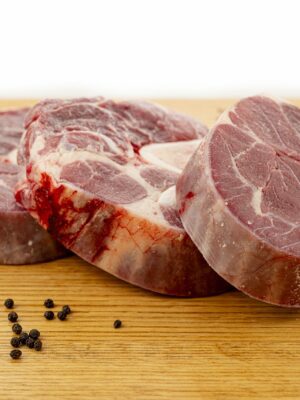 Beef osso buco
  Approx. 300 g Bag of Padrón Peppers
  Lean diced beef / beef ragout
  Dried Onions (kg)
  Tasting pack of 100% Iberian acorn (2x ham, 2x shoulder ham, 2x cured loin, 2x salchichón, 2x chorizo)