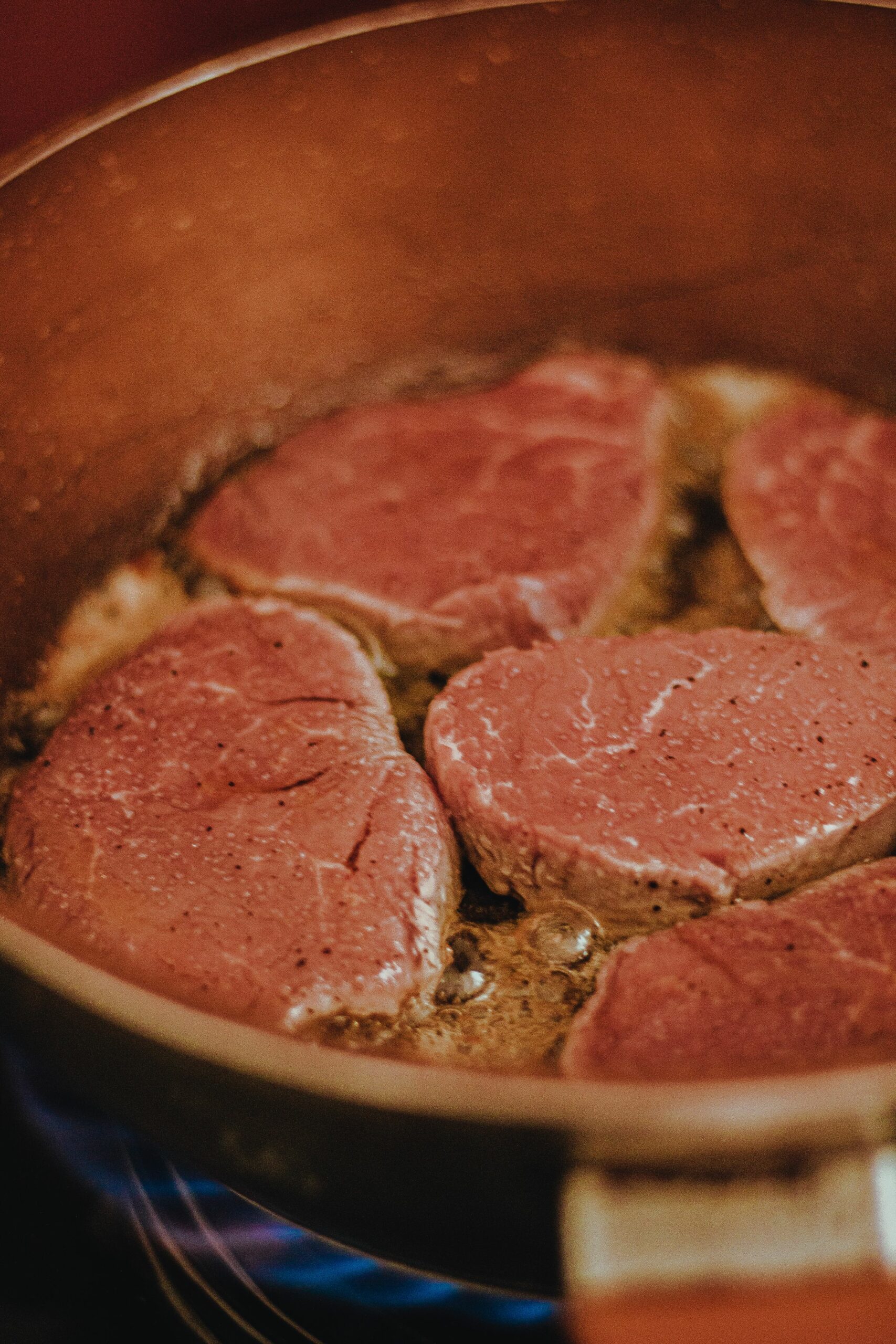
You heat the pan, add the meat and instead of a brown crust, a puddle appears. The steak turns grey and beef strips seem to boil. Meat releasing some water is normal; meat sitting in liquid usually reflects the cooking setup.
Muscle naturally contains a lot of water. Heat changes its proteins and some liquid is expelled. You cannot prevent all of it, but you can make sure the pan evaporates moisture quickly enough for browning to happen.
The most common cause: overcrowding
If a pan is packed with steaks, cubes or strips, the metal temperature drops and many pieces release moisture at the same time. When water arrives faster than it can evaporate, it collects and the environment becomes closer to steaming than searing.
The best fix is to cook in batches. Leave space between pieces. Two small batches usually brown much better than one overloaded pan.
Preheat the pan properly
A lukewarm pan loses too much heat when wet meat is added. Preheat before cooking. You do not need uncontrolled maximum heat, but the surface should be hot enough for browning to start quickly.
Heavy pans hold heat better than very thin ones. Cast iron, substantial stainless steel and sturdy griddles are particularly useful for a strong sear.
Dry the surface
External water must evaporate before the meat surface can become hot enough to brown. Remove the beef from its packaging, discard excess liquid and pat it dry with kitchen paper.
This is especially useful with thawed beef, vacuum-packed meat and wet marinades. It does not remove water from inside the muscle; it simply avoids adding unnecessary moisture at the start.
Thawing can affect liquid loss
Frozen and thawed meat may lose more liquid because ice crystals alter part of the cell structure. That does not make frozen beef poor quality, but careful thawing and drying become even more useful.
See our guide to thawing meat safely.
Does meat need hours at room temperature?
No. Surface dryness, a hot pan and enough space matter far more for browning. Raw meat does not need to sit out for hours to develop a crust.
For thick cuts, manage the centre through cooking technique and a thermometer rather than trying to warm the whole steak on the counter.
What about salt?
Moisture can appear shortly after salting. Two timings work particularly well: salt immediately before cooking or salt well in advance while keeping the meat refrigerated.
If a recently salted surface looks wet, pat it dry. Our guide to when to salt meat explains why.
Wet marinades make searing harder
If beef enters the pan dripping with marinade, that liquid must evaporate too. Drain excess marinade and dry the surface lightly when browning is the goal.
A marinade can add flavour, but it cannot replace good heat management. Too much liquid can actually hide the beef flavour and delay crust formation.
Do not move the meat constantly
The surface needs real contact time with hot metal. Lifting the steak every few seconds makes browning harder. You can turn it more than once, but let each contact last long enough to develop colour.
Why water slows browning
While liquid water remains, much of the pan's energy is used to heat and evaporate it. Strong browning needs a hotter and relatively dry surface. That is why a pan full of juices produces grey meat even though the inside continues to cook.
What if a puddle has already formed?
If the beef still needs browning, remove it briefly, evaporate excess liquid and return the meat in smaller batches. If it is already close to the desired doneness, do not keep cooking for many extra minutes just to make a crust; you may overcook it.
How to sear steaks step by step
- Discard liquid from the package.
- Pat the surface dry.
- Preheat a pan large enough for the meat.
- Add cooking fat only if the method needs it.
- Cook a few pieces at a time with space between them.
- Allow one side to colour before moving.
- Monitor the centre and remove on time.
For thin cuts, combine this with our guide to tender, juicy beef steaks.
What about beef strips?
Strips have a large surface area and release moisture rapidly. Use a large hot pan or wok and work in small batches. Vegetables can release water too, so browning the beef first and adding it back later often works better.
Cutting across the fibres improves tenderness as well. See how to cut against the grain.
And ground beef?
A large pack of mince can boil if it is tipped into a small pan all at once. Work in batches and let some larger sections contact the pan before breaking everything into tiny pieces.
See our ground beef guide for more advice.
Does lots of liquid mean bad meat?
No single pan observation can prove that. Visible liquid depends on freezing, thawing, packaging, cut, doneness and cooking technique. Excellent beef can release plenty of water when it enters a small, cool pan with a wet surface.
Judge quality using origin, cut, freshness, composition, marbling and storage as well.
Thickness changes the strategy
A thick steak needs more time for heat to reach the centre. Maximum heat from start to finish can burn the outside. A gentler phase combined with a strong sear and internal-temperature control often works better.
Our beef doneness guide explains how to measure the centre.
Common mistakes
- Adding too much meat at once.
- Using a pan that is too small.
- Failing to preheat.
- Cooking meat with a wet surface.
- Pouring all the marinade into the pan.
- Cooking beef strips with lots of watery vegetables from the start.
- Overcooking meat while waiting for all liquid to disappear.
Frequently asked questions
Is the reddish liquid blood?
It is mainly water mixed with muscle pigments and proteins.
Will more oil stop water coming out?
No. Oil can help contact and heat transfer, but it does not remove moisture or fix an overcrowded pan.
Should the burner always be at maximum?
No. You need enough heat for browning, but the correct level depends on the pan, thickness and fat content.
A good crust starts before cooking
Drying, preheating, leaving space and controlling time are the key steps. You cannot prevent muscle from losing all moisture, but you can stop that liquid from turning a steak meant for searing into a grey, wet cook.
-
Sale!
 Select options
This product has multiple variants. The options may be chosen on the product page
Select options
This product has multiple variants. The options may be chosen on the product page


 12 Jars of Sweet-and-Sour Peppers, 720 ml
  Canela Beans
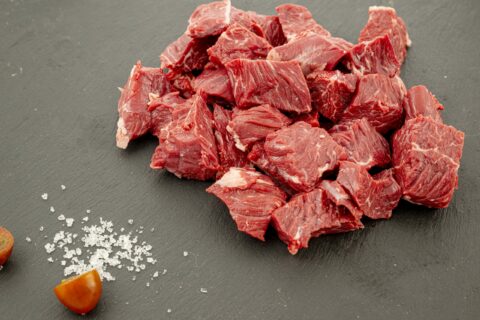
  Lean diced beef / beef ragout