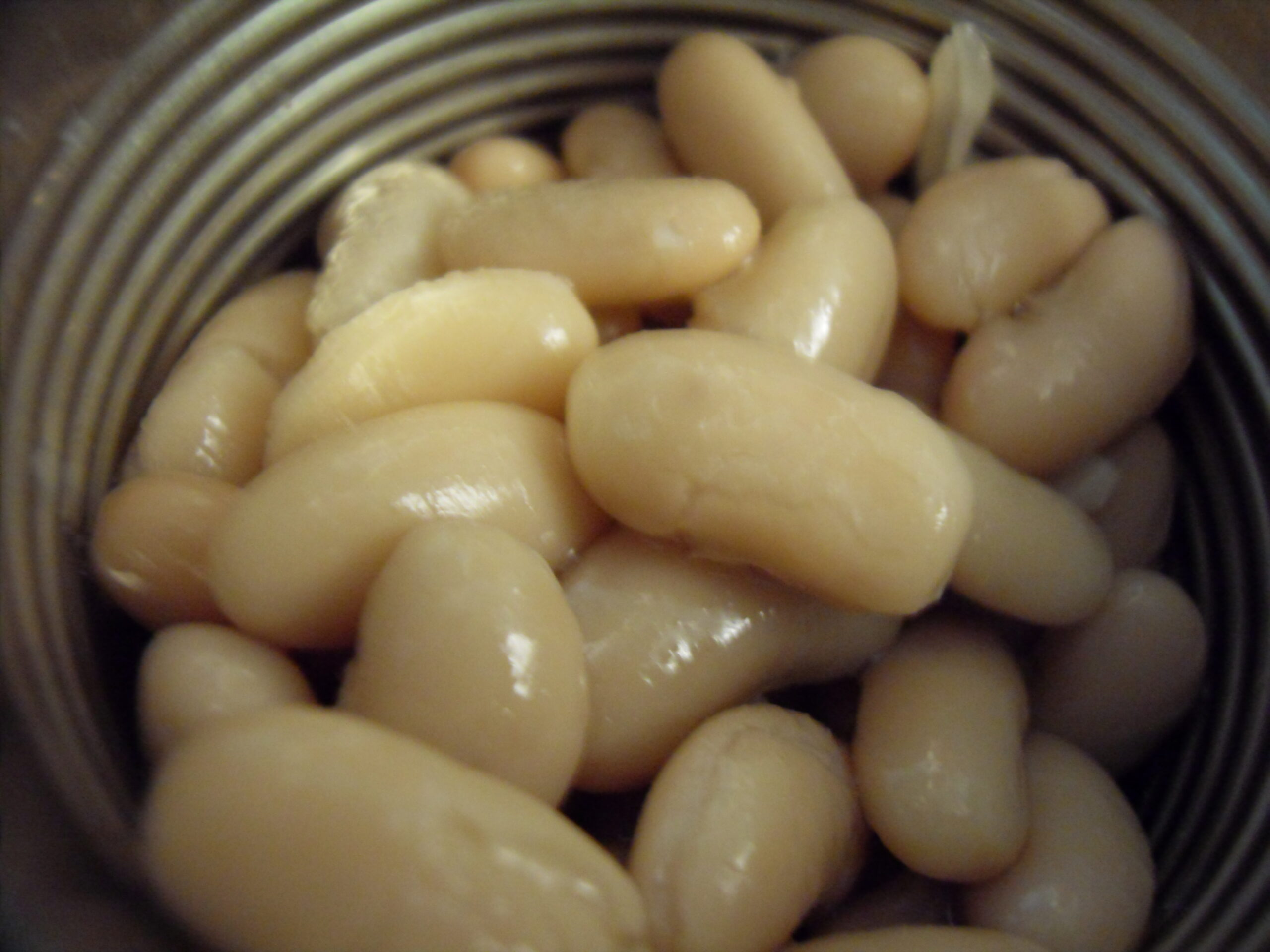
Two jars can look the same size while containing very different amounts of food. One might declare 660 g net weight and 400 g drained weight; another 580 g net and 420 g drained. If you are actually buying artichokes, peppers, asparagus, pulses or another solid ingredient, looking only at the largest number can give the wrong impression.
The difference between net weight and drained weight is simple but extremely useful. Net quantity describes the total food content of the package. Drained weight, where applicable, describes the amount of solid food remaining after the packing liquid is removed. They are not competing figures; they answer different questions.
Related guides: how long opened canned food keeps in the fridgehow long canned foods last and signs of spoilagewhen colour changes in canned vegetables are normalshop preserves
What does net weight mean?
Net weight is the quantity of food in the package without the jar, can, lid or other packaging. In a preserve containing both solid food and liquid, the declared net content includes the edible packaged components that make up the product.
A jar can therefore say “net weight: 660 g” even though it does not contain 660 g of peppers after draining. Part of that weight belongs to water, brine, juice or another surrounding medium.
What does drained weight mean?
Drained weight is the amount of solid food left after the packing medium is separated in cases where a drained declaration is required. Under EU food information rules, when solid food is presented in specified liquid media that are merely ancillary to the essential food, the drained net weight must also be indicated.
Those media include, under the regulatory definition, water, aqueous salt solutions, brine, aqueous food-acid solutions, vinegar, sugar solutions and certain fruit or vegetable juices. The purpose is practical: shoppers can see how much solid product they are buying.
A practical example
Imagine two jars of artichokes:
- Jar A: 660 g net weight and 400 g drained weight.
- Jar B: 580 g net weight and 420 g drained weight.
If you look only at net weight, A appears larger. If your main concern is the amount of artichoke you can serve after draining, B actually provides 20 g more solid food. This does not prove B is better quality, but it changes the quantity comparison.
Packing liquid is not necessarily “filler”
A lower drained weight does not automatically mean that a producer has filled the jar with useless water. Liquid can be important for processing, heat transfer, stability, salt or acid distribution and texture protection. In some products it also has culinary value.
Our guide to vegetable preserve packing liquid explains why it should not automatically be treated as waste. Weight is a separate question: knowing how much liquid and solid are present helps you compare quantities transparently.
Does every preserve show a drained weight?
No. Drained weight is relevant when solid food is presented in a liquid medium that falls within the applicable rules. Not every moist or sauced product works this way. A vegetable purée, tomato sauce or preparation in which the liquid phase is an essential part of the food cannot necessarily be meaningfully divided into “solid food after draining”.
So you should not expect a drained figure on every preserved product. Its use depends on the nature and presentation of the food.
Net weight is not gross weight
Another common mistake is confusing net quantity with what a scale shows when you weigh the unopened jar. The latter is approximately gross weight: food plus glass or metal, lid and other packaging. The declared net amount excludes the container.
This is why weighing a closed jar at home will not match the label's net weight. A glass jar alone can add several hundred grams.
How to compare price properly
When the solid part is what you really want, a useful measure is price per kilogram of drained product. Divide the price by drained kilograms. A €4.80 jar with 400 g drained product works out at €12 per drained kilogram.
This is especially helpful when packages differ in size. Price per jar can be misleading because a cheaper jar may contain much less solid food.
Should you always choose the highest drained percentage?
No. You can calculate the ratio of drained to net weight to understand the proportion of solid food, but a high percentage does not prove higher quality. Some vegetables need more surrounding liquid to remain properly covered or are sold with different formulations.
Variety, size, texture, origin and production can justify price differences far larger than a few grams of liquid. Drained weight compares quantity; it is not a substitute for evaluating quality.
What if you also use the liquid?
If your recipe uses the packing medium, net weight becomes more practically relevant because more of the total contents enter the dish. Pepper juices can become part of a sauce, and the liquid from some pulses can add body to a stew.
Drained weight still remains useful because it tells you the amount of solid food. The two figures complement each other.
Package size can be deceptive
Containers have different shapes, glass thicknesses and headspaces. A tall jar may look larger than a wide one despite containing less net food. Reading the declared quantities is far more reliable than comparing silhouettes.
This is also why glass jars and cans should not be compared by appearance alone: package mass and geometry differ significantly.
How to read both figures in ten seconds
- Find net weight: the total amount of food content.
- If drained weight is shown, use it to see how much solid food remains without the packing medium.
- For comparing the price of the solid ingredient, calculate or check price per drained kilogram.
- Do not interpret a large difference as deception: consider the product and the role of its liquid.
- Also compare ingredients, origin, size and production quality.
How does this fit with the rest of the label?
Weight is only one part of the information. The ingredient list tells you what the packing medium contains, nutrition information describes composition, storage instructions explain what to do after opening, and the legal food name identifies what is being sold.
For the full picture, see how to read a vegetable preserve label.
The key idea
Net weight answers “how much food content is in the package overall?”; drained weight answers “how much solid food remains without the packing liquid?” When you buy a preserve mainly for its solid pieces, the second figure is often the most useful quantity comparison.
Use both figures without turning either into an automatic quality score. Real value combines quantity, raw material, production, flavour and how you intend to use the food.


 100% mature beef burgers – gluten-free (2)
 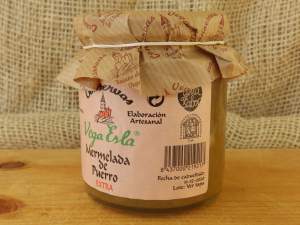 Artisan Leek Jam, 250 ml
  Tasting pack of 100% Iberian acorn (2x ham, 2x shoulder ham, 2x cured loin, 2x salchichón, 2x chorizo)