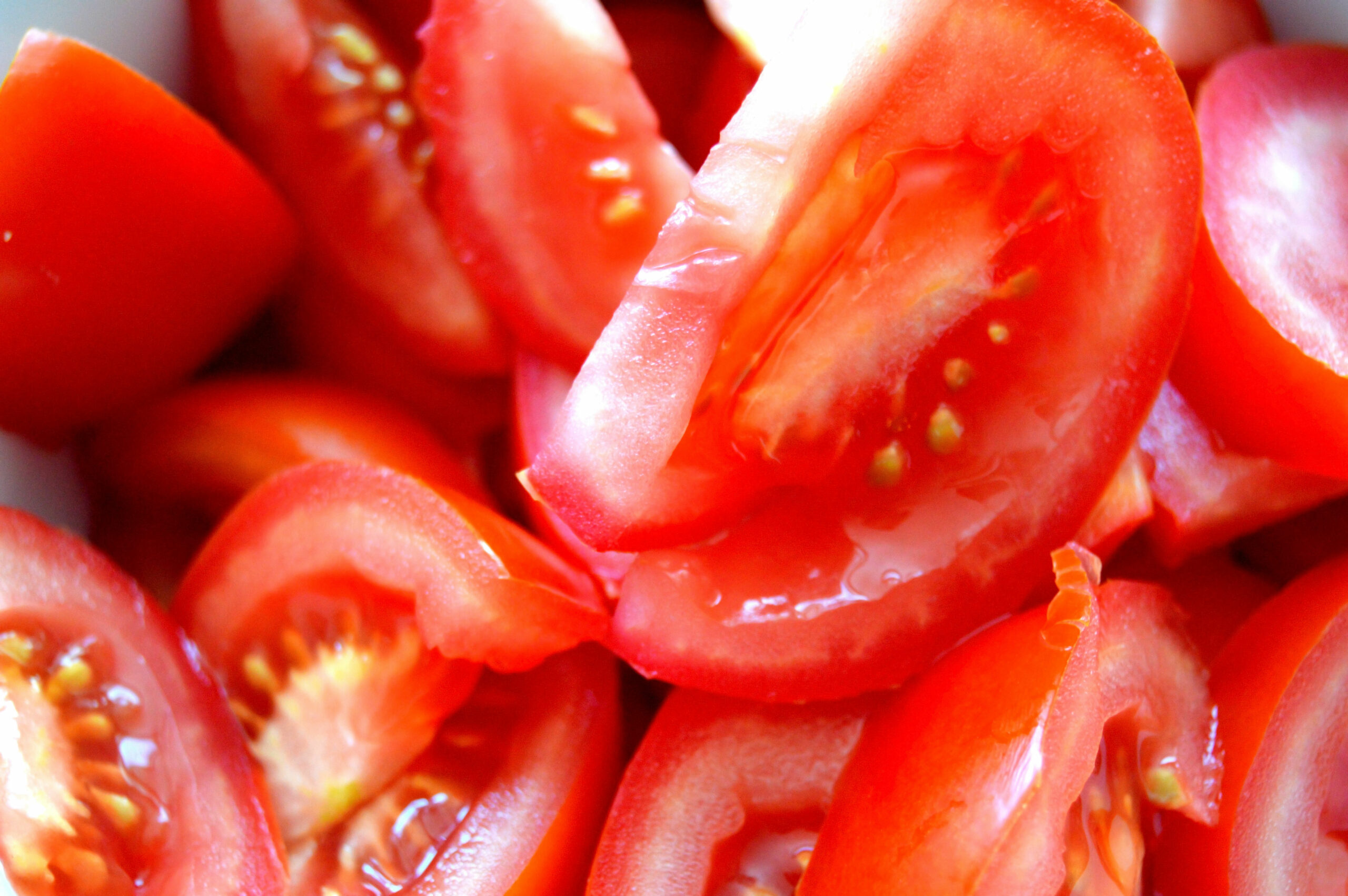
A mealy tomato is not necessarily a spoiled tomato. It is a tomato whose texture has lost the combination of juiciness, cohesion and elasticity we expect when eating it fresh. The flesh may feel dry, grainy, cottony or as if it breaks into small particles without releasing enough juice.
This is frustrating because the outside can look perfectly normal. The skin may be red and intact and the fruit may still feel firm. The explanation lies inside the tissue: cell structure, water content, variety, maturity and storage history matter as much as appearance.
What does “mealy” actually mean?
In a pleasant fresh tomato, cell walls provide enough structure to resist the bite while the flesh remains juicy and cohesive. When that balance changes, cells and tissue can separate too readily and create a granular sensation.
Mealiness is not a flavour. A tomato can taste sweet and still be mealy. It can also have weak aroma, but poor aroma and poor texture do not always share the same cause. It helps to separate texture, flavour and food condition.
Variety matters
Tomatoes differ naturally in water, dry matter, internal cavities and flesh firmness. Some varieties are selected to tolerate transport and longer commercial life, while others prioritise aroma, juiciness or dense flesh.
A dense tomato is not automatically mealy. Many fleshy tomatoes are excellent for slicing. The problem is when density becomes a dry, crumbly sensation instead of firm, juicy flesh. Variety information and the grower's intended use are therefore more useful than colour alone.
Red does not always mean perfectly ripe
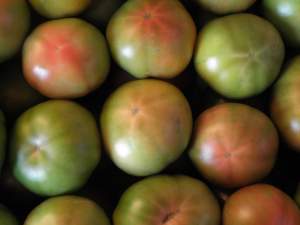
External colour is useful but does not measure every part of internal ripening. A tomato can develop red pigments without reaching the exact texture and aroma you want. Fruit may also be harvested firm to tolerate transport and continue colouring afterwards.
That does not mean firm-harvested tomatoes are necessarily poor. It simply means visual colour tells only part of the story. Read firmness together with aroma, weight, variety and intended culinary use.
Cold storage can affect sensory quality
Low temperatures slow metabolism and deterioration, but prolonged refrigeration can alter aroma perception and texture in some tomatoes. The result depends on variety, ripeness, temperature and duration.
Tomatoes that still need to ripen are generally better kept at room temperature away from direct sun and excessive heat. Once fully ripe, refrigeration can buy time if they will not be eaten soon. Allowing them to warm before serving usually improves sensory perception.
Storage time matters even without visible rot
A tomato continues to age while it looks externally acceptable. It loses water and its tissue structure changes. Firm, juicy flesh can gradually become soft, dry or granular. Good-looking skin is not a guarantee that the interior is at its sensory peak.
Buy quantities you can realistically use and sort tomatoes by ripeness at home. Eat the most advanced fruit first and leave firmer specimens for later.
Can you detect mealiness before cutting?
There is no perfect test, but several clues help. A tomato that feels unusually light for its size may have lost water. A fruit that remains rock hard despite advanced colour may not be ideal for raw eating. A complete lack of aroma near the stem is also unhelpful when you want an aromatic tomato.
Do not squeeze hard. Gentle pressure is enough to assess elasticity. Repeated strong handling in a shop causes bruising that later shortens useful life.
What to do with a tomato that is already mealy
If the tomato is sound, with no mould, fermentation, sliminess or abnormal odour, mealiness is mainly a quality issue. Instead of serving it in slices, use it where original texture matters less: sauce, sofrito, soup, blended preparations or roasting, depending on flavour and ripeness.
If grainy texture is accompanied by rotten areas, mould, fermentation or unpleasant odour, the issue is no longer simply mealiness and the tomato should be discarded.
Mealy and overripe are not the same
An overripe tomato usually shows excessive softness and loss of structure and may develop damaged skin or fermentation. A mealy tomato can still be firm. The two conditions can overlap, but they are not synonyms.
The same distinction applies to cracking. A tomato can split during growth because of changes in water availability without becoming mealy. Our guide to cracked tomatoes covers that separate question.
How to buy tomatoes with better texture
- Buy for the intended dish: salad, toast and sauce need different ripeness.
- Look for weight: a dense-feeling fruit often retains plenty of water.
- Check elasticity: firm need not mean rock hard; ripe need not mean soft.
- Use aroma: especially when the tomato will be eaten raw.
- Know the variety: expected texture differs significantly between types.
- Avoid bruising: damaged tissue deteriorates faster during storage.
Good storage starts at home
Do not pile heavy produce on ripe tomatoes or leave them near heat. Sort by ripeness and use the most advanced fruit first. For the broader picture, our guide to choosing, ripening and storing tomatoes explains how handling changes with intended use.
When you buy seasonal produce directly from a grower, information about variety, harvest and culinary use is often more useful than a universal rule based only on colour or firmness.
Seasonal vegetables
- EMDO Selection

 100% mature beef burgers – gluten-free (2)
  100% beef burgers – gluten-free (2)