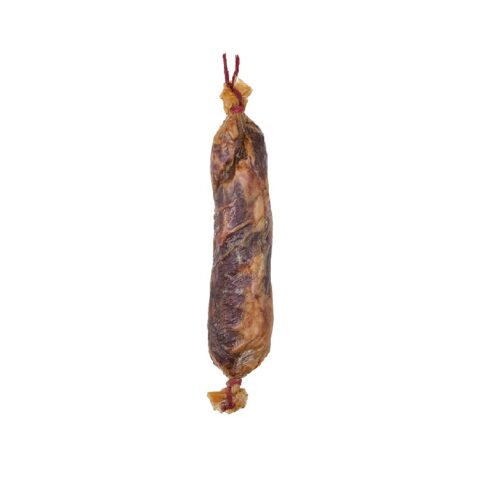
Dry-cured Iberian loin is nutritionally concentrated: it provides a large amount of protein, a variable amount of fat, minerals such as iron and zinc, and several B vitamins. Part of this concentration comes from curing, during which the meat loses water and nutrients become more concentrated per 100 grams of finished product.
Quick summary: nutrients in Iberian cured loin
- Protein: one of its main nutrients, commonly around 35–50 g per 100 g depending on the product and dataset.
- Fat: more variable than protein and influenced by marbling, feeding and the individual piece.
- Iron: dry-cured loin is a useful animal-source iron food; an official Spanish reference gives 3.7 mg/100 g.
- Zinc, phosphorus, potassium and magnesium: also contribute to its mineral profile.
- B vitamins: especially thiamine (B1), niacin (B3) and vitamin B12.
- Sodium: can be high because salt is essential to the curing process.
Protein: the defining nutrient
Loin starts as a whole muscle. As it cures and loses water, protein becomes more concentrated per 100 g than in fresh meat. MAPA's dry-cured loin sheet reports 50 g protein per 100 g. A study of sliced Iberian cured loin found values of roughly 35.6–40.1 g/100 g. Our current acorn-fed 100% Iberian loin declares 46 g/100 g. These figures describe different products rather than a contradiction.
How much fat does it contain?
There is no single figure. Iberian loin is often relatively lean compared with visibly fatty cured cuts, but Iberian pork can have substantial intramuscular marbling.
In the cited sliced-loin study, intramuscular fat ranged from about 8.9 to 14.5 g/100 g. MAPA's general dry-cured loin sheet reports 20.7 g/100 g, while our current product declares 15 g/100 g. This is why ranges are more useful than a universal number.
What type of fat predominates?
Monounsaturated fat is usually the largest fatty-acid fraction in dry-cured Iberian loin, and oleic acid is the most abundant individual fatty acid. A study of loins from Iberian pigs finished in the montanera system reported roughly 56% monounsaturated fatty acids, around 37–38% saturated fatty acids and about 6–7% polyunsaturated fatty acids.
This does not mean loin is automatically a “low-fat” food. It describes the composition of the fat that is present; total fat intake still depends on the product and serving size.
Iron, zinc and other minerals
The official MAPA reference gives 3.7 mg iron per 100 g for dry-cured loin. As an animal food, it provides haem iron alongside non-haem iron, and haem iron is generally absorbed more efficiently than non-haem iron from plant foods.
Loin also provides zinc, phosphorus, potassium and magnesium. Sodium deserves separate attention: MAPA lists 1,470 mg sodium per 100 g for dry-cured loin, although recipes differ. Portion size is therefore especially relevant for people who need to restrict salt.
B vitamins
Dry-cured loin provides B vitamins involved in energy metabolism and normal blood-cell formation. MAPA highlights thiamine (B1), riboflavin (B2), niacin and vitamin B12. Research promoted by the Spanish Iberian Pig Interprofessional organisation also identifies protein, B1 and B12 as notable nutrients across the Iberian products analysed.
100 g or a serving?
Values per 100 g are ideal for comparing foods, but a normal serving of cured loin is usually smaller. A 40–50 g portion provides roughly 40–50% of the nutrients and sodium shown in a 100 g table.
Conclusion
Iberian cured loin stands out for its high protein density, iron and B vitamins, and a fat profile in which monounsaturated fatty acids usually predominate. Exact composition varies considerably, so the nutrition declaration of the specific product should always take priority over a generic figure.
For product terminology, see our guides to caña de lomo and dry-cured loin and Iberian loin versus lomito.
Sources and how to read the figures
The figures in this article should be treated as reference values rather than a universal label for every Iberian cured loin. Final composition changes with the raw material, intramuscular fat, feeding system, recipe, salt content, degree of drying and producer.
The main references used are the Spanish Ministry of Agriculture (MAPA) food sheet for dry-cured loin and scientific studies on dry-cured Iberian loin. The MAPA sheet reports 50 g protein, 20.7 g fat and 3.7 mg iron per 100 g for dry-cured loin in general. Studies specifically analysing Iberian dry-cured loin have reported protein values around 35–40 g/100 g and meaningful differences in fat content between samples and commercial categories.
For that reason, when you need the exact value for a particular product, its own nutrition declaration takes priority. The acorn-fed 100% Iberian loin currently sold in our shop, for example, declares 46 g protein and 15 g fat per 100 g.
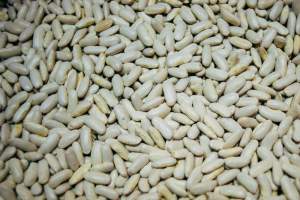 White Kidney Beans
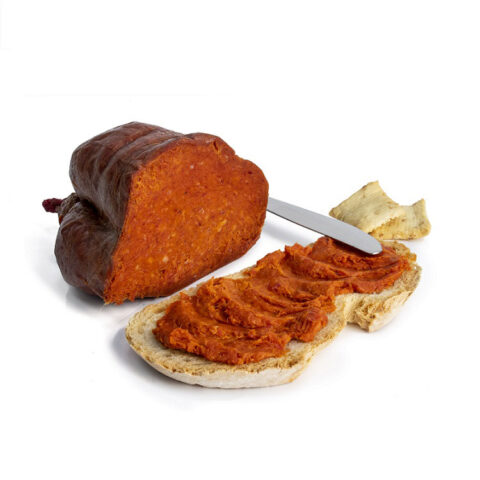
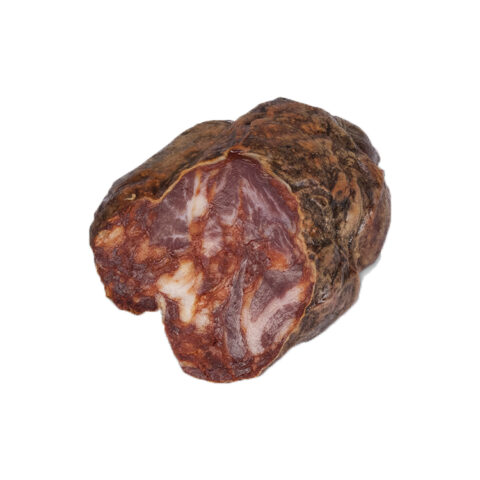
 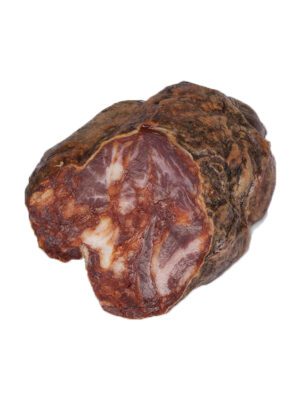 100% Iberian acorn-fed morcón