Roasting red peppers at home transforms a simple vegetable. Heat concentrates sweetness, softens the flesh and blisters the skin until it can be peeled away. The finished peppers work in salads, toast, sandwiches, rice dishes, pasta, omelettes and side dishes, or simply dressed with olive oil and salt.
The technique comes down to three stages: roast until the skin is well blistered, rest the peppers covered and peel them without rinsing away their juices. Both an oven and an air fryer work well; capacity and speed are the main differences.
Which red peppers are best for roasting?
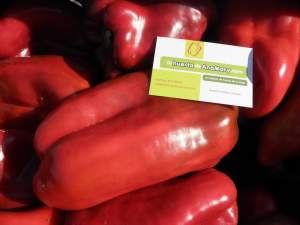
Choose firm, fleshy red peppers that feel heavy for their size. Smooth, taut skin is a useful sign of freshness. Thick-walled peppers provide more usable flesh after roasting and cope well with moisture loss.
They do not need to be identical, but similarly sized peppers will cook at roughly the same rate. Small peppers finish earlier, while very large ones may need extra time or another turn.
How to prepare peppers before roasting
Wash and dry them thoroughly. For the classic method, roast them whole, including the stem, because this helps retain their natural juices. There is no need to remove the seeds first.
You can rub the skin with a very thin film of olive oil, although it is optional. Use a tray with a rim because the peppers release liquid as they cook.
How to roast red peppers in the oven
Preheat the oven to 220°C. Place whole peppers on the tray with a little space between them. Roast for approximately 35 to 50 minutes, depending on their size and your oven. Turn them once or twice so several sides receive direct heat.
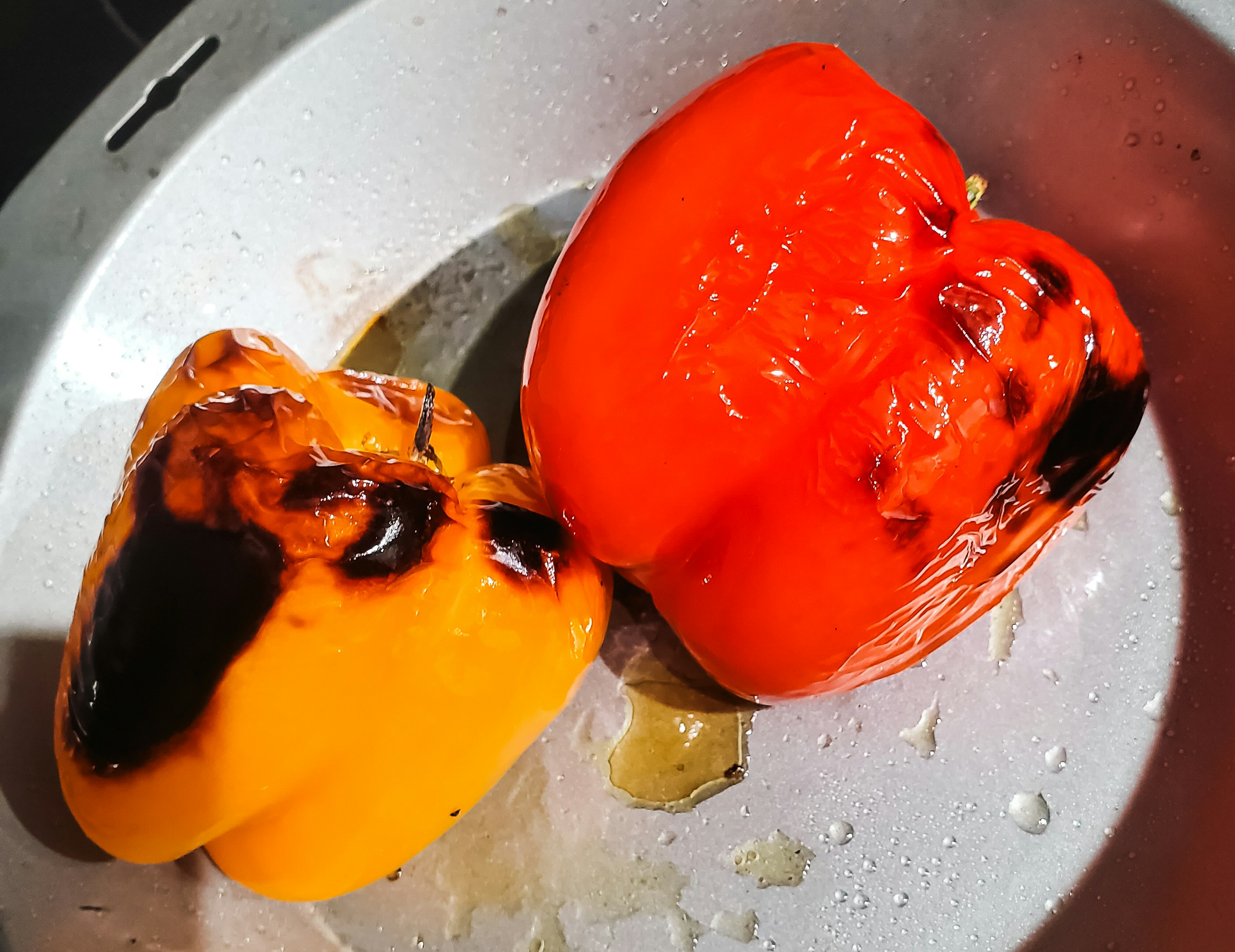
Do not stop when the skin is merely wrinkled. Easy peeling requires clearly blistered skin with dark patches while the flesh underneath feels completely soft when pressed gently with tongs. Blackened skin in places does not mean the flesh is burnt.
Can you use the grill or broiler?
Yes. A grill is useful at the end when the pepper is already soft but the skin has not blistered enough. Watch it closely because distance from the heating element has a large effect.
You can also use the grill from the start and turn frequently, but conventional oven heat is often easier for a full tray and produces very even softening.
How to roast peppers in an air fryer
An air fryer is excellent for two or three peppers, depending on basket size. Preheat if your model recommends it and cook at about 190-200°C for 18-30 minutes. Turn the peppers every 7-10 minutes so all sides blister.
Air-fryer timings vary considerably because power, airflow and basket geometry differ. Start checking early with small peppers. The final signs are always more important than the clock: blistered skin and fully tender flesh.
The easy-peeling trick: rest them covered
Transfer the hot peppers to a bowl and cover with a lid, plate or suitable cover. Rest for around 15-20 minutes. Steam trapped around the surface helps separate the skin from the flesh.
You do not need to put hot peppers in a plastic bag. A covered bowl does the same job and conveniently collects their juices.
How to peel roasted peppers without washing away flavour
Once the peppers are cool enough to handle, remove the stem, open them and take out the seeds. Pull the skin away with your fingers or a small knife. Properly roasted and rested skin usually comes off in large strips.
Do not rinse the pepper under running water. Water washes away valuable roasting juices and some of the concentrated flavour. Use your fingers, a spoon or kitchen paper to remove stubborn seeds.
What should you do with the roasting juices?
Do not discard them automatically. Roasted peppers release a sweet, intensely flavoured liquid that can be strained and poured back over the peeled strips. It is useful in dressings and sauces and helps keep stored peppers moist.
If the tray contains heavily burnt particles, strain carefully and use only the clean liquid.
How to season roasted peppers
The simplest dressing needs little more than salt and good extra virgin olive oil, with sliced garlic if you like. Sherry vinegar, cumin, onion, tuna, boiled egg and fresh herbs are also classic partners.
Taste the pepper before adding too much. A ripe roasted red pepper has considerable natural sweetness, so seasoning should support it rather than hide it.
How long do roasted peppers keep in the fridge?
Once peeled, store them in a clean, closed container in the refrigerator. For home cooking, make quantities you expect to eat within a few days rather than treating them like a commercially sterilised preserve.
Use clean utensils when serving and avoid leaving them at room temperature for long periods. Discard peppers that develop mould, abnormal slime, gas or an off-odour.
Can roasted peppers be frozen?
Yes. They freeze well because roasting has already softened their texture. Cool, peel and deseed them, then freeze in useful portions with a little of their juice.
After thawing they may be slightly softer for salads, but they remain excellent for sauces, stews, rice dishes, fillings and blended recipes.
Common mistakes
- Removing them too early: pale skin is much harder to peel.
- Not turning them: one side chars while another stays firm.
- Peeling immediately: the covered resting stage saves a lot of effort.
- Rinsing under the tap: carries away flavourful juices.
- Throwing away the liquid: it is one of the best parts of the roast.
- Overcrowding an air fryer: blocks hot air from reaching the surface evenly.
Frequently asked questions
What temperature should I roast peppers at?
About 220°C in a conventional oven is a good reference. In an air fryer, 190-200°C usually works well.
How long do whole red peppers take in the oven?
Most medium-to-large peppers need about 35-50 minutes, with one or two turns.
Why are my peppers difficult to peel?
They were probably not blistered enough or were peeled without a covered rest. Both stages help the skin release.
Do roasted peppers always need peeling?
For the classic tender preparation, peeling gives the best texture because charred pepper skin can be tough.
Browse our producer-grown vegetables if you want to start with fresh peppers.
- EMDO Selection